Skip to header Skip to main navigation Skip to main content Skip to footer
Home
Cascades Field Guide
A practical field guide to the North Cascades Highway and surrounding areas.

Main navigation

  • Home
  • This Weekend's Plan
  • Where to Stay
    • Start Here
    • Marblemount
    • Rockport
    • Concrete
    • National Park Campgrounds
    • Winthrop
    • Cabin Rentals vs Campgrounds vs Hotels
  • Trip Planning
    • Start Here
    • One-Day Itinerary
    • Two-Day Itinerary
    • Seasonal Access
    • Camping
    • Food and Services
    • Backup Plans: Rain & Highway Closures
    • Safety and Permits
    • Lakes & Rivers
  • Things To Do
    • Easy Hikes
    • Scenic Stops
    • Family-friendly
    • Dog Friendly Trails
    • Accessible Trails
  • Experiences
    • Fishing
    • River Rafting
    • Self-Guided Tours
    • Wildflowers (spring)
    • Larches (fall)
    • Bald Eagle Viewing (winter)
    • Mushroom Foraging
    • Guided Day Trip from Seattle
  • Areas
    • North Cascades Highway
      • Concrete & Baker Lake
      • Rockport
      • Marblemount
      • Cascade River Road & Cascade Pass
      • Newhalem, Diablo Lake, Ross Lake
      • Rainy Pass & Washington Pass
    • Methow Valley (east side of pass)
      • Mazama
      • Winthrop
  • Get Weekend Updates
  • Area Map

Breadcrumb

  • Home
  • Methow Valley

Methow Valley: Winthrop, Mazama, Twisp, and the East Side of the North Cascades

The Methow Valley is the east-side counterpart to the North Cascades Highway. It includes Winthrop, Mazama, Twisp, and the dry, open valley east of Washington Pass. For many visitors, it is not just the far end of Highway 20. It is its own destination, with lodging, food, trails, lakes, winter recreation, and Cascade Loop trip-planning value.

Use this page to choose the right Methow Valley base before opening town-specific guides. Winthrop is the easiest all-around service hub, Mazama is the closest-feeling base for Washington Pass and upper-valley recreation, and Twisp works well for quieter stays, local services, arts, food, and south-valley access.

Quick orientation

If you are driving the full North Cascades Highway when SR 20 is open, the Methow Valley usually comes after Rainy Pass and Washington Pass on the east side of the mountains. The valley can also be part of a Cascade Loop trip, a Winthrop weekend, a larch-season base, a winter ski trip, or a slower east-side vacation.
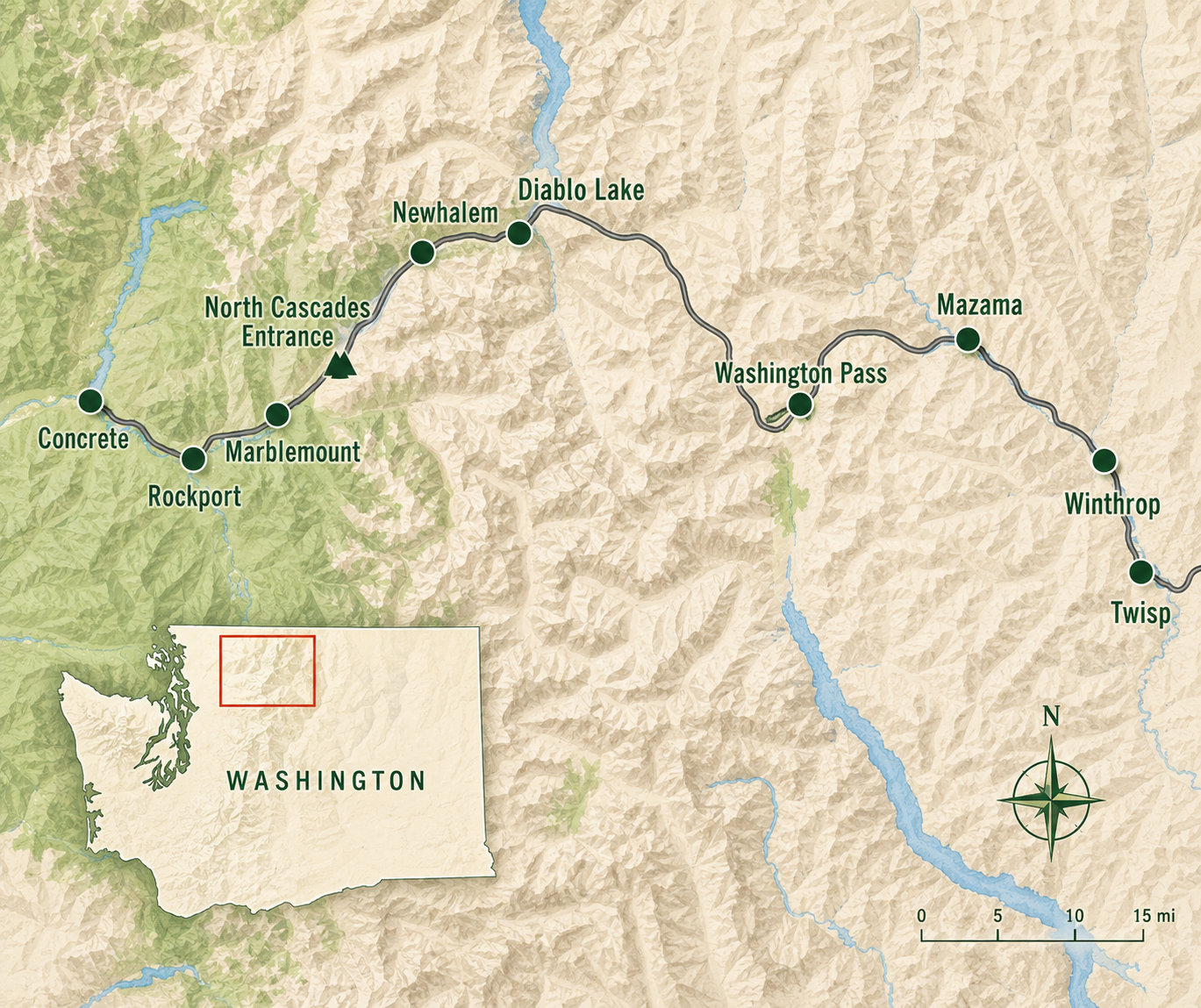
North Cascades Corridor Map

The big planning difference is this: the west side of the North Cascades is wetter, greener, and closer to Newhalem, Diablo Lake, and Marblemount. The Methow Valley is drier, sunnier, more open, and more town-based, with stronger lodging and services in Winthrop and Twisp.

Mazama Use Mazama for upper-valley stays, Washington Pass access, trails, winter recreation, quiet lodging, and a smaller mountain-town feel. Winthrop Use Winthrop for the easiest Methow Valley base, with lodging, food, groceries, fuel, gear shops, services, and walkable downtown access. Twisp Use Twisp for a quieter south-valley base, local food, arts, services, pharmacy access, and trips toward Winthrop, Mazama, or the lower Methow. 

Which Methow Valley town should you start with?

Start with Winthrop if you want the easiest all-around base

Winthrop is usually the simplest starting point for first-time Methow Valley visitors. It has the strongest mix of lodging, restaurants, groceries, fuel, outdoor shops, visitor services, and walkable town appeal.

It works especially well if your trip includes Washington Pass, Blue Lake, Maple Pass, Pearrygin Lake, Sun Mountain, Methow Trails, winter recreation, or a Cascade Loop overnight.

Where to Stay in Winthrop Compare Winthrop as an east-side base for Washington Pass, Mazama, and the Methow Valley. Winthrop Services Find practical visitor services including groceries, fuel, food, gear, medical access, parking, and trip-prep stops. 

Start with Mazama if you want the upper valley

Mazama is smaller, quieter, and closer to the upper end of the valley. It makes sense if your trip is focused on Washington Pass, upper-valley trails, Nordic skiing, quiet cabins, or a more tucked-away Methow stay.

The tradeoff is service depth. Mazama has useful visitor basics, but it is not the place to assume full-town backup for groceries, pharmacy needs, vehicle problems, or late-night options. For many trips, Winthrop or Twisp still function as the larger reset points.

Mazama Area Guides Start here for Mazama lodging, food, fuel, trails, winter access, and upper-valley planning. 

Start with Twisp if you want a quieter service town

Twisp is less touristy than Winthrop and can work well for visitors who want a quieter base, local food, arts, practical services, or access to the south end of the valley.

It is also worth knowing as a backup town. Depending on what you need, Twisp may be more useful than Winthrop for certain services, errands, pharmacy needs, or lower-valley logistics.

Twisp Area Guides Start here for Twisp lodging, food, services, arts, local stops, and south-valley Methow planning. 

What the Methow Valley is best for

The Methow Valley is especially useful when your trip needs more than a quick scenic pullout. It is a good fit for travelers who want an overnight base, a slower east-side stay, a winter recreation trip, a bike or ski weekend, a family-friendly town base, or a Cascade Loop route that connects the North Cascades Highway with eastern Washington.

Good reasons to base in the Methow Valley

  • You want to stay near Winthrop, Mazama, Twisp, Pearrygin Lake, or Sun Mountain.
  • You are planning Washington Pass, Blue Lake, Maple Pass, Cutthroat Lake, or larch-season hikes from the east side.
  • You want lodging, food, groceries, gear shops, and services after crossing the North Cascades Highway.
  • You are building a Cascade Loop trip instead of a simple out-and-back drive from the west side.
  • You are visiting in winter, when the Methow Valley becomes a stronger destination than the closed-through North Cascades Highway.

How the Methow Valley fits with the North Cascades Highway

When SR 20 is open all the way through, the Methow Valley pairs naturally with a North Cascades Highway trip. A common plan is to drive from the west side through Newhalem, Diablo Lake, Rainy Pass, and Washington Pass, then stay in Mazama, Winthrop, or Twisp.

When SR 20 is closed for winter or affected by repairs, snow, fire, or other closures, the Methow Valley may need to be reached from the east or south instead. That can turn a simple Highway 20 plan into a longer Cascade Loop-style decision, so always check current access before treating the route as open end-to-end.

North Cascades Highway Plan the SR 20 corridor from Concrete and Marblemount through Newhalem, Diablo Lake, Rainy Pass, and Washington Pass. Current Conditions Check road access, smoke, snow, closures, and seasonal issues before committing to a route. Seasonal Access Use this before planning around SR 20, Washington Pass, winter closures, or shoulder-season travel. Area Map See how the Methow Valley connects with the North Cascades Highway, gateway towns, and nearby planning regions. 

Start with the town that matches your trip

For the easiest first choice, start with Winthrop. For upper-valley quiet, Washington Pass access, or a smaller mountain-town feel, start with Mazama. For a more local, quieter, service-oriented base, start with Twisp.

Winthrop The easiest all-around Methow Valley base for lodging, food, services, and first-time trip planning. Mazama A smaller upper-valley base for Washington Pass, trails, quiet stays, and winter recreation. Twisp A quieter Methow Valley town with local services, food, arts, and south-valley access. 

Last updated: June 2026.

Get Weekly North Cascades Updates

Sign up for the weekly update Trail conditions, seasonal highlights, local insights, and new guides delivered once a week. 
View the guide map

Footer menu

  • Local Business Resources
  • Advertise
  • Support Cascades Field Guide

Lower Footer

  • About Us
  • Privacy Policy
  • Submit a Correction
  • Terms of Service & Disclosures

Copyright © 2026 Cascades Field Guide - All rights reserved