Blue Lake Trail Guide: Parking, Family Fit, Season, and Larch Timing
Last updated: April 2026
Blue Lake is a Washington Pass hike on SR-20, east of Newhalem and just west of Washington Pass. It is a strong choice for families who want a real alpine lake hike without committing to Maple Pass, but the small lot, high-elevation weather, and long no-services stretch make timing matter.
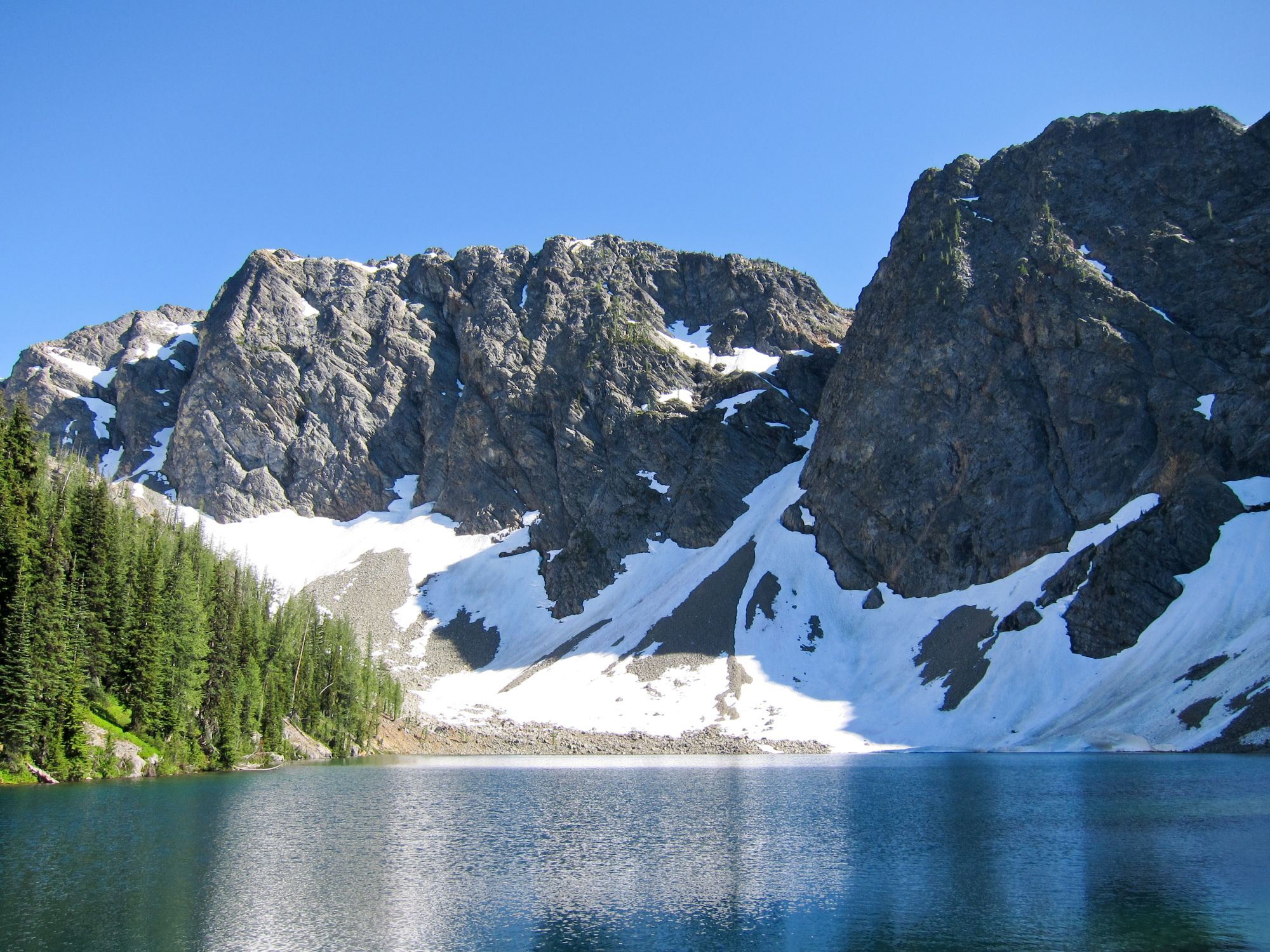
Blue Lake in Okanogan National Forest near Washington Pass | CC BY 2.0, MiguelVieira at Flickr
Get the weekly North Cascades planning email for road, weather, smoke, and hike timing notes before your SR-20 trip.
Quick Decision Guide
Blue Lake is best when you are already driving the full Highway 20 corridor and want one main hike near Washington Pass. It is not the best choice if you are arriving late, short on supplies, or trying to keep the day close to Marblemount or Newhalem.
- Best fit: Families and first-time SR-20 visitors who want a moderate hike with a clear payoff.
- Not a casual stop: Treat it as a half-day hike plus corridor driving, not as a quick roadside viewpoint.
- Parking reality: The paved lot has about 20 designated spaces and fills quickly. If it is full, switch plans.
- Pass needed: This is a national forest trailhead. Bring a Northwest Forest Pass, Interagency Pass, Digital Day Pass, or use the posted day-use payment option.
- Best season: Summer through early fall after snow melts. In fall, larch color can be excellent, but cold mornings, early snow, and crowds are more likely.
Your Options
- Choose Blue Lake if: you can arrive early, you already have food and water, and you are comfortable with a moderate mountain trail.
- Choose Washington Pass Overlook instead if: kids are tired, the weather is turning, or the Blue Lake lot is full. Check out our Washington Pass Overlook guide.
- Choose Rainy Lake instead if: you need an easier paved walk near Rainy Pass and do not want Blue Lake’s climb. Check out our Rainy Pass guide.
- Choose Maple Pass instead if: you want a bigger loop and are ready for a longer, more exposed hike with more elevation gain. Check out our Maple Pass guide.
- Skip the high pass zone if: SR-20 is closed, wildfire smoke is thick, or the forecast calls for icy conditions near Washington Pass.
Where Blue Lake Fits
Blue Lake sits in the Washington Pass part of the SR-20 trip, well east of Marblemount, Newhalem, Diablo, and Rainy Pass. If you are driving west to east, it comes late in the classic North Cascades Highway day, after the big west-side stops and before the road drops toward Mazama and Winthrop.
Why here: Blue Lake earns its role because it gives you a real Washington Pass hike without the longer commitment of Maple Pass. The tradeoff is that it has much less parking flexibility than a viewpoint and much less service backup than anything near Marblemount.
Do not treat Blue Lake like a Newhalem-area hike. If you are staying west of the mountains, this is a deeper corridor commitment. If you are staying in Mazama or Winthrop, it works better as an early or late-day high pass hike because you are already on the east side of the route.
Cascade River Road and Baker Lake Road are not useful same-day substitutes for Blue Lake. They are separate detours from the west side of SR-20. If Blue Lake fails because of parking, weather, or SR-20 access, use nearby Washington Pass, Rainy Pass, or lower Highway 20 backups instead.
Parking and Trailhead Logistics
Parking is the main planning problem at Blue Lake. The official paved lot has about 20 designated spaces, including one accessible space, and the lot often fills quickly. If you park outside the marked lot, stay outside the highway fog line and do not block emergency access.
If the lot is full, the right answer is not to circle or squeeze into a bad spot. Use your backup plan. Blue Lake is short enough to attract casual hikers, but the parking supply is not built for everyone who wants to stop there on a clear summer or larch-season day.
The trailhead is on the south side of SR-20 near milepost 162, east of Newhalem and west of Washington Pass. If you are driving west to east and reach Washington Pass Overlook first, you have gone too far.
There is a vault toilet at the trailhead, but no potable water. Bring water before you leave the lower corridor. If you are coming from the west, make Marblemount your practical reset for fuel, food, water, and forgotten supplies before you continue past Newhalem and Diablo toward the pass. For a more detailed supply check, use the last gas and supplies before the pass guide.
Download maps before you leave stronger service areas. Data can be unreliable as you drive deeper into the Highway 20 corridor, and you do not want to be making backup decisions at the trailhead with no clear map.
Passes, Dogs, and Rules
Blue Lake is not inside the main national park fee setup. It is in Okanogan-Wenatchee National Forest, so plan for a national forest recreation pass or a valid interagency pass.
- Digital Day Pass, Northwest Forest Pass, and Interagency Recreation Passes are honored.
- A day-use fee may be available through the posted payment system.
- Download the Recreation.gov app before the trip if you plan to use Scan & Pay, because service may not work well on-site.
- Dogs should be kept on leash to protect pets and wildlife.
- No overnight camping is allowed within 0.25 mile of Blue Lake.
- No motorized or mechanized travel is allowed on the trail.
The pass mistake is common because many visitors spend the same trip inside and outside the national park complex. Blue Lake is one of the places where that difference matters.
Is Blue Lake Family-Friendly?
Blue Lake is family-friendly for active kids, but it is not an easy stroll. The trail is about 4.4 miles roundtrip with about 1,050 feet of gain and a high point around 6,254 feet. That makes it more forgiving than Maple Pass, but much more of a hike than Washington Pass Overlook.
For kids: The main question is not whether the trail is famous or pretty. The question is whether your group still has energy after the long drive past Marblemount, Newhalem, Diablo, and Rainy Pass. If kids are already dragging by the time you reach the pass area, switch to Washington Pass Overlook instead.
If your main goal is keeping the day easy, use the family-friendly North Cascades hikes guide before committing to Blue Lake.
Season and Larch Timing
Blue Lake is a high-elevation trailhead. The trailhead itself is around 5,400 feet, and the hike reaches higher. That means the season is shorter than lower stops near Marblemount, Newhalem, Diablo, or Rockport.
Summer: This is the simplest planning window once snow is gone and SR-20 is open. Still check recent trail reports before driving because downed trees, snow patches, bugs, smoke, and storm damage can change the day.
Larch season: Late September into early October is the common planning window, but the exact timing changes by year. Do not build the day around a fixed date. Check recent trip reports close to your visit, then assume parking will be harder than a normal weekday or weekend.
Fall weather: A sunny lower-corridor forecast does not mean Blue Lake will feel warm. Bring layers and be ready for cold wind, wet tread, or early snow near Washington Pass. If the forecast mentions freezing overnight temperatures, ice, or new snow, consider a lower-elevation plan.
Winter access: Blue Lake is not accessible when the North Cascades Highway is closed through the pass zone. Check North Cascades seasonal access before making this your main hike in spring, late fall, or winter.
Plan A and Plan B
Plan A: If Blue Lake is the main hike, make it the first serious stop after you commit to the pass area. From the west, reset in Marblemount, continue through Newhalem and Diablo, pass Rainy Pass, then go to Blue Lake before Washington Pass Overlook. Do the overlook after the hike because it is easier to add later.
This plan works best as a half-day hike inside a longer SR-20 day. It also works well if you are continuing east to Mazama or Winthrop after the hike.
Plan B: If the lot is full, do not force Blue Lake. Go to Washington Pass Overlook for the closest low-effort stop, Rainy Lake for an easier walk near Rainy Pass, or Maple Pass only if your group has the time, energy, weather, and parking for a bigger hike.
Bad weather backup: If smoke, rain, wind, or snow makes the pass area poor, drop the ambition level instead of driving deeper into the high country. Use North Cascades backup plans for lower-elevation choices and bad-weather route changes.
Nearby Stops and Alternatives
These are the nearby choices that actually help if Blue Lake is too crowded, too late, or too much for your group.
- Washington Pass Overlook: Best after Blue Lake or as the backup when kids are tired. It is closer to a viewpoint than a hike.
- Rainy Lake: Best when the group needs an easier walk near Rainy Pass. Use it when Blue Lake feels like too much climbing.
- Maple Pass: Best for a bigger hiking day. It is not the backup for a tired family or a late start.
- Cutthroat area: Best when you want another east-side trail option, but you still need to check conditions and parking before committing.
- Diablo Lake Overlook: Best as a lower-effort west-side stop if you are turning back toward Newhalem or Marblemount.
Do not string together every stop just because they are on the same highway. If Blue Lake is the hike, keep the rest of the day simple.
Sources
- Blue Lake Trailhead - parking, pass, toilet, water, rules, and trailhead location.
- Blue Lake - trail mileage, elevation gain, high point, trip reports, and route context.
- North Cascade Hwy SR 20 - current pass status and road conditions.
- Mountain Pass Closure Dates - seasonal SR-20 opening and closure history.
- Washington Pass Forecast - current mountain weather near the trailhead.
Related Guides
Conditions change quickly on SR-20, especially near Washington Pass. Check official road, weather, fire, and trail sources before driving, and switch plans if parking, smoke, snow, or timing makes Blue Lake a poor fit that day.