Fishing Near North Cascades and Highway 20: Lakes, Rivers, Species, Rules, and Where to Start
Use this guide to find realistic public fishing options near the North Cascades Highway, from easy Methow Valley lakes to Baker Lake, Diablo Lake, Ross Lake, short-hike mountain lakes, and rule-sensitive river fisheries.
Last updated: June 2026
Fishing near the North Cascades is absolutely possible, but the best answer is not always “go fish the nearest river.” For most visitors, the easiest and most reliable choices are public lakes: Pearrygin Lake, Patterson Lake, Baker Lake, Diablo Lake, Rainy Lake, and a few other well-defined waters with obvious access.
Rivers like the Skagit, Cascade, Baker, and Methow can be real fisheries, and they are often what anglers are most curious about. They are also much more regulation-sensitive than the lakes. River rules can change by section, bridge, species, gear type, date, emergency order, and sometimes even day of week. This guide is meant to help you choose the right kind of fishing day, not replace the current Washington fishing regulations.
Get road, closure, and trip-planning updates before your North Cascades trip
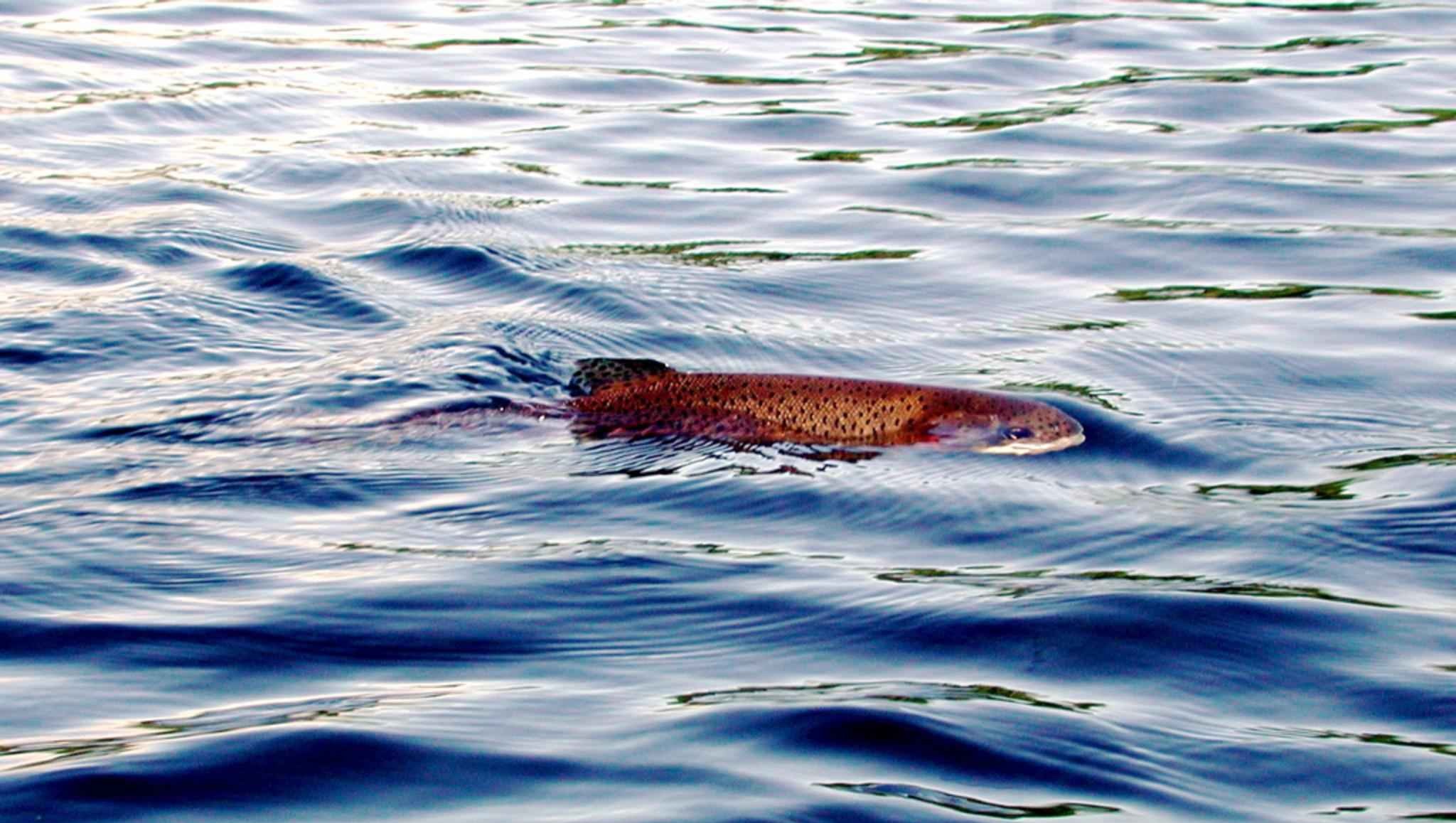
Photo: Rainbow trout. | Karen Laubenstein / U.S. Fish and Wildlife Service, public domain.
Quick Decision Guide
Best easy east-side fishing near Winthrop
Start with Pearrygin Lake or Patterson Lake. Pearrygin is the simpler family/casual trout option. Patterson has good public access and a broader species mix, including kokanee, rainbow trout, tiger trout, yellow perch, bass, crappie, and bluegill.
Best west-side fishing destination
Baker Lake is the strongest west-side choice if fishing is a real part of the trip. It has kokanee, seasonal sockeye opportunity, rainbow trout, mountain whitefish, and bull trout present, but bull trout / Dolly Varden are closed to retention and boat access matters a lot.
Best scenic reservoir along the park corridor
Diablo Lake is the best scenery-plus-fishing choice along Highway 20. Think rainbow trout, cold water, paddling, campground access, and big views. Do not treat bull trout or Dolly Varden as target fish.
Best serious scenic lake trip
Ross Lake is a better fit for experienced boaters, paddlers, or resort-supported trips than for casual roadside fishing. It can be a real fishing destination, but the logistics are part of the trip.
Best short-hike mountain lake options
Rainy Lake and Cutthroat Lake are the cleanest Highway 20 high-lake options to mention publicly. Expect light trout fishing, scenery, snow-season limits, parking pressure, and fragile shoreline etiquette.
Best river approach
For the Skagit, Cascade, Baker, and Methow rivers, first decide whether you want a guided/specialist river day or a casual fishing stop. For casual visitors, lakes are usually the better answer. For river anglers, check WDFW rules the same week and verify the exact river section before fishing.
Fish by Water Body: What You Might Catch and How to Think About Each Place
This is the fast species-and-fit directory. It is not a legal season chart. Use it to choose a water, then check the current WDFW and land-manager rules before fishing.
Pearrygin Lake
Likely fish to know: rainbow trout and brown trout.
Best fit: Families, casual anglers, campers, and visitors staying near Winthrop who want a straightforward lake with state park infrastructure.
Rough timing: Best treated as a spring-through-fall lake for most visitors. Check current rules before going, especially outside the main warm-weather season.
Verify before going: WDFW lake rules, Pearrygin State Park day-use / launch details, and Discover Pass or fee requirements.
Patterson Lake
Likely fish to know: kokanee, rainbow trout, tiger trout, yellow perch, black crappie, bluegill, largemouth bass, and smallmouth bass.
Best fit: Visitors who want more variety than a simple trout lake, plus bank, kayak, small-boat, or light trolling options.
Rough timing: Strong spring-through-fall value, with ice-fishing interest in suitable winter conditions. Treat winter use as a current-conditions decision, not a guarantee.
Verify before going: WDFW rules and public access. Use the WDFW access site and public road-side areas; do not assume resort or private shoreline is public.
Baker Lake
Likely fish to know: kokanee, sockeye salmon, rainbow trout, mountain whitefish, and bull trout.
Best fit: Anglers who are intentionally building a fishing or boating day around Baker Lake. Boats and kayaks make a major difference, especially for kokanee and sockeye.
Rough timing: General lake fishing is a spring-through-fall planning topic. Sockeye is a summer fishery only when current WDFW information supports it.
Verify before going: WDFW Baker Lake rules, the Baker River sockeye season/counts page, current launch access, USFS / PSE recreation notices, and any aquatic invasive species inspection requirements. Bull trout / Dolly Varden are closed to retention.
Lake Shannon
Likely fish to know: kokanee, resident coastal cutthroat trout, brook trout, and bull trout.
Best fit: Anglers already focused on the Baker Lake / Concrete area who want a secondary kokanee or reservoir option.
Rough timing: Treat as a spring-through-fall lake, with current access details more important than broad seasonal claims.
Verify before going: WDFW lake rules and current PSE access / launch information. Bull trout / Dolly Varden should be treated as release-only unless current rules clearly say otherwise.
Diablo Lake
Likely fish to know: rainbow trout, with bull trout present. NPS also describes the Gorge / Diablo / Ross lake complex as commonly holding rainbow, eastern brook, and cutthroat trout.
Best fit: Scenic fishing, campground days, paddling, and visitors already spending time around Colonial Creek or Diablo.
Rough timing: Legal fishing may be broader than the practical season, but real use depends on Highway 20 access, lake conditions, cold water, wind, and launch conditions.
Verify before going: WDFW lake rules, NPS fishing and boating rules, lake conditions, and launch usability. Bull trout / Dolly Varden are closed to take.
Gorge Lake
Likely fish to know: rainbow trout, with bull trout present. NPS also describes the Gorge / Diablo / Ross lake complex as commonly holding rainbow, eastern brook, and cutthroat trout.
Best fit: A quieter Newhalem / Gorge-area fishing stop for people already in the corridor.
Rough timing: Treat as a practical warm-season or open-access reservoir option, even if rules are less restrictive than the access reality.
Verify before going: WDFW rules, NPS boating conditions, and access. Do not expect NPS boat rentals on Gorge or Diablo.
Ross Lake
Likely fish to know: large rainbow trout, eastern brook trout, other trout / cutthroat context, and bull trout present.
Best fit: Prepared paddlers, boaters, resort-supported trips, and anglers who understand that access is the main planning issue.
Rough timing: Best thought of as a summer-to-early-fall destination. Water level, docks, ramps, and portage logistics matter.
Verify before going: Current WDFW Ross Lake rules, NPS Ross Lake boating information, lake levels, boat-in camp permits, and Ross Lake Resort / Hozomeen access details. Do not treat Ross Lake as a roadside fishing stop.
Rainy Lake
Likely fish to know: westslope cutthroat trout.
Best fit: Visitors who want a short paved trail, a mountain lake, and light fishing as part of a scenic stop.
Rough timing: Usually a snowmelt-through-fall option, with access tied to Highway 20, Rainy Pass parking, and trail conditions.
Verify before going: WDFW high-lake page, USFS trailhead information, recreation pass requirements, parking, and snow conditions. Keep shoreline impact low.
Cutthroat Lake
Likely fish to know: westslope cutthroat trout.
Best fit: Active visitors who want a short hike near Washington Pass and are comfortable with limited parking and a more fragile setting.
Rough timing: Best after the trail is snow-free and before Highway 20 winter closure. Do not assume spring access just because the road is partly open.
Verify before going: WDFW high-lake page, USFS trailhead conditions, recreation pass rules, and camping restrictions near the lake.
Skagit River
Likely fish to know: salmon by season / segment, steelhead context, coastal cutthroat trout, other trout / char, and bull trout / Dolly Varden.
Best fit: Guided trips or advanced anglers who will verify the exact reach and current rules. Some bank access exists, but that does not mean the water is open for what you want to fish.
Rough timing: Spring, summer, and fall windows can exist for different species, but they are not reliable evergreen claims. Salmon, steelhead, and bull trout / Dolly rules are section- and season-sensitive.
Verify before going: WDFW special rules, emergency rules, Fish Washington, exact river segment, bridge/confluence boundaries, and NPS rules if using park reaches or launches.
Cascade River
Likely fish to know: salmon by current rule, trout, other game fish, and bull trout / Dolly Varden.
Best fit: Experienced river anglers, not casual “fish after a hike” visitors. Lower-river opportunities can be highly date-specific.
Rough timing: Some spring, summer, or fall windows may exist in a given rule year, but this is one of the easiest rivers to describe incorrectly if old dates are frozen into a guide.
Verify before going: WDFW special rules and emergency rules every trip. Watch for anti-snagging rules, barbless hook rules, night closures, day-of-week limits, hatchery-only retention, and exact section boundaries.
Baker River
Likely fish to know: sockeye-management context, with highly managed access and timing.
Best fit: Mostly a cautionary mention. If Baker-area fishing is your goal, Baker Lake is the cleaner public recommendation.
Rough timing: Any meaningful public-facing Baker River discussion should be tied to current WDFW sockeye and access information, not evergreen river advice.
Verify before going: WDFW special river rules, emergency rules, Baker sockeye updates, and any temporary access closures.
Methow River
Likely fish to know: trout by segment, whitefish opportunities by rule, and highly restricted salmon / steelhead context.
Best fit: Guided or skilled DIY fishing, especially for anglers comfortable reading segmented river rules and selective-gear requirements.
Rough timing: Summer and fall can be relevant for trout-focused fishing where legal; winter whitefish-style opportunities may exist in some rule years or segments. Do not assume any salmon or steelhead retention.
Verify before going: WDFW Columbia Basin river rules, emergency rules, exact segment, catch-and-release language, selective gear, and any current steelhead or salmon closures.
Before You Fish: Rules to Check First
Fishing rules in Washington are water-specific. Before you fish, check the current WDFW fishing regulations, the WDFW emergency fishing rules, and the exact WDFW page for the lake or river you plan to fish.
For waters inside the North Cascades National Park Service Complex, also check the NPS fishing page, NPS boating information, and NPS lake and river conditions.
- License: A Washington fishing license is required. Do not assume you can buy one inside the park corridor.
- Emergency rules: WDFW emergency rules can override the printed pamphlet or older online summaries.
- Exact water: Check the exact lake or river page, not just a regional summary.
- Exact river section: River rules can change at bridges, confluences, dams, mouths, or other boundary points.
- Bull trout / Dolly Varden: Several waters have bull trout or Dolly Varden present, but closed to retention.
- Salmon and steelhead: Treat all salmon, sockeye, Chinook, coho, and steelhead fishing as same-week verification territory.
- Access rules: Fishing rules and access rules are separate. You may also need a Discover Pass, Northwest Forest Pass, state park pass, launch fee, backcountry permit, or vessel permit depending on where you go.
For river fishing, check more than “is it open?”
River fishing is where visitors are most likely to get tripped up. Before fishing the Skagit, Cascade, Baker, or Methow, check for:
- exact river section
- bridge or confluence boundaries
- open dates
- days of week
- species allowed
- hatchery vs wild retention
- catch-and-release language
- selective gear rules
- barbless hook rules
- anti-snagging rules
- night closures
- catch record card requirements
- emergency closures
- boating or launch restrictions
Need a Washington fishing license before fishing the North Cascades corridor?
For immediate use of catch record cards or tags, WDFW recommends using a local dealer. Mobile licensing is also available through WDFW’s app system, but visitors should set it up before leaving cell service. The most practical Highway 20 stops are Concrete Market Fresh and AJ Food Mart / Mobil in Marblemount for the west side of the pass. For the east side, check Ace Hardware or Pardners Mini Market in Winthrop, and Valley Do It Center in Twisp.
Best Lakes and Reservoirs for Most Visitors
Pearrygin Lake: easiest family/casual choice near Winthrop
Pearrygin Lake is one of the simplest fishing recommendations on the east side. It sits close to Winthrop, has state park infrastructure, good shoreline access, boat access, camping nearby, and a straightforward rainbow trout focus.
WDFW lists rainbow trout and brown trout here, with good access from both the state park and WDFW access site (WDFW Pearrygin Lake). Use this when you want a lower-friction fishing stop that still fits a family or campground-style Methow Valley trip.
Patterson Lake: broader species mix near Winthrop
Patterson Lake is the better pick if you want a more varied fishery near Winthrop. WDFW lists kokanee, rainbow trout, tiger trout, yellow perch, black crappie, bluegill, largemouth bass, and smallmouth bass, with road-side shore access and a WDFW gravel launch (WDFW Patterson Lake).
This is a strong casual lake, but access and shoreline ownership are mixed. Use the public WDFW access and road-side public areas. Do not assume nearby resort shoreline is public.
Baker Lake: strongest west-side fishing destination
Baker Lake is the best west-side choice if fishing is a real part of your trip. WDFW lists kokanee, sockeye salmon, rainbow trout, mountain whitefish, and bull trout, with bull trout and Dolly Varden closed to retention (WDFW Baker Lake).
The key planning point is that Baker Lake is much better with a boat or kayak, especially if you are targeting kokanee or sockeye. Shoreline access can be good for a casual camp-and-fish day, but the main fishery is not just “stand anywhere on shore and expect sockeye.”
Sockeye timing is managed in-season, so check the WDFW Baker River sockeye season and counts page before building a trip around sockeye. Also check current launch, campground, and aquatic invasive species inspection requirements before you go.
Diablo Lake: scenic reservoir fishing along Highway 20
Diablo Lake is best framed as scenery-plus-fishing. WDFW lists naturally reproducing rainbow trout as the main attraction and says the lake is closed to taking bull trout or Dolly Varden (WDFW Diablo Lake).
This is a good option for visitors already camping at Colonial Creek, paddling, or spending time around Diablo. It is not the place to imply easy powerboat rentals or easy limits. Check NPS boating and lake conditions, especially because reservoir levels, wind, cold water, and launch conditions can matter as much as the fishing rules.
Gorge Lake: quieter secondary reservoir option
Gorge Lake is smaller and less iconic than Diablo, but it can work as a quieter reservoir option near Newhalem. WDFW describes fair rainbow trout fishing and notes that bull trout / Dolly Varden are closed to retention (WDFW Gorge Lake).
Treat this as a secondary scenic fishing option, not a destination that should reshape a whole North Cascades trip.
Ross Lake: serious scenic lake, serious logistics
Ross Lake is one of the most impressive fishing settings in the North Cascades, but it is not simple roadside fishing. WDFW highlights native rainbow trout, and NPS notes that Ross Lake fishing runs on defined rules and seasons with Washington license requirements and boat-in camping permits for overnight trips (NPS lake and river conditions).
Access is the whole story. The south end is reached by Diablo Lake launch, portage, or Ross Lake Resort logistics. The north end is reached through Hozomeen via British Columbia. Docks, hazards, water levels, motor rules, and permits all matter. Feature Ross Lake as a destination for prepared paddlers, boaters, and resort-supported trips, not as an easy add-on for a casual Highway 20 stop.
Lake Shannon: useful, but below Baker Lake
Lake Shannon belongs as a Concrete / Baker-area secondary option. WDFW lists kokanee, resident coastal cutthroat, brook trout, and bull trout, with bull trout / Dolly Varden closed to retention (WDFW Lake Shannon).
This is more useful for anglers who already know they want a kokanee-oriented reservoir than for first-time visitors looking for the easiest family fishing stop. Check current PSE access and launch details before relying on it.
Short-Hike Mountain Lake Options
Rainy Lake
Rainy Lake is one of the easiest mountain-lake fishing options to explain to ordinary visitors because it is reached by a paved trail from Rainy Pass. WDFW lists abundant westslope cutthroat trout, and the trail makes the lake unusually approachable for a high-elevation setting (WDFW Rainy Lake).
The limiting factors are not complicated fish rules. They are snow, parking, crowds, and high-lake etiquette. Use light gear, avoid trampling fragile shoreline, and do not expect solitude in peak season.
Cutthroat Lake
Cutthroat Lake is a slightly more active short-hike option near Washington Pass. WDFW describes it as a pretty, easy-to-reach lake with westslope cutthroat trout (WDFW Cutthroat Lake).
This is appropriate as a scenic fishing sidebar, not as an invitation to publish a long list of fragile high lakes. Check current trail access, snow, pass requirements, and camping restrictions before going.
River Fishing: Fish, Seasons, and Why Same-Week Rules Matter
The rivers are where visitors are most likely to get bad advice from a general travel guide. The Skagit, Cascade, Baker, and Methow are not “just pull over and fish” recommendations. Rules can change by river section, bridge, date, species, gear type, and emergency order.
That does not mean the rivers should be ignored. It means the guide should explain what kind of fishery each river is, what fish may be relevant, when anglers usually start paying attention, and what must be checked before fishing.
Skagit River
The Skagit is the most important river corridor in the area. It supports a mix of salmon, steelhead, coastal cutthroat, trout / char, and bull trout / Dolly Varden context depending on the reach and season. It is also one of the easiest rivers to oversimplify.
Rough timing: Spring, summer, and fall opportunities can exist, but the target species and legal sections change. Salmon and steelhead fishing should always be treated as current-rule territory. Bull trout / Dolly Varden rules are especially important to verify.
Best visitor framing: Guided or advanced DIY. Some public bank access exists, and drift-boat or non-motorized use may be part of some trips, but this should not be sold as a casual “fish anywhere along Highway 20” river.
Before fishing: Check the exact Skagit River section, WDFW special rules, WDFW emergency rules, Fish Washington, species retention rules, gear rules, and NPS requirements if using park reaches or launches. Do not use this guide as permission to fish any visible bar, bridge, or boat launch.
Cascade River
The Cascade River should be treated as a specialist river, not a casual visitor recommendation. Lower-river salmon opportunities can be highly date-specific, and current rules may include anti-snagging, barbless hook, night-closure, and day-of-week restrictions.
Fish to understand: Depending on the current rule set, the lower river may involve salmon, trout, other game fish, and bull trout / Dolly Varden rules. Do not assume all of those are legal to target or keep.
Rough timing: Spring, summer, or fall windows may exist in a given year, but the details are too date-specific to summarize casually. This is not a good place for generic “fish here after your hike” advice.
Before fishing: Check WDFW special rules and emergency rules for the exact current lower-river language. Look specifically for open dates, days of week, hatchery-only language, gear restrictions, night closure, and anti-snagging rules.
Baker River
The Baker River should stay mostly out of a general public fishing guide. The lower system is tied to sockeye management, access closures, treaty-fishery timing, and in-season decisions. If Baker-area fishing is your goal, Baker Lake is the cleaner public recommendation.
Fish to understand: Most casual visitors should think of the Baker River through the lens of sockeye management, not as a broad DIY river fishery.
Rough timing: Any useful public-facing Baker River information depends on current WDFW sockeye information and access notices.
Before fishing: Check WDFW special river rules, emergency rules, Baker sockeye season/count information, and any temporary access closures.
Methow River
The Methow River is a real east-side fishery, but it is not the simple choice for an ordinary Highway 20 visitor. Sections can be closed, selective-gear only, catch-and-release, or limited by current steelhead and salmon decisions.
Fish to understand: Trout and whitefish opportunities may be relevant by section and season. Salmon and steelhead are highly rule-sensitive and should never be assumed open for retention.
Rough timing: Summer and fall can be relevant for trout-focused anglers where legal. Winter whitefish-style opportunities may exist in some rule years or segments, but this should be checked directly in the current regulations.
Best visitor framing: Guided or skilled DIY. For most casual visitors staying near Winthrop, Pearrygin or Patterson is the better first answer.
Best Waters by Fishing Style
Bank and shore fishing
Start with Pearrygin Lake, Patterson Lake, Rainy Lake, or casual Baker Lake shoreline access. These are the easiest options without needing a boat-first plan.
Boat, kayak, or canoe fishing
Baker Lake, Ross Lake, and Lake Shannon benefit most from a boat or paddle craft. Diablo and Gorge can also work with car-top craft, but check NPS boating conditions first.
Family fishing
Pearrygin Lake and Patterson Lake are the cleanest family fits. Baker Lake can work well for families already camping or boating there, but it is a larger and more involved lake.
Scenic fishing
Diablo Lake, Ross Lake, Baker Lake, Rainy Lake, and Cutthroat Lake are the strongest scenery-plus-fishing options.
Guided or specialist fishing
Use this framing for the Skagit River, Methow River, Cascade River, and any salmon or steelhead-focused river plan. The reason is not just skill. It is rule complexity.
Mixed-species casual lake fishing
Patterson Lake is the clearest answer near Winthrop because it has trout, kokanee, perch, bass, crappie, and bluegill in one visitor-friendly lake.
Kokanee or sockeye-oriented fishing
Baker Lake is the strongest west-side answer. Patterson and Lake Shannon can also be relevant for kokanee, but Baker Lake is the bigger destination fishery.
Who Makes the Rules?
One fishing trip can involve more than one rule source. The agency that manages the fishery is not always the same agency that manages the parking lot, boat launch, campground, road, or trail.
- WDFW: fishing licenses, seasons, limits, species rules, gear rules, catch records, two-pole rules, and emergency rule changes.
- NPS: North Cascades park-complex fishing rules, boating restrictions, closures, launches, lake conditions, and backcountry permits for boat-in camps.
- USFS: trailheads, roads, parking passes, campgrounds, and many Rainy Pass, Cutthroat, and Baker Lake access points.
- Washington State Parks: Pearrygin Lake day-use, launch, camping, and Discover Pass details.
- PSE: Baker Lake and Lake Shannon reservoir recreation access, launches, and facility conditions.
- WDFW access sites: parking, launch access, Vehicle Access Pass / Discover Pass details, and site-specific closures.
A simple rule: check WDFW for whether you can fish, then check the land manager for whether you can get there, park there, launch there, or camp there.
Common Mistakes to Avoid
- Do not assume a river is open because you see people fishing near the water.
- Do not assume a lake is a good fit for your group just because fish are present there.
- Do not target or keep bull trout or Dolly Varden unless the current rules clearly allow it. In the main waters covered here, treat them as release-only unless you have verified otherwise.
- Do not build a Baker Lake sockeye trip around old dates. Check current WDFW sockeye information.
- Do not treat Ross Lake as a quick roadside stop. Access, water levels, portage logistics, and permits matter.
- Do not send visitors onto private shoreline around Patterson Lake or other mixed-ownership waters.
- Do not publish or share exact river holes, small tributaries, fragile alpine lakes, or sensitive access points.
- Do not rely on this guide as legal advice. Use it to choose a water, then verify the current rules before fishing.
Where to Base a Fishing-Oriented Trip
Concrete and Baker Lake
Choose Concrete or Baker Lake if your fishing plan centers on Baker Lake, Lake Shannon, west-side campgrounds, or a longer lake day. This is the strongest west-side fishing base.
Newhalem, Colonial Creek, and Diablo
Choose this area if fishing is part of a broader park-corridor trip. Diablo, Gorge, and Ross are scenic waters first and fishing waters second for most casual visitors.
Winthrop and the Methow Valley
Choose Winthrop if you want easier east-side lake fishing, especially Pearrygin Lake or Patterson Lake. Use the Methow River only if you are willing to verify the exact current rules or hire a guide.
Mazama and Washington Pass
Choose Mazama if your fishing is secondary to Washington Pass-area scenery, short hikes, or early starts toward Rainy Lake and Cutthroat Lake. It is not as service-rich as Winthrop, but it is closer to the pass.
Related Guides
Bottom line: For most visitors, start with public lakes, not complicated rivers. Pearrygin and Patterson are the easiest Methow-side choices. Baker Lake is the strongest west-side fishing destination. Diablo, Gorge, Ross, Rainy, and Cutthroat are best understood as scenic fishing options with access caveats. The Skagit, Cascade, Baker, and Methow rivers are real fisheries, but they need exact-reach, same-week rule verification and are better framed as guided or specialist waters than casual DIY recommendations.