North Cascades Mushroom Season Near Highway 20
Last updated: July 2026
Mushroom season near the North Cascades Highway is not one simple “go here in October” answer. Highway 20 crosses wet west-side forest, high mountain passes, and the much drier Methow Valley side, so timing changes quickly as you move from Concrete and Marblemount toward Washington Pass, Mazama, and Winthrop.
This guide is for practical trip planning: when mushroom season usually happens, how broad habitat patterns work, what rules to check, and how to avoid the most common safety mistakes. It is not an edible-mushroom identification guide, and it does not share exact picking spots.
Get practical North Cascades updates before your next Highway 20 trip, including road access, seasonal timing, and new guide releases.
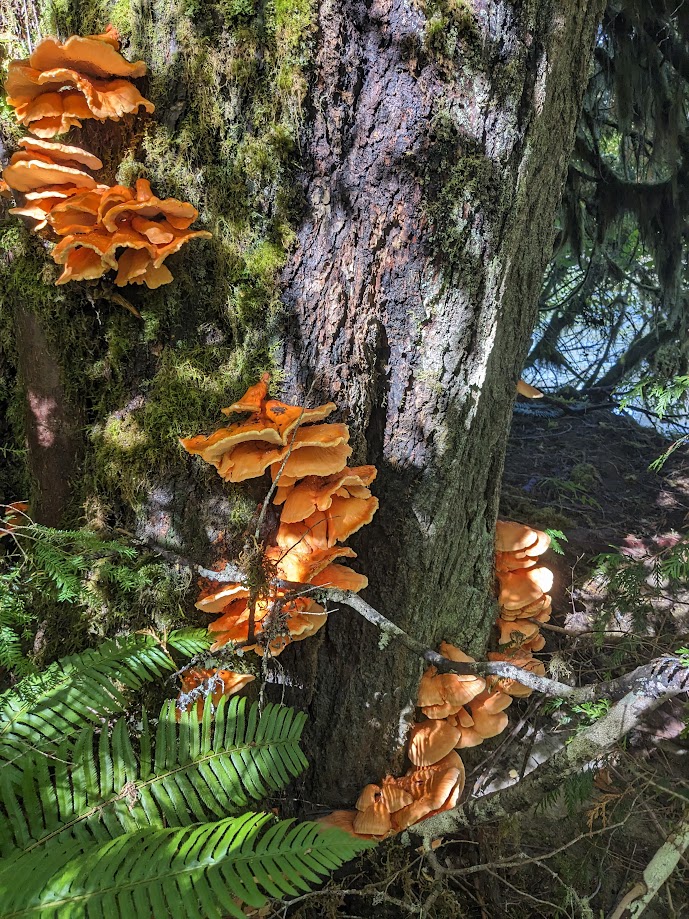
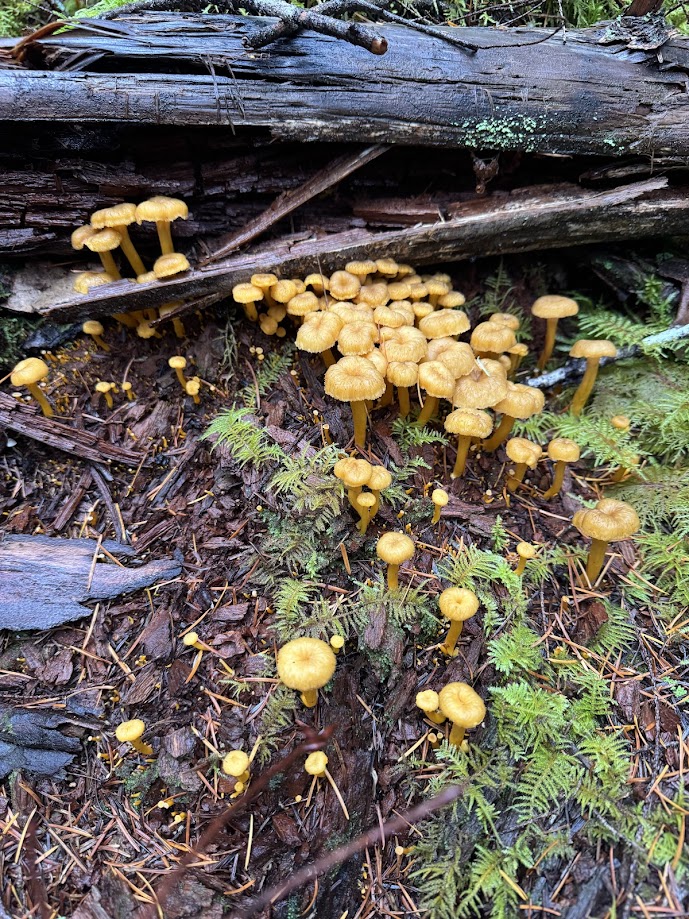
Photos: (1) Chicken of the Woods and (2) Winter Chanterelles / yellowfoots - © 2026 CascadesFieldGuide.com. All rights reserved.
Quick Decision Guide
The useful planning model is this: spring morels move uphill with snowmelt, fall mushrooms begin after meaningful rain, the west side is usually the more forgiving fall zone, and the east side is more moisture-dependent.
- Best broad fall window: September through November, with October usually the strongest month after meaningful rain.
- Best spring topic: Morels, especially where snow has recently melted and legal access is clear.
- Best beginner frame: Learn broad habitat and legal rules first. Do not start by chasing secret spots.
- Best west-side areas to understand: low-to-mid elevation forest around Concrete, Rockport, Marblemount, Baker Lake, Baker River, Newhalem, and nearby national forest zones.
- Best east-side frame: Mazama, Winthrop, Twisp, and Okanogan-Wenatchee National Forest are drier, more variable, and more tied to snowmelt, burns, pine habitat, and road access.
- Best safety rule: If you are not already confident with mushroom identification, use this guide to understand the season and landscape, not to decide what is safe to eat.
This Is Not a Mushroom ID Manual
Do not eat any wild mushroom identified only from this page, an app, a photo, or a social-media comment. Mushrooms can be dangerous or deadly when misidentified. This guide helps you understand season, habitat, legal access, and trip logistics. Identification requires field guides, training, local expertise, and conservative judgment.
This guide also avoids exact picking spots. It uses broad habitat bands and public-land rules instead of GPS points, secret patches, pullouts, or sensitive tributaries.
Mushroom Season by Month
January to February: Not a main foraging season for most visitors. In mild lower-elevation west-side forests, some cold-season wood fungi may still appear, but snow, short days, wet roads, and limited access make this more of a specialist window than a casual visitor season.
March to April: Early morel possibility begins in lower, warmer areas once snow has melted and soils warm. This is usually not a high-country Highway 20 season yet. Spring oyster mushrooms and other wood fungi can also appear in suitable hardwood settings, but beginners should not treat spring mushrooms as automatically easier.
May to June: Morels move upslope with snowmelt. Spring kings and some other boletes become more plausible in mountain conifer zones, especially on the drier side of the Cascades. This is also when roads, gates, lingering snow, and fresh storm damage can matter more than the calendar.
July to August: This is a transition season. High-country morels can linger in late snowmelt years, and summer boletes may appear, but west-side fall chanterelle season usually still needs real autumn rain. In dry years, summer can look promising in the mountains but still produce very little at lower elevations.
September: Fall mushroom season begins when meaningful rain returns. Chanterelles, lobster mushrooms, boletes, cauliflower mushrooms, matsutake, and hedgehogs become more realistic where habitat and legal access line up.
October: Usually the broadest mushroom month for the corridor. This is the main public-guide window for fall mushroom season near the North Cascades, especially in wet west-side conifer forest and low-to-mid elevation public forest zones where collecting is legal.
November: Lower, milder west-side forests can stay active if rain continues and hard freezes hold off. Yellowfoots, hedgehogs, some chanterelles, velvet foot, and other cold-season wood fungi become more relevant than high-country mushrooms.
December: Late-season foraging is mostly a lower-elevation west-side and wood-fungi topic. Higher roads can be snowy, storm-damaged, gated, or unsafe. Treat December as a local-expert season rather than a normal Highway 20 visitor plan.
How Mushroom Foraging Actually Works
Good mushroom foraging is not just walking into the woods after rain. It is a sequence of decisions: season, elevation, habitat, land manager, access, identification, harvest method, and what you do after you get home.
- Start with season. Spring is mostly morels and snowmelt. Fall is the main chanterelle, lobster, hedgehog, bolete, cauliflower, matsutake, and yellowfoot window.
- Pick a broad habitat. Think low wet forest, mid-elevation conifer forest, burn areas, hardwood riparian edges, or drier east-side pine and mixed-conifer zones.
- Confirm the land manager. National park, national forest, state land, DNR land, county land, private timberland, and tribal land do not share one rule.
- Check access before leaving. Roads, gates, fire closures, snow, washouts, and storm damage can matter more than the mushroom calendar.
- Collect conservatively. Leave unknown mushrooms, leave some behind, avoid tearing up the forest floor, and follow the manager’s cut-or-pull rules.
- Keep collections separated. Do not throw unknown mushrooms into the same bag as mushrooms you think are edible.
- Identify later, carefully. Use multiple field guides, local experts, and the whole mushroom, not just cap color.
- Eat only after certainty. A travel guide can help you understand the season and terrain. It cannot make a mushroom safe to eat.
West Side vs. East Side
West side: Concrete, Rockport, Marblemount, Newhalem, Diablo, Baker Lake, and Baker River sit in the wetter side of the corridor. This is the more obvious fall mushroom context for most visitors because rain returns earlier and lower-elevation forest can stay mild later into the year.
Baker Lake and Baker River: These are useful broad areas to understand for wet-forest fall season, especially if you are already using the Concrete or Baker Lake side of the site. Treat them as legal-access and road-condition questions, not guaranteed destinations.
Cascade River Road: This area can look promising on a map, but it is a road-access, closure, land-boundary, and wilderness-rule problem first. Do not treat random pullouts or spur roads as permission to collect. Cascade River Road also has private land, national forest, wilderness, and national park context close together. Check jurisdictions before leaving Marblemount.
Newhalem, Diablo, and Ross Lake corridor: This is a scenic, high-visitor corridor where national park complex rules matter. It is better treated as a legal-rules and low-impact learning area than as a mushroom-picking destination.
Rainy Pass and Washington Pass: High-elevation pass country has a shorter, more fragile season. It is better known for summer hikes, wildflowers, larches, and alpine scenery than as a beginner mushroom plan. Snow, parking, early freezes, and short daylight can all limit practical foraging.
East side: Mazama, Winthrop, Twisp, and the Methow side are drier and more rain-shadowed. This side can matter for morels, spring kings, boletes, pine-associated fall mushrooms, and matsutake, but timing depends heavily on local moisture, snowmelt, forest type, burn history, and legal access.
Habitat Bands to Understand
The safest way to talk about mushroom habitat is by broad forest type and elevation band, not exact pullouts or coordinates. A habitat band helps you understand the season without turning a guide into a spot list.
Low-elevation west-side forest
This is the lower, wetter forest pattern around the west side of the corridor. It can matter for fall mushrooms after rain and for late-fall or early-winter species when higher roads are snowy or frozen. Think damp conifer forest, mossy ground, valley-bottom forest, and some hardwood edges.
This is the broadest place to understand late-season yellowfoots, hedgehogs, some chanterelles, cold-season wood fungi, and the way fall mushroom season can linger after higher country has shut down.
Mid-elevation conifer forest
This is often the broadest fall mushroom band. Chanterelles, white chanterelles, lobster mushrooms, hedgehogs, cauliflower mushrooms, boletes, and other fall species can all belong in this conversation, depending on moisture, forest type, and legal access.
For a public guide, this is the most useful habitat concept: not because every mid-elevation forest produces mushrooms, but because this is where many visitors first learn how rain, duff, conifers, elevation, and road access fit together.
Higher-elevation forest edges
Higher forest and subalpine edges matter more for spring-to-summer mushrooms such as morels, spring kings, and some boletes. Snowmelt controls the calendar, and access often becomes the limiting factor.
Do not assume high-country hiking season and mushroom season are the same thing. A trail may be open while mushroom conditions are poor, or mushrooms may be present where road access, parking, or legal collecting rules make the outing impractical.
Burn areas
Burn areas are mainly a morel topic for this guide. They can be productive in some years, but they are also hazardous. Watch for closures, falling snags, hidden holes, unstable soil, washed-out roads, ash, debris-flow risk, and changing Forest Service rules.
A burn-area morel plan should be treated as a same-week access and safety decision, not a casual “go after a fire” rule. If the area is closed or the road is damaged, the answer is simple: do not go.
Hardwood logs, stumps, and riparian edges
Some mushrooms grow from wood rather than from the forest floor. Oyster-like mushrooms, chicken of the woods, velvet foot, and other wood fungi may appear on logs, stumps, dead wood, alder, cottonwood, or mixed hardwood edges.
Wood-growing mushrooms are not automatically safer. Beginners still need to learn substrate, age, underside structure, lookalikes, and condition before eating anything.
Drier east-side pine and mixed-conifer zones
On the Methow side, mushrooms are often more tied to snowmelt, thunderstorms, burn history, pine habitat, and short moisture windows. Spring kings, boletes, morels, and matsutake can all enter the conversation, but this is less forgiving for casual visitors who only know the wetter west-side fall pattern.
Common Mushrooms Visitors Ask About
This is not an identification list. It explains common visitor questions, not whether a mushroom in your hand is safe to eat.
More beginner-relevant, but still require further ID before consumption
Golden chanterelles and white chanterelles
Golden chanterelles and white chanterelles are among the mushrooms most commonly associated with fall foraging on the wetter west side of the North Cascades. They still require careful identification, and you should confirm that mushroom gathering is allowed where you find them.
Beginners should examine the entire mushroom—including its cap, underside, stem, growth pattern, and surrounding habitat—and learn to distinguish chanterelles’ ridges from true gills. Color alone is not enough for a reliable identification.
Lobster mushrooms
Lobster mushrooms stand out in fall forests because of their vivid orange-red color and irregular shape. Condition matters as much as identification: leave mushrooms that are old, soft, waterlogged, moldy, or heavily damaged by insects. These ones tend to rot from the bottom up.
Hedgehog mushrooms
Hedgehog mushrooms are also associated with fall foraging in the region. They are named for the small, toothlike spines beneath their caps rather than gills, pores, or ridges. Although this is a distinctive feature, careful identification is still necessary.
Cauliflower mushrooms
Large, ruffled clusters make cauliflower mushrooms one of the more recognizable forest mushrooms. Recognizable, however, is not the same as safely identified. Confirm the species carefully, and check its age, cleanliness, and overall condition before harvesting it.
Worth knowing about, but not beginner-first
Morels
Morels are the main spring mushroom. They follow snowmelt and can appear in disturbed or burned landscapes, but burn-area foraging is not casual. Check closures, roads, and hazard-tree warnings first.
Several morel types exist. Morels also require careful identification and preparation knowledge. Do not treat spring mushrooms as automatically safe because they are common in foraging discussions.
Spring kings, porcini, and other boletes
Spring kings and other boletes can be important in mountain conifer areas, especially on the drier side of the Cascades. They are more specialized than ordinary visitor content should imply. Beginners need to learn pores, staining, texture, habitat, age, and lookalikes before eating any bolete.
Chicken of the woods
Chicken of the woods is a wood-growing mushroom visitors may notice because of its color and shelf-like growth. It can appear in late summer or fall depending on conditions, but edibility can depend on tree species, age, condition, and individual tolerance. This is a learn-with-experts mushroom, not a casual “bright orange equals dinner” mushroom.
Oyster-like mushrooms and velvet foot
Oyster mushrooms and velvet foot grow on wood and may appear in spring, fall, or during mild winter weather. Correct identification requires more than general appearance: consider the type of wood, growth pattern, age, and condition, and be aware that dangerous lookalikes exist.
Yellowfoot / winter chanterelles
Yellowfoots, also called winter chanterelles, may appear from late fall into winter in damp, lower-elevation conifer forests of the Pacific Northwest. Despite the name, they are not simply late-season versions of the larger chanterelles found earlier in fall. They require separate identification skills and are better learned with experienced identifiers than treated as an easy beginner harvest.
Matsutake
Matsutake is a specialized fall, pine-associated mushroom with cultural, commercial, and identification complexity. Special regulations often apply to this species, so research the rules before foraging them. This one requires extra caution as they are more difficult to properly identify and have dangerous lookalikes.
Legal Mushroom Picking Near Highway 20
The biggest legal mistake is assuming that “public land” has one mushroom rule. It does not. Highway 20 visitors can move between national park, national forest, state, county, conservation, private timber, and tribal lands without realizing the rules changed.
North Cascades National Park Complex
North Cascades National Park Complex rules are listed in the park’s Superintendent’s Compendium. The current compendium says edible fungi must be cut, not pulled. The same section clearly lists a one-liter / one-quart daily limit for edible fruits and berries, but the current page does not clearly display a separate mushroom quantity limit.
Practical takeaway: if you plan to collect edible fungi inside the park complex, verify the current compendium wording and confirm quantity limits directly with the park before collecting.
Mount Baker-Snoqualmie National Forest
For west-side forest areas near Baker Lake, Baker River, Cascade River Road, and nearby national forest land, check the Mt. Baker-Snoqualmie special forest products page. Current forest guidance lists personal mushroom gathering under free-use personal permits, with a free-use limit of five gallons per year, per household, assuming you get a permit first. If you collect on Mt. Baker-Snoqualmie National Forest land, carry the required permit or written authorization, follow the district’s current terms, and ask about closed areas when you obtain the permit.
Gathering is prohibited in certain areas, including legislated wilderness, research natural areas, experimental forests, and other closed areas. That matters near the Highway 20 corridor because forest roads, wilderness boundaries, and park boundaries can sit close together.
Okanogan-Wenatchee National Forest
For the Methow and east-side context, check the Okanogan-Wenatchee forest product permits page. Current guidance says personal mushroom harvest up to five gallons per day is free, but collectors must carry the free Incidental Use Mushroom Information Sheet.
Practical takeaway: do not assume the west-side national forest rule and the east-side national forest rule are the same. Check the forest you are actually on.
Washington State Parks, DNR lands, county lands, conservation lands, private timberland, and tribal lands
These should be treated as verify-first. Do not assume a state park trail, county park, land-trust property, river access, timber road, or pullout allows mushroom collection. Some places are open for walking but not collecting. Others may be private or seasonally closed.
If you cannot identify the land manager, do not collect.
Beginner Identification Basics
Before eating wild mushrooms, beginners need to learn more than names. Learn the difference between true gills, false gills, pores, teeth, ridges, rings, volvas, stem texture, bruising, substrate, spore color, and host trees.
Good identification uses the whole mushroom: cap, underside, stem, stem base, age, surrounding forest, what it grows from, and what else is nearby. Photograph the top, underside, stem, base, and habitat before disturbing it.
Learn to ask better questions:
- Is it growing from soil, wood, moss, duff, a stump, buried wood, or burn soil?
- Is the underside made of gills, ridges, pores, teeth, or something else?
- Is the stem hollow, solid, brittle, fibrous, smooth, scaly, ringed, or bulbous?
- What trees are nearby?
- Is the mushroom young, mature, old, waterlogged, bug-damaged, or decaying?
- Does the mushroom bruise or stain when handled?
- What do multiple field guides and experienced local identifiers say?
Do not mix unknown mushrooms into an edible collection. Do not assume cooking makes a poisonous mushroom safe. Do not serve wild mushrooms to other people unless you are absolutely certain what they are and they understand the risk.
What to Bring
- Offline map or paper map: cell service is unreliable away from towns and main corridor stops.
- Permit or printed rule sheet: carry whatever the land manager requires.
- Knife: useful for clean harvest and minimizing ground disturbance where cutting is required or recommended.
- Basket, mesh bag, or breathable container: keeps mushrooms from getting crushed or slimy.
- Separate bags: keep different mushrooms separated until identified.
- Notebook or phone notes: record habitat, tree species, elevation band, and where the mushroom was growing.
- Rain gear and waterproof footwear: west-side fall mushroom season often means wet forest and muddy roads.
- High-visibility clothing: fall mushroom season can overlap with hunting seasons on nearby public lands.
- Headlamp and turnaround time: short fall days and forest-road confusion can turn a casual outing into a problem.
- Basic emergency kit: water, food, layers, first aid, and a way to get back if the road or trail is confusing.
How to Harvest Responsibly
- Do not rake, dig, or tear up the forest floor.
- Follow the land manager’s cut-or-pull rule.
- Leave old, tiny, damaged, or unknown mushrooms.
- Leave some mushrooms behind for wildlife, spores, and other visitors.
- Keep species separated until identification is certain.
- Do not dump unknown mushrooms into a shared cooking pile.
- Pack out trash, food wrappers, and broken gear.
- Do not block gates, private roads, driveways, pullouts, or emergency access.
- Do not sell, barter, or trade mushrooms collected under personal-use rules.
- Do not post exact locations for fragile, crowded, or sensitive areas.
After You Collect: What Happens at Home Matters
Many mistakes happen after the walk, not during it. People mix collections, forget habitat details, rush identification, or cook mushrooms they are not fully certain about.
- Re-check every mushroom individually before cooking.
- Discard anything old, slimy, moldy, bug-damaged, or uncertain.
- Keep a small sample or clear photos if you eat wild mushrooms, especially when serving a group.
- Try only a small amount the first time even with a correctly identified edible species, because some people react poorly to mushrooms others tolerate.
- Never mix unknown mushrooms into soup, sauces, stir-fries, dehydrators, or shared meals.
If someone becomes ill after eating wild mushrooms, call Poison Help at 1-800-222-1222. If someone has trouble breathing, seizures, collapse, severe symptoms, or cannot be awakened, call 911.
Before You Drive Out
Check current conditions, WSDOT, NPS alerts, and the relevant Forest Service pages before committing to a mushroom outing. A good season does not matter if the road is closed, the burn area is restricted, the forest road is washed out, or the land manager does not allow collecting where you planned to go.
Handle fuel, food, restrooms, and phone downloads before leaving the service towns. Concrete is the stronger full-service west-side stop, Marblemount is the practical west-side staging point, and Winthrop is the upper-valley reset point for the Methow side.
A useful pre-drive checklist:
- Is the highway open for the route you expect?
- Is the side road open, gated, washed out, snowy, or restricted?
- Which land manager controls the exact area?
- Do you need a permit, free-use sheet, parking pass, or printed rule page?
- Are you entering a wilderness area, research natural area, closed burn area, or private timberland?
- Do you have offline maps and enough fuel to turn around?
- Is it hunting season, storm season, smoke season, or early snow season?
What Not to Do
- Do not eat mushrooms identified only by an app or photo.
- Do not collect where the land manager is unclear.
- Do not assume national park, national forest, state park, DNR, county, tribal, and private land rules are the same.
- Do not enter closed burn areas, gated roads, or active work zones.
- Do not block roads, gates, trailheads, driveways, or emergency access.
- Do not turn mushroom season into a secret-spot hunt on fragile public lands.
- Do not assume a mushroom is safe because someone online used the same common name.
- Do not serve wild mushrooms to guests unless you are fully confident and they understand what they are eating.
FAQ
When is chanterelle season near Highway 20?
Usually fall, especially after meaningful rain. September can start the season, October is usually the strongest broad month, and lower west-side forests can continue into November in mild years.
What are winter chanterelles?
Winter chanterelles, often called yellowfoots, are a late-fall into winter mushroom in damp Pacific Northwest forest settings. They are smaller and more specialized than the larger fall chanterelles most beginners hear about first. Treat them as a learn-with-experts mushroom, not a casual beginner target.
Can I pick mushrooms in North Cascades National Park?
The park compendium currently says edible fungi must be cut, not pulled. The page clearly lists a one-liter / one-quart daily limit for edible fruits and berries, but it does not clearly display a separate mushroom quantity limit. Verify the current compendium and confirm mushroom limits with the park before collecting.
Do I need a permit in Mount Baker-Snoqualmie National Forest?
Current Mt. Baker-Snoqualmie guidance lists mushrooms under free-use personal permits, with a free-use limit of five gallons per year, per household. Do not assume this means “no permit.” Check the current Forest Service page and district guidance before collecting.
Do I need a permit on the Methow side?
On Okanogan-Wenatchee National Forest, current guidance says personal mushroom harvest up to five gallons per day is free, but collectors must carry the free Incidental Use Mushroom Information Sheet. Check current forest guidance before collecting.
Where are the best mushroom spots?
This guide does not share exact spots. Use broad habitat, legal rules, and safe learning practices instead.
Can beginners use this guide to identify edible mushrooms?
No. This is a trip-planning and safety guide. Use field guides, local classes, mycological societies, and experienced identifiers before eating anything you collect.
What should I do if someone gets sick after eating wild mushrooms?
Call Poison Help at 1-800-222-1222. If someone has trouble breathing, seizures, collapse, severe symptoms, or cannot be awakened, call 911.