Dispersed Camping Near North Cascades: Legal Checklist and Safer Setup
Last updated: July 2026
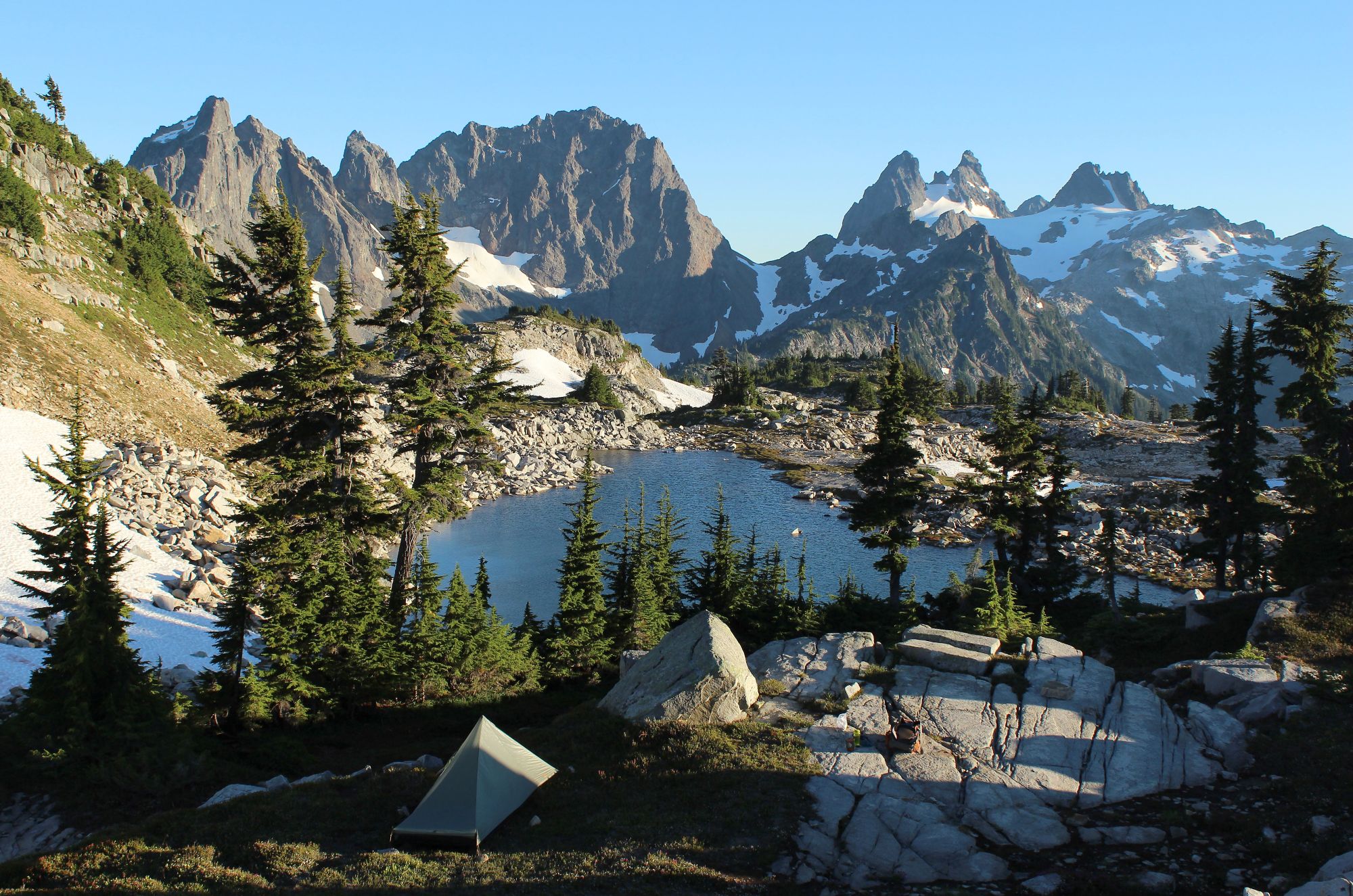
Attribution: U.S. Forest Service
Dispersed camping can save a North Cascades trip when developed campgrounds are full, but it is not the easy fallback many visitors imagine. The first question is not “where is a nice pullout?” It is whether you are on land where dispersed camping is legal, whether the road is open to your vehicle, and whether fire, waste, water, and overnight parking rules make the spot usable.
Get road, closure, and fire updates before your trip
Quick Answer: Can You Dispersed Camp Near North Cascades?
Yes, but not everywhere. Dispersed camping is not allowed inside the North Cascades National Park Complex. It may be possible on nearby National Forest land where camping, road access, and overnight use are not restricted, but you need to verify the exact land manager and current rules before you commit. Check out our map to get a better understanding of who manages the land.
- Inside the park complex: Not allowed - use designated campgrounds or designated backcountry campsites only. Do not treat a roadside pullout as a campsite. This includes North Cascades National Park as well as Ross Lake & Lake Chelan National Recreation Areas
- On nearby National Forest land: Conditionally allowed - allowed where not prohibited by closure orders, site-specific restrictions, road rules, or fire restrictions. Your best easy bets are the Baker Lake area and on Bacon Creek Road closer to the National Park, but others exist.
- On state, utility, or private land: Not allowed - do not assume camping is legal just because a road or pullout looks unused. This could end up with you being kicked out after you set up camp.
- If you are arriving late: Do not drive unknown forest roads in the dark looking for a spot. Use a developed campground, a known legal backup, or a lodging fallback instead. Check out our Where to Stay guide for more resources.
Safer Alternatives If This Feels Too Uncertain
Dispersed camping is best for people who can verify land rules, handle rougher roads, bring their own water, pack out trash, manage human waste, and change plans before dark. If that does not describe this trip, use one of these guides instead.
The Legal Checklist Before You Camp
Before you use any dispersed site near the North Cascades, you should be able to answer all of these questions confidently.
- Am I outside the North Cascades National Park Complex? NPS says overnight camping or parking is only allowed in designated campgrounds or campsites, and there is no dispersed camping in the park complex (NPS camping information).
- Who manages this land? National Forest, National Park, state land, private land, and utility land can sit close together in this corridor. The rules are not interchangeable. Check out our map to get a better understanding of who manages the land.
- Is this road open to motor vehicles? Use the Forest Service Motor Vehicle Use Map for the relevant National Forest, not just a map app or a social-media pin (USFS maps and MVUM information).
- Is there an active closure order? Forest roads, fire areas, hazard-tree zones, flood-damaged roads, and camp areas can close even where dispersed camping is normally allowed (Mt. Baker-Snoqualmie National Forest alerts).
- Do current fire restrictions allow your setup? Assume campfires may be banned during dry periods and verify before lighting anything (Washington DNR burn restrictions).
- Can you handle water, trash, and human waste? If not, use a developed campground.
- Do you have a Plan B before dark? If the road is rough, the pullouts are occupied, or the rules are unclear, stop searching and switch plans.
If you cannot answer “who manages this land?” and “is this exact road legal for my vehicle?” use a developed campground instead.
Where Dispersed Camping Is Not Allowed
The most important boundary is the park complex boundary. North Cascades National Park, Ross Lake National Recreation Area, and Lake Chelan National Recreation Area are managed by the National Park Service as the North Cascades National Park Complex. Do not assume that “public land” near SR 20 means dispersed camping is allowed.
- Do not dispersed camp inside the park complex. Use designated frontcountry campgrounds or designated backcountry campsites with the required permit.
- Do not sleep in random roadside pullouts along the park corridor. A scenic turnout, trailhead, or wide shoulder is not automatically an overnight campsite.
- Do not camp on private, state, or utility land unless overnight use is clearly allowed. The SR 20 corridor includes mixed ownership, and visual cues are not enough.
- Do not use closed roads, gates, or work areas. If a road is gated, signed closed, blocked, or not shown as open to your vehicle class, treat it as unavailable.
Where It May Be Allowed Nearby
Dispersed camping is most realistically a nearby National Forest question, not a national park question. On National Forest land, dispersed camping may be allowed outside developed campgrounds where there is no closure order, no local restriction, and the road is legal for your vehicle. You still need to verify the exact place before you use it.
On the west side of the corridor, two areas visitors often research are the Baker Lake area, Bacon Creek Road and the National Forest portions of Cascade River Road. These can be reasonable places to investigate carefully, but they should not be treated as guaranteed campsite directories. Some stretches, spurs, pullouts, or nearby lands may be closed, already occupied, private, or otherwise unsuitable.
- Baker Lake area and Bacon Creek Road: treat these as National Forest road-corridor research zones. Check current road status, MVUM access, fire restrictions, and closure orders before relying on it.
- Cascade River Road: only consider places that are clearly outside the park complex and on land where dispersed camping is allowed. Only camp past the National Forest sign but before the National Park sign. Cascade River Road is also an access road for major trailheads and developed campgrounds, so do not block pullouts, gates, driveways, trailhead access, or turnarounds.
- Do not use a map pin alone. A pin can be outdated, illegally placed, on the wrong side of a boundary, or unusable because of a closure or fire restriction.
- Use developed Forest Service campgrounds when you want less uncertainty. If your actual goal is just a legal place to sleep near Marblemount or the Cascade River Road corridor, a developed campground is often a better answer. Here are some backup options.
Who Should Skip Dispersed Camping
Dispersed camping is not the best fallback for every North Cascades visitor. Skip it if your group needs predictability more than solitude.
- Late arrivals: searching unknown forest roads after dark is how people get stuck, choose illegal spots, or miss better backup options.
- Families who need bathrooms: use a developed campground, RV park, cabin, or hotel instead.
- Large RVs, trailers, or low-clearance vehicles: many forest roads and turnouts are not forgiving.
- Visitors without water, trash capacity, or a waste plan: dispersed sites do not solve those problems for you.
- Anyone depending on cell service: coverage fades quickly in the corridor and can disappear entirely on side roads.
- Anyone unsure about boundaries: if you cannot tell whether you are on National Forest, National Park, state, private, or utility land, do not camp there.
How to Choose a Lower-Risk Site
The safer dispersed site is usually not the deepest, quietest, most scenic place you can find. It is the legal, durable, already-impacted spot you can use without damaging resources, blocking access, or getting trapped by road conditions.
- Use already-impacted sites. Choose existing hardened pullouts or clearings instead of creating a new site.
- Avoid soft shoulders. Wet shoulders, ditches, and loose edges can strand vehicles, especially in spring and fall.
- Keep roads, gates, and turnarounds open. Fire crews, road crews, rangers, residents, and other visitors need room to pass and turn around.
- Stay back from streams and rivers. Camping right on the water increases erosion, sanitation risk, and wildlife impacts.
- Do not rely on fire rings as proof. An existing fire ring does not mean the site is legal or that fires are currently allowed.
- Be willing to leave. If a site is trashed, crowded, muddy, too close to water, or unclear legally, move on before you unpack.
Fire, Waste, Water, and Road Rules
- Fire: do not assume campfires are allowed. Fire restrictions can change quickly by season, district, elevation, and land manager. Check the current managing-agency restriction and Washington burn restrictions before you light anything (WA DNR burn restrictions).
- Human waste: Leave No Trace recommends catholes 6 to 8 inches deep and at least 200 feet from water, camp, and trails, unless local rules require packing out waste instead (Leave No Trace waste guidance).
- Trash: pack out everything, including food scraps, cans, foil, wipes, toilet paper, broken gear, and trash left by previous users when you can safely remove it.
- Water: bring your own water or have a treatment plan. Do not assume streams are safe, nearby, or easy to access.
- Stay limits: Mount Baker-Snoqualmie National Forest has camping restriction rules for time spent outside developed campgrounds. Verify the current order before relying on any long-stay assumption (USFS MBS camping restrictions).
- Road legality: Motor Vehicle Use Maps are the official source for which Forest Service roads are open to motorized travel. A road appearing in a navigation app does not prove it is open or legal for your vehicle.
- Noise and generators: dispersed sites are not private campgrounds. Keep noise low, especially near other pullouts or late at night.
- Pets: keep dogs controlled so they do not run through other camps, harass wildlife, or create conflict.
What to Check Before Losing Cell Service
Do this before you leave the last reliable service area, not after you are already on a side road.
- Download offline maps for the corridor and your chosen forest-road area.
- Save or download the relevant MVUM / official Forest Service map.
- Check NPS camping rules if you are anywhere near the park complex boundary.
- Check Forest Service alerts and closure orders.
- Check current fire restrictions and burn bans.
- Fill fuel before you commit to a side road.
- Buy water, food, and any needed toilet/waste supplies.
- Identify your Plan B campground, town, or lodging option before dark.
- Tell someone your rough area if you are heading onto a lower-traffic road.
When to Stop Searching and Use Plan B
The biggest dispersed-camping mistake near the North Cascades is continuing deeper because the first few options did not work. Set a limit before you start searching.
- Use Plan A only if you already have legal zones identified. Do not arrive with only a vague idea that “there is forest land somewhere nearby.”
- Stop after 45 to 60 minutes. If you have not found a clearly legal, safe, durable site within that window, switch plans instead of driving deeper.
- Stop earlier if road quality gets worse. If you are worried about clearance, mud, washouts, turnaround space, or darkness, leave while leaving is still easy.
- Use a developed option if anyone in your group is tired, cold, hungry, or stressed. Those are the conditions that lead to bad site choices. Here are some backup options.
A legal developed campground, private campground, RV park, cabin, or hotel is a better backup than an improvised illegal campsite.
Common Mistakes That Get People Ticketed or Stuck
- Assuming “near the park” means “legal to camp.” It does not.
- Confusing National Forest rules with National Park rules.
- Treating Bacon Creek Road or Cascade River Road as guaranteed camping areas instead of places to research carefully.
- Driving past a good-enough legal spot while searching for a perfect one.
- Entering rough side roads after dark without knowing where they go.
- Blocking gates, road edges, driveways, or turnarounds.
- Camping too close to streams or rivers.
- Assuming an old fire ring means fires are allowed.
- Forgetting that trash, toilet paper, food scraps, and wipes all need to leave with you.
- Waiting until cell service is gone to check rules, road status, or backup options.
Official Sources to Check
- NPS - Camping in the North Cascades National Park Complex
- USFS - Mt. Baker-Snoqualmie National Forest maps and MVUM information
- USFS - Mt. Baker-Snoqualmie National Forest alerts and closure orders
- USFS - Mt. Baker-Snoqualmie National Forest camping restrictions
- Washington DNR - Burn restrictions
- Leave No Trace - Dispose of waste properly
- U.S. Forest Service photo source
Rules and restrictions can change by season, district, road, and active closure order. Before you camp, confirm the land manager, current restrictions, fire rules, and road legality using official NPS and Forest Service sources.