North Cascades Highway Seasonal Access Tracker: Is SR 20 Open in 2026?
Last updated: August 2026
Use this page to interpret seasonal access on the North Cascades Highway, also called SR 20. Do not treat “open” as one universal verdict. The answer depends on where you are starting, which direction you are traveling, and whether you need the highway to work as a complete west-to-east crossing.
Start with the Current Conditions banner at the top of the page. If an SR 20 pass closure is listed, the highway is not open as a full crossing. If no SR 20 pass closure is listed during the normal summer operating season, the seasonal through-route is open. WSDOT remains the official authority for the road itself.
Start Here: Four Different SR 20 Verdicts
Before interpreting the word “open,” identify your origin and the trip you are actually trying to make. These are four separate access questions:
- West-side corridor: If you are coming from Seattle, Skagit County, Concrete, Rockport, or Marblemount, you may still be able to reach west-side destinations such as Newhalem or Diablo when the full crossing is closed. The closure point determines how far the trip works.
- Methow Valley destination: Winthrop, Mazama, Twisp, and the wider Methow Valley can remain open and reachable from the east or south even when SR 20 is closed across the mountains. A closed crossing is not a closed Methow Valley.
- Pass country from the east: Travelers already in the Methow may sometimes be able to drive partway west toward Rainy Pass or Washington Pass before the full crossing opens. The reachable endpoint changes, so check the current closure details before choosing a trailhead, overlook, or campground.
- Full west-to-east crossing: A Seattle-to-Winthrop drive over SR 20, an east-to-west crossing, or a complete Cascade Loop route requires the highway to be open continuously across the seasonal pass segment.
If your itinerary combines several of these trip types, use the strictest verdict. A road that works for a Methow stay or a west-side day trip may still fail as a complete cross-mountain route.
How to Read the Current Conditions Banner
- If the banner lists an SR 20 pass closure: Treat the full west-to-east crossing as closed. Open Current Conditions and the WSDOT pass report to see what remains reachable from each side.
- If the banner does not list an SR 20 pass closure: During the normal summer operating season, the highway is open as a full seasonal crossing. Check WSDOT before departure for short-term incidents, restrictions, or changes.
- Do not extend the highway verdict to everything nearby: An open SR 20 does not confirm that high trails, side roads, campgrounds, parking areas, or visitor facilities are open or snow-free.
Use WSDOT’s North Cascades Highway pass report as the live road authority. Use Current Conditions for the practical trip interpretation, including what the status means for destinations, side roads, weather, smoke, and backup plans.
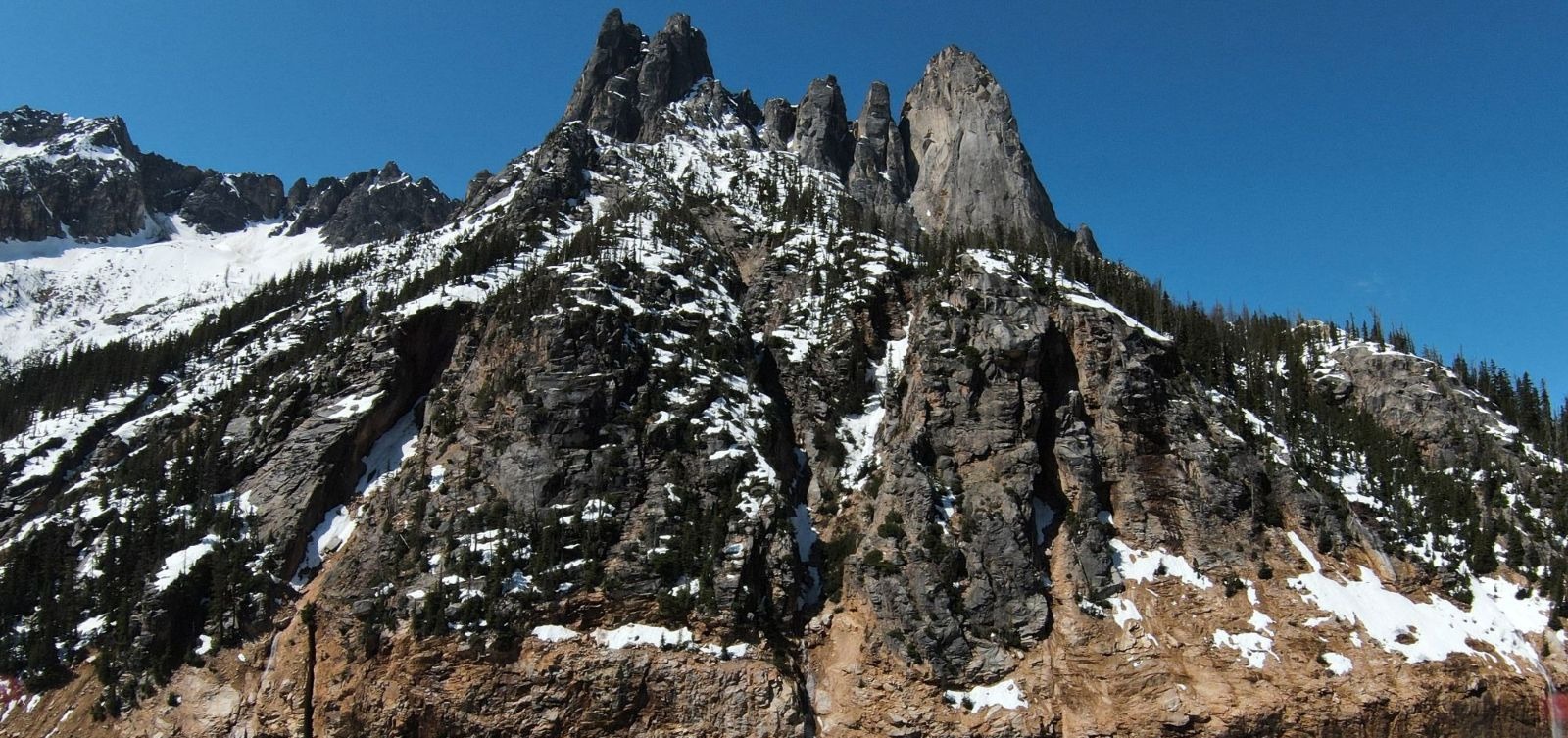
Liberty Mountain from Washington Pass / Photo: © 2026 CascadesFieldGuide.com. All rights reserved.
Get weekly North Cascades trip updates before you commit to a spring, early summer, fall, or closure-sensitive Highway 20 plan.
What “Open” Actually Means
“Open” only becomes useful after you attach it to a direction and destination. The same closure can produce very different answers for a west-side visitor, a Methow traveler, and someone trying to drive all the way across the mountains.
- Coming from the west: A closure farther east may still leave Newhalem, Diablo, or other west-side stops reachable. That does not make Washington Pass or a Seattle-to-Winthrop crossing available.
- Coming from the east or south: A seasonal pass closure does not normally prevent a separate Methow Valley trip. Winthrop, Mazama, and Twisp should be evaluated as destinations reached from the east or south, not only as the far end of a west-origin Highway 20 crossing.
- Heading west from the Methow: Partial east-side access may make some mountain-corridor destinations reachable before the full crossing opens. Do not assume a specific endpoint from evergreen guidance; use the current closure information.
- Driving the complete highway: The route is open as a through-drive only when there is continuous access between the west-side corridor and the Methow Valley.
A useful status statement should therefore answer two questions: “From which side?” and “Open for what trip?”
The Methow Valley Is a Separate Destination
The annual North Cascades Highway closure interrupts the cross-mountain route. It does not close the communities, lodging, restaurants, services, and recreation areas of the Methow Valley.
If you plan to reach the Methow from Seattle or Skagit County by driving east over SR 20, you need a confirmed full crossing. If you are approaching from the east or south, the full North Cascades crossing is not required for a Methow trip.
Start with the Methow Valley guide, then choose the town that fits the trip:
- Winthrop: Best general-purpose base for the widest mix of lodging, dining, visitor services, and mixed-interest trips.
- Mazama: Best outdoor-first base for visitors prioritizing the upper valley and the east approach toward pass country.
- Twisp: Useful for valley services, longer stays, arts and community stops, and trips that do not depend on crossing the pass.
When the crossing is closed, keep these links visible. The correct conclusion is often “change the approach or trip shape,” not “cancel the Methow Valley.”
Recent SR 20 Opening and Closing History
Recent history helps define the normal planning window for the full cross-mountain route, but it is not a prediction. Snowpack, avalanche work, rockfall, washouts, culverts, road damage, and emergency repairs can all change the opening or closing date.
Important: These dates describe the seasonal through-route across the mountains. They do not describe whether the Methow Valley itself was open to visitors from the east or south.
- 2025: Opened April 22 and closed Dec. 4.
- 2024: Opened April 19 and closed Nov. 18.
- 2023: Opened May 11 and closed Nov. 30.
- 2022: Opened May 10 and closed Nov. 3.
- 2021: Opened May 5 and closed Nov. 15.
- 2020: Opened May 12 and closed Nov. 16.
- 2019: Opened April 18 and closed Dec. 11.
The recent record supports a practical rule: April openings happen, May openings are common, and June gives more certainty for visitors building a trip around the full crossing. High-elevation trail conditions can remain wintry after the road opens.
Seasonal Access Calendar
This calendar describes the usual full-crossing pattern. West-side corridor trips and Methow Valley trips follow different access logic and can remain viable when the seasonal pass segment is closed.
- March: Usually too early for a full SR 20 crossing. Plan the west-side corridor and the Methow Valley as separate destinations reached from opposite sides.
- April: A full opening is possible in some years but too uncertain for a must-work cross-state itinerary. Methow trips from the east or south do not depend on the full crossing.
- May: A common opening window. Early May can still be uncertain, and high trails may remain snowy even after through-access returns.
- June: Better for full Highway 20 planning, although early June can still be too soon for some high-elevation hikes, side roads, and campgrounds.
- July through September: The strongest general window for the full crossing, Washington Pass stops, high trailheads, and trips that combine the west-side corridor with the Methow Valley.
- October: Often still open for through-travel, but weather changes faster and early snow can affect high roads and trails.
- November: Closure risk rises. Do not build a fragile cross-mountain itinerary around late-season access. West-side and Methow trips can still be planned separately.
- December through February: Treat the high pass as closed to through traffic. Use a west-side winter plan or approach the Methow Valley from the east or south for a separate winter destination trip.
For a broader month-by-month trip decision, use the Best Time to Visit North Cascades guide.
Why Opening Changes
North Cascades Highway crosses high avalanche terrain between the west-side park corridor and the Methow Valley. The seasonal route is not simply waiting for visible snow to melt. Crews must clear snow, manage avalanche hazards, remove debris, inspect the roadway, and repair damage before through-traffic can safely resume.
Common mistake: Do not assume a warm spring in Seattle, the Skagit Valley, or the Methow Valley means the cross-mountain segment is ready. Rainy Pass and Washington Pass are much higher and can hold winter conditions long after the gateway towns feel like spring.
Some years are mainly snow-clearing years. Others involve rockfall, washouts, damaged shoulders, culverts, flooding, or emergency repairs. A partial reopening from one side may happen before the road works as a complete crossing.
That is why the exact closure endpoints matter. The road can support a west-side trip, a Methow trip, or some east-side mountain access without yet supporting a continuous drive across the Cascades.
What Opening Does Not Mean
Opening the highway does not mean every trail, side road, campground, parking area, or viewpoint is fully ready. It means the seasonal highway segment is available to traffic under the current rules.
This is where people misjudge the corridor: A road can be open while nearby trails are still covered by snow. Rainy Pass, Washington Pass, Maple Pass, Blue Lake, and other high trailheads can lag behind the highway opening by weeks. Check the park weather guide and current trail information before treating an early-season opening as full summer access.
Campgrounds and side roads follow their own timelines. A full SR 20 opening does not automatically mean Cascade River Road, Thornton Lakes Road, Hidden Lake Road, Harts Pass Road, or other high-elevation access roads are ready.
Services also depend on your direction. Westbound and eastbound travelers should plan fuel, food, restrooms, and turnaround options before entering the remote middle of the corridor. West-side travelers can use the last gas and supplies guide. Methow travelers should use the Methow Valley guide and the relevant town page.
Choose the Right Plan for Your Route
Full-crossing plan: Use this when your itinerary requires a continuous drive between the west-side corridor and the Methow Valley. This includes a Seattle-to-Winthrop drive over SR 20, an east-to-west crossing, and a complete Cascade Loop route.
For a simple route after the road is fully open, use the North Cascades Highway One-Day Itinerary.
West-side corridor plan: Use this when you are approaching from Seattle or Skagit County and do not need to cross the mountains. Build the day around the destinations west of the current closure point, then use a west-side backup if the reachable corridor is shorter than expected.
Methow Valley destination plan: Use this when Winthrop, Mazama, Twisp, Pearrygin Lake, or another Methow destination is the trip itself. Approach from the east or south when the cross-pass route is closed. Do not describe the valley as closed simply because it cannot be reached from the west over SR 20.
Pass-country-from-the-east plan: Use this only after checking the current eastern closure endpoint. Partial access may support some scenic stops, trailheads, or campgrounds, but the available reach changes and should not be promised in evergreen copy.
Postpone or replace the plan: Do this when the specific destination you want sits beyond the reachable endpoint or when your itinerary only works as a complete crossing. Use the North Cascades backup plans guide to choose a route-appropriate alternative.
What to Check Before You Leave
- Current Conditions banner: If it lists an SR 20 pass closure, the full crossing is closed. Open the linked conditions page for the practical interpretation from each side.
- WSDOT pass report: Use the North Cascades Highway pass report as the official current highway source.
- WSDOT opening and closure history: Use the historic opening and closing dates for long-term seasonal context.
- Park road conditions: Check NPS road conditions for park-managed roads and related access notes.
- Cascade River Road: If your west-side or backup plan involves Cascade Pass, check Cascade River Road separately.
- Weather and high-country conditions: Check the park weather guide and a current forecast before treating the pass as a summer drive or assuming the trails are ready.
- Your actual approach: Confirm whether you are traveling from the west, approaching the Methow from the east or south, heading west from the Methow, or attempting the full crossing. The same road notice can produce a different answer for each trip.
Related Guides
This guide explains how to interpret SR 20 access; it is not a live road-control source. Use the Current Conditions banner and WSDOT for today’s status. A closed cross-mountain route does not mean the Methow Valley is closed as a destination.