Methow Valley Without Hiking: Scenic Stops, Towns, Lakes, and Easy Days
Last updated: August 2026
You do not need a substantial hike to build a worthwhile Methow Valley day. The best choice depends on how much walking you actually want, whether you prefer scenery, arts, history, water, or town time, and what remains practical when heat, smoke, rain, seasonal access, or limited hours change the plan.
Winthrop is the broadest first-time choice, Twisp is strongest for arts and poor-weather flexibility, Mazama works best as a quiet upper-valley stop, and Pearrygin offers the clearest developed public lake day.
Get the North Cascades weekend planning update before your Methow Valley trip.
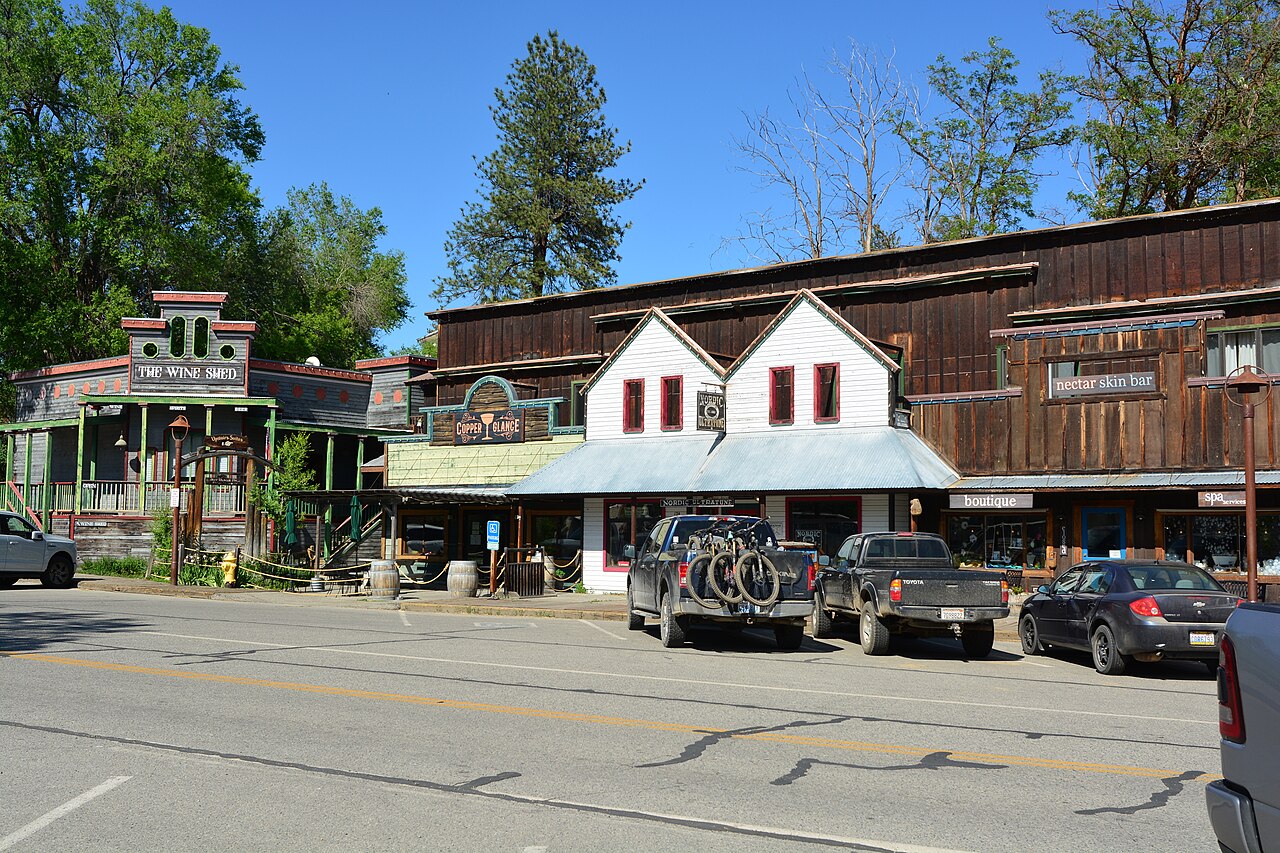
Photo: Buildings on Riverside Avenue, Winthrop, Washington | CC 4.0
For overlooks, visitor centers, scenic stops, and easy walks on the west side and across the broader Highway 20 corridor, use the North Cascades Without Hiking guide.
Quick Decision Guide
- Almost no walking and the largest mountain view: Use the initial Washington Pass Overlook viewpoint when SR-20 is open and a designated parking space is available.
- Best all-around low-effort town day: Choose Winthrop for food, history, riverfront stops, the fish hatchery, and flexible town time.
- Best arts or poor-weather day: Choose Twisp, but confirm at least one gallery, interpretive center, or studio before leaving.
- Best developed public lake day: Use Pearrygin Lake State Park rather than assuming every Methow lake has equivalent public facilities.
- Quiet upper-valley scenery: Visit Mazama for food and scenery, adding the Tawlks–Foster bridge only when the group is comfortable with an approximately two-mile walk.
Choose the Town and Walking Load
Winthrop: Best broad first-time choice
Winthrop has the widest collection of low-effort visitor options. A day can combine a meal, downtown wandering, Shafer Historical Museum, the Winthrop National Fish Hatchery, Homestream Park, or a return to the lodging without requiring a long drive between every stop.
Choose Winthrop when the group has mixed interests or uncertain energy. It is easier to shorten the day here than in Mazama, and the town provides more practical backup when one seasonal attraction is closed.
Do not assume the entire downtown route is barrier-free. Boardwalks, street crossings, parking surfaces, curbs, heat, snow, and ice can change how easy the experience feels.
Twisp: Best arts and poor-weather base
Twisp is the strongest choice when arts, culture, food, and practical services matter more than western-themed sightseeing. TwispWorks, the Methow Valley Interpretive Center, The Confluence, public art, and food can form a useful half-day.
The individual pieces maintain separate schedules. Build the day around one confirmed open attraction, then treat the rest of Twisp as flexible additions.
Mazama: Best as a quiet upper-valley stop
Mazama works well for food, a scenic drive, quiet lodging, and an optional river walk. It does not have enough independent attractions to function like Winthrop or Twisp on a day when several activities are needed.
Use Mazama as the destination when the group genuinely wants a slower day. Do not drive there expecting a dense collection of museums, shops, or indoor weather backups.
Sun Mountain: Best property-centered pattern
Sun Mountain can work for visitors who want scenery, dining, lodging downtime, lake access, or reserved activities concentrated around one property.
Public trails, hotel facilities, restaurants, spa appointments, lake equipment, and guest amenities are separate products. Confirm what is available to non-guests and what requires lodging, payment, or a reservation.
Decide what “without hiking” means
- Almost no walking: Scenic driving, the initial Washington Pass viewpoint, a meal, a property view, or a short vehicle-side stop.
- A few hundred feet: A brief museum, hatchery, or overlook visit.
- Flexible wandering: Winthrop, TwispWorks, gallery visits, or museum grounds where the group can stop at any time.
- Short outdoor walk: Homestream Park or another route where turning around is simple.
- A real but relatively level walk: Tawlks–Foster Suspension Bridge, approximately two miles round trip.
A short route is not automatically accessible, and a paved route is not automatically suitable for every mobility device. Surface, grade, stairs, seating, weather, parking, and the return distance still matter.
Scenic Stops and Low-Effort Outdoors
Washington Pass Overlook
Washington Pass offers the largest mountain payoff for the least walking in the Methow region. From the parking area, the initial paved route leads roughly 400 feet to a viewpoint over the highway and Liberty Bell Mountain.
The complete overlook loop is not the same experience as the initial viewpoint. The continuing route includes steeper grades and stairs, so visitors with limited mobility should use the first viewpoint as the destination rather than assuming the entire loop has the same access.
The pass can be substantially colder and windier than Winthrop or Twisp. Bring layers even during a hot valley day, and use the Washington Pass planning guide for direction-specific access, restrooms, parking, and seasonal conditions.
If designated parking is unavailable, continue safely and return to the valley. Do not use Blue Lake, Cutthroat, or another hiking trailhead as overflow for an overlook visit.
Homestream Park
Homestream Park near Winthrop combines river scenery, artwork, interpretive features, benches, shelters, and a short outdoor route. It works best as a 30- to 60-minute stop before dinner, after lunch, or on an arrival day.
The park is fully outdoors and is not a rain or smoke refuge. Supervise children near the river and shorten the visit when heat, ice, or wet surfaces reduce comfort.
Winthrop National Fish Hatchery
The fish hatchery provides a short self-guided visitor stop near Winthrop. It can be worthwhile for visitors interested in fish-rearing facilities, river ecology, or a simple outdoor activity that does not require trail planning.
Do not promise a guided tour, active educational program, or visibly returning adult fish. Those experiences depend on season, staffing, and fish cycles.
Scenic valley driving
The drive between Twisp, Winthrop, and Mazama provides open-valley, river, ranchland, and mountain scenery without requiring a formal destination at every turn.
Keep the route on ordinary public roads. This guide should not send low-effort visitors onto rough forest roads or remote backroads simply because they appear scenic on a map.
Winthrop and Twisp: History, Arts, and Town Time
Winthrop downtown
Downtown Winthrop works best as flexible town time rather than a tightly scheduled attraction. Visitors can combine a meal, shops, a short boardwalk section, river views, or another confirmed stop.
This is the easiest place to let energy determine the duration. The group can spend 30 minutes or several hours without committing to a fixed route.
Shafer Historical Museum
Shafer Historical Museum is a strong low-effort history stop. The outdoor grounds include historic buildings, mining and farm equipment, and exhibits connected to the valley’s settlement period.
Hosted building access is more seasonal than the outdoor grounds. Weather, smoke, snow, ice, heat, and volunteer availability can also affect the visit, so confirm current conditions when entering buildings matters.
TwispWorks
TwispWorks is an open campus containing artists, businesses, nonprofit organizations, public art, gathering spaces, food, and the Methow Valley Interpretive Center.
The campus itself can be visited flexibly, but it is not one continuously staffed indoor attraction. Studios, food businesses, exhibits, and partner organizations maintain their own schedules.
Methow Valley Interpretive Center
The Methow Valley Interpretive Center adds Indigenous history, ecological interpretation, exhibits, and an outdoor native plant garden. It is one of the strongest cultural options in the valley when its public hours fit the trip.
Check the current schedule before driving to Twisp specifically for the center.
The Confluence
The Confluence provides an indoor gallery and art shop in Twisp. It is particularly useful when the group wants a low-effort cultural stop or needs to reduce outdoor time.
Exhibits and opening hours change. Use it as the confirmed anchor for a Twisp day rather than assuming every art venue will be open at once.
Build the day around one confirmed anchor
A practical arts-and-town day might begin with The Confluence or the interpretive center, continue with lunch, and add TwispWorks campus time only if the weather and open businesses support it.
Do not build a rainy-day itinerary that fails unless four independently operated businesses all happen to be open.
Mazama and Sun Mountain
Mazama Store and upper-valley time
The Mazama Store is the practical anchor for a low-effort upper-valley stop. It provides food, bakery items, basic groceries, fuel, and a place to pause before or after scenic driving.
Use Mazama when quiet scenery and a slower pace are enough. The store is a valuable service stop, but it does not turn Mazama into a full all-weather attraction district.
Tawlks–Foster Suspension Bridge
The Tawlks–Foster route follows relatively gentle terrain to a suspension bridge over the Methow River. It can work for visitors who do not want a mountain hike but still want a meaningful outdoor walk.
The outing is approximately two miles round trip. Treat it as a real walk with a return commitment, not as a vehicle-side scenic stop.
Check the surface, weather, snow, mud, and individual ability before starting. Visitors seeking only a few hundred feet of walking should choose another option.
Sun Mountain lodging-centered day
A Sun Mountain day makes the most sense when the property itself supplies the desired experience. Scenery, dining, a spa appointment, a lounge, lake access, or a reserved activity can reduce the need to drive between towns.
This pattern is especially useful for couples with different energy levels or for a recovery day between more active outings.
Confirm whether each feature is public, open to restaurant or spa customers, limited to overnight guests, or available only through a reservation. Do not describe the entire property as an unrestricted public attraction.
Pearrygin and Patterson Lake
Pearrygin Lake: Best developed public lake choice
Pearrygin Lake State Park is the clearest answer when public parking, restrooms, picnic areas, swimming, boating, fishing, and developed visitor facilities matter.
The park supports a flexible day. Visitors can stop for a picnic, spend several hours beside the water, or use it as the day’s main destination without needing a hike.
State-park day use normally requires a Discover Pass or another accepted state-parks option. Facility availability, camping loops, water systems, showers, and boating services can vary by season.
Summer visitors should bring shade, drinking water, sun protection, and a plan for the hottest part of the afternoon.
Patterson Lake: Public water access, not an equivalent beach
The Washington Department of Fish and Wildlife provides public access at Patterson Lake for launching, fishing, and water use. The public site includes a gravel ramp and should not be presented as a Pearrygin-style developed swim beach.
Patterson can be the better choice when fishing or paddling is the actual goal. It is a weaker choice when the visitor expects a managed beach, showers, broad picnic facilities, or easy water entry.
Separate Patterson public access from Sun Mountain amenities
Sun Mountain may offer separate lake access, equipment, or guest activities near Patterson. Those property amenities should not be confused with the WDFW public access site.
Confirm where the family is allowed to park, launch, rent equipment, use a beach, or enter the property before leaving the lodging.
Two-Hour, Half-Day, and Full-Day Plans
Two-hour Winthrop plan
Time budget: Approximately two hours.
- Start with a meal, coffee, or flexible downtown time.
- Choose Shafer Historical Museum or the fish hatchery as the main stop.
- Add Homestream Park only when time, surfaces, and weather still fit.
- Return to the lodging rather than driving to another town to fill the schedule.
Half-day Twisp arts plan
Time budget: Three to four hours.
- Confirm The Confluence or the Methow Valley Interpretive Center before departure.
- Use that attraction as the day’s guaranteed anchor.
- Add TwispWorks campus time and food.
- Use grocery shopping or another practical stop before returning to the lodging.
Half-day scenic plan
Time budget: Three to five hours from Winthrop, depending on stops and parking.
- Drive toward Mazama and Washington Pass when SR-20 is open.
- Use the initial Washington Pass viewpoint as the main destination.
- Return to Mazama for food.
- Skip additional pass-country stops if parking, wind, cold, or energy becomes the limiting factor.
Full low-effort summer day
Time budget: Five to seven hours with a midday break.
- Use Pearrygin Lake as the morning anchor.
- Eat lunch before leaving the park or return to the lodging.
- Rest during the hottest part of the afternoon.
- Add one short Winthrop or Twisp stop later.
- Do not attempt Pearrygin, Washington Pass, Mazama, Winthrop, and Twisp in the same day.
Winter version
Snow and ice change surfaces, parking, and ordinary town walking. Use the Methow Valley winter guide for skating, snowshoeing, town choice, winter lodging, and non-ski backups.
Rain, Heat, Smoke, and Access Plan B
Rain or cold
Use Twisp when a confirmed gallery, interpretive center, or other indoor anchor is operating. Pair it with food and practical errands rather than expecting a full day of continuously open attractions.
A resort-centered or lodging-centered day may be stronger when the property has usable indoor space, dining, or a reserved activity.
Heat
Put Washington Pass, town walking, and other exposed outdoor stops early in the day. Use Pearrygin, shade, lunch, the lodging, or a shorter indoor stop during the hottest period.
Do not replace an uncomfortable exposed activity with another exposed stop simply because it is nearby.
Smoke
Check current air quality before leaving and reduce exertion when smoke increases. Higher elevation, another valley town, or a different lake is not automatically cleaner.
An indoor business is not automatically a clean-air refuge. Unless filtration is verified, use the lodging, shorten the day, relocate, or change the trip rather than making unsupported indoor-air assumptions.
Washington Pass is closed or parking is unavailable
Return to Mazama, Winthrop, Pearrygin, or Twisp. Change the type of day instead of driving between nearby mountain parking areas.
A closed pass-country plan does not close the Methow Valley. The valley can still support food, arts, history, lake time, and lodging-centered scenery.
The museum or gallery is closed
Do not replace one unconfirmed seasonal business with another. Use flexible town time, food, TwispWorks campus wandering, the lodging, or an outdoor stop that still fits the weather.
The route exceeds the group’s mobility
Use the shortest worthwhile component. At Washington Pass, stop at the initial viewpoint instead of completing the loop. In Mazama, skip the suspension bridge if two miles is too much.
The correct backup may be a meal and a scenic drive rather than a different walk.
Common No-Hiking Planning Mistakes
- Treating “without hiking” as “without walking.” Confirm the actual distance, surface, and return requirement.
- Calling every paved route fully accessible. Grades, stairs, transitions, parking, and weather still matter.
- Using Patterson as a substitute for Pearrygin. Public boat access is not the same as a developed public beach.
- Assuming every Sun Mountain amenity is public. Check guest, reservation, and payment requirements.
- Treating TwispWorks as one indoor attraction. It is an open campus with independently operated partners.
- Building a full Mazama day without a walking or property-based plan. Mazama is better as a quiet stop than a dense attraction center.
- Depending entirely on Washington Pass. Seasonal access, weather, and parking can remove it from the day.
- Calling any indoor business a smoke refuge. Indoor air quality should not be assumed.
- Trying to visit every town in one day. Choose one geographic cluster and one optional secondary stop.
- Using another mountain lot as the backup for full parking. Return to the valley rather than repeating the same failure.
Sources
- North Cascades National Park — Accessibility at Washington Pass Overlook
- Washington State Parks — Pearrygin Lake State Park
- Washington Department of Fish and Wildlife — Patterson Lake Access
- Shafer Historical Museum — Visitor Information
- Winthrop National Fish Hatchery — Visit Us
- TwispWorks
- Methow Valley Interpretive Center
- The Confluence
- Methow Trails — Summer Trail System
- WSDOT — North Cascades Highway Report
- AirNow Fire and Smoke Map
Related Guides
Road access, smoke, weather, parking, attraction hours, lake facilities, property amenities, and walking surfaces can change. Verify the controlling agency, property, or operator before leaving, and shorten the plan when the route no longer fits the group’s mobility or comfort.