Methow Valley Winter Guide: Where to Stay, Ski, and Find a Non-Ski Plan
Last updated: August 2026
A Methow Valley winter trip works best when the town, lodging, and main activity are chosen together. Winthrop is the easiest overall base, Mazama is strongest for a ski-first stay, Twisp is best for self-catering and practical services, and Sun Mountain suits visitors who want recreation concentrated around the lodging.
The North Cascades Highway normally closes across the mountains in winter, but that does not close the Methow Valley. Winter visitors generally reach Winthrop, Twisp, and Mazama from the east or south rather than treating the trip as a Highway 20 crossing.
Get the North Cascades weekend planning update before your winter trip.
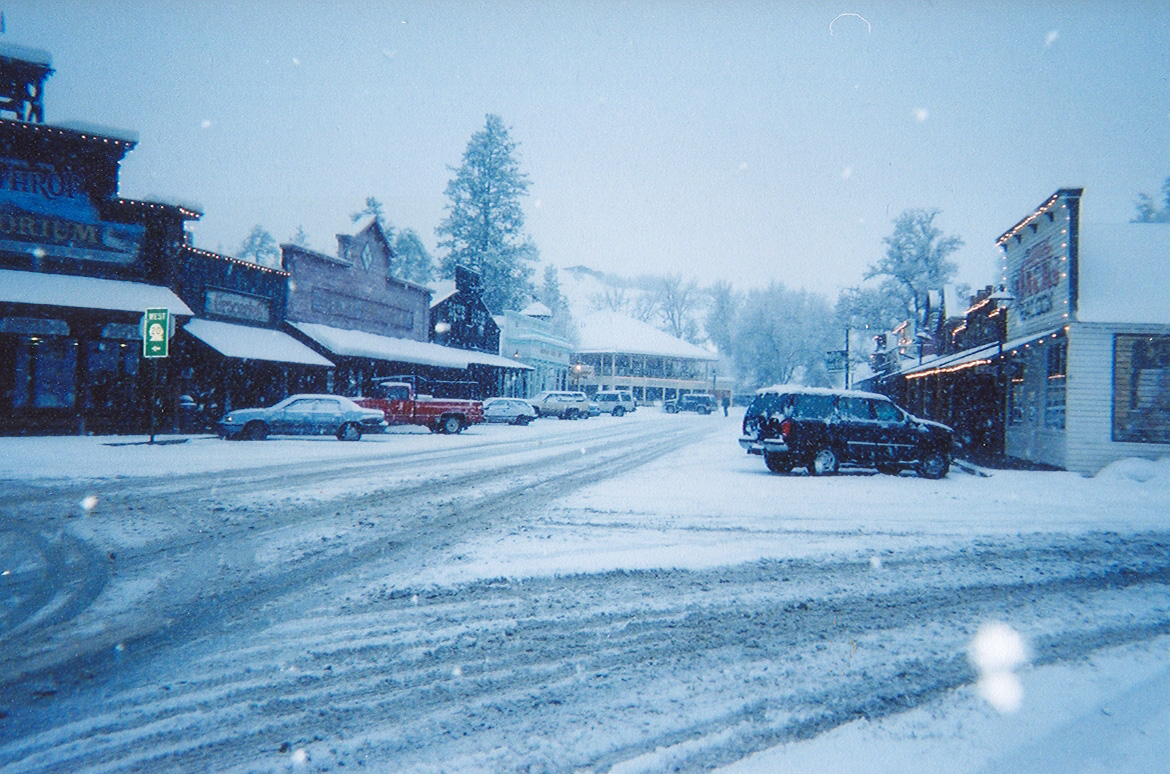
Photo: Snow-covered downtown Winthrop showing the value of a walkable winter base | Creative Commons 2.5
Quick Decision Guide
- First winter visit or mixed-interest group: Stay in Winthrop for the easiest combination of lodging, meals, rentals, skating, trail access, and non-ski backup.
- Nordic skiing is clearly the trip: Stay in Mazama or choose genuinely trail-oriented lodging. Stock groceries before checking in.
- Longer stay, kitchen, or practical services matter most: Stay in Twisp and expect to drive to the primary recreation zones.
- The lodging should supply part of the activity plan: Consider Sun Mountain, but confirm which rentals, lessons, trails, and amenities are public, reserved, or limited to guests.
- Downhill skiing, lessons, or tubing are the goal: Make Loup Loup the day’s main destination rather than combining it with a Mazama or upper-valley ski day.
Choose the Town and Lodging Pattern
Winthrop: Best overall winter base
Winthrop is the safest first answer for couples, families, beginner skiers, and groups whose members may want different activities. It has the broadest mix of visitor lodging, restaurants, winter rentals, public skating, and access to the valley’s trail system.
Choose a walkable or short-drive Winthrop stay when meals and non-ski time matter almost as much as skiing. This is especially useful for a short weekend, a first Nordic trip, or a group where one person may return to town before everyone else.
The tradeoff is morning driving. Winthrop is not as close as Mazama to the upper-valley trail network, and it does not provide ski-from-the-door access unless the specific property genuinely connects to a usable winter route.
Mazama: Best ski-first base
Mazama is the better choice when Nordic skiing, snowshoeing, quiet cabin time, or upper-valley trail access is the main purpose of the stay. A trail-oriented cabin or small inn can reduce morning driving and make a longer ski day easier.
Mazama is service-thin. Its store, food, fuel, and outdoor businesses are useful, but they do not provide the same redundancy as Winthrop or Twisp. A late arrival without groceries or a dinner plan can turn a scenic cabin into a logistical problem.
Use the detailed Mazama lodging guide when trail proximity is more important than town convenience.
Twisp: Best for kitchens, groceries, and flexibility
Twisp works well for longer stays, self-catering groups, budget-conscious visitors, and travelers who want easier access to full grocery shopping and everyday services. A suite or vacation rental with a kitchen can be more valuable than trail proximity when restaurant hours are reduced or winter conditions change the activity plan.
The tradeoff is driving. Twisp is south of Winthrop and farther from Mazama and Sun Mountain. Do not book it as the “cheap ski base” without accounting for repeated winter drives to the activity zone.
Sun Mountain: Best resort-centered pattern
Sun Mountain can work well for a mixed group because lodging, skiing, snowshoeing, rentals, instruction, dining, and indoor downtime may be concentrated around the property. It is also useful when different people want different levels of outdoor commitment.
Confirm the exact activity before booking. Public trail access, lodging amenities, equipment, lessons, guided activities, and guest-only facilities are separate decisions. Do not assume every advertised winter activity is included with the room or available without a reservation.
Choose the lodging feature that solves the likely failure
- Walkability: Best when a non-skier wants an independent day or the group does not want to drive for every meal.
- Kitchen or kitchenette: Best for families, dietary needs, late arrivals, and reduced winter restaurant hours.
- Direct trail access: Best only when the connected trail fits the group’s ability and intended activity.
- Property amenities: Best for a mixed group, provided access and reservations are confirmed.
- Separate sleeping and living areas: Valuable when wet equipment, early starts, children, or different activity schedules are involved.
Match the Winter Activity to the Right Zone
Methow Trails maintains an extensive connected winter system, but connected does not mean every zone offers the same terrain, access, or visitor experience. Choose the trail area before choosing a random route from the full map.
Winthrop zone: Best first orientation
Start around Winthrop when the group needs rentals, a shorter ski session, easy access to town, or a simple first day. This is the most forgiving pattern for beginners because the outdoor activity can be shortened without sacrificing the rest of the trip.
Winthrop also works well when one person skis and another prefers skating, food, shopping, or lodging downtime.
Mazama zone: Best upper-valley ski base
Mazama offers a strong mix of gentler valley-bottom skiing and access to longer upper-valley routes. It is a logical place for a committed skier to spend several days without changing bases.
Do not select a long connected route merely because it begins near the lodging. Check distance, climbing, grooming, daylight, and the group’s ability to return before committing.
Sun Mountain: Best mixed-terrain and mixed-activity zone
Sun Mountain supports skiing and a substantial snowshoe network near a resort setting. It can suit couples or families where one person wants instruction, another wants a short snowshoe outing, and another wants to remain near the lodge.
Terrain varies. Resort access does not automatically make every route beginner-friendly, and equipment or instruction may require advance arrangements.
Cub Creek and Rendezvous: Better for a deliberate longer day
These areas are more appropriate for visitors who understand the route, climbing, distance, and return commitment. They should not be the automatic first-day choice simply because they appear on the connected system map.
Choose them when the group wants a longer ski and has checked grooming, weather, daylight, and transportation. They are less useful when someone may want to quit early or needs a parallel town activity.
Snowshoeing
Use designated snowshoe routes rather than assuming a groomed ski trail permits walking. Sun Mountain and parts of the broader Methow system offer marked snowshoe choices, but the pass, activity rules, and allowed routes can differ from skiing.
Fat biking and dog-compatible trails
Fat bikes and dogs are allowed only on designated winter routes. A ski pass does not automatically authorize another activity, and a dog-friendly route may have separate pass or etiquette requirements.
Check the current map symbol for the exact route before unloading equipment or a dog. Do not rely on a summer trail description to determine winter use.
Pearrygin Lake Sno-Park
Pearrygin offers non-motorized winter recreation near Winthrop, including cross-country skiing, snowshoeing, fat biking, and snow play when conditions support them. Parking uses the Washington Sno-Park system rather than an ordinary Methow Trails pass.
This makes Pearrygin useful for a lower-commitment day, but it is not a paperwork-free substitute. Confirm the permit, grooming report, plowing, and current permitted uses before leaving town.
Loup Loup
Loup Loup is east of Twisp and should be treated as its own downhill, lesson, Nordic, or tubing day. Operating days, snow coverage, lessons, and scheduled activities are condition-dependent.
Do not plan a Mazama ski morning followed by a casual Loup Loup afternoon. The direction and winter driving burden make that an inefficient and fragile itinerary.
Build a Non-Ski or Mixed-Group Day
A non-skier needs a real plan, not instructions to wait at the lodging. The best answer depends on the base town and whether the group will share transportation.
Winthrop non-ski day
Use the Winthrop Rink when a public skating session fits the schedule. Rentals, helmets, and skate assists are available, but public skating occurs in scheduled sessions rather than as continuous all-day access.
Add food, a short town walk when surfaces are safe, or lodging downtime. Do not build the day around outdoor wandering during severe cold, ice, or active snowfall without checking walking conditions.
Twisp town and arts day
TwispWorks, food, coffee, galleries, and practical errands can form a quieter half-day. Individual studios and partner businesses maintain their own winter schedules, so verify the specific place that matters instead of assuming the whole campus is open.
Sun Mountain mixed-group day
One person can ski while another snowshoes, uses a reserved property activity, or remains near the lodge. This pattern works best when the activities and access rules are confirmed before booking.
Mazama non-skier reality
Mazama is weakest when a non-skier needs several independent activities without a car. A quiet cabin, reading, food at the store, a designated snowshoe route, or a short shared outing may be enough for the right visitor, but it is not a broad town-entertainment base.
When the group contains a committed skier and a non-skier who wants more choice, Winthrop or Sun Mountain is usually easier than a remote Mazama cabin.
Choose the time commitment
- Two hours: Public skating session, short snowshoe outing, food and town time, or a brief groomed-trail introduction.
- Half day: Beginner ski lesson, Pearrygin winter outing, Twisp town-and-food plan, or property-centered recreation.
- Full day: Loup Loup, a substantial Nordic route, a guided activity, or a combined short outdoor session and deliberate town or resort afternoon.
Passes, Rentals, Lessons, and What to Reserve
Reserve before the trip
- Holiday, school-break, and prime winter-weekend lodging.
- Rental equipment when sizes, children’s gear, or several matching sets are needed.
- Nordic lessons or resort instruction.
- Sun Mountain activities that require reservations or equipment.
- Loup Loup lessons or scheduled products when offered.
Use the broader what to book before the trip guide for the difference between advance commitments and live-condition decisions.
Verify during the week
- Trail grooming and open zones.
- Snowshoe, fat-bike, walking, and dog designations.
- Rental-shop hours and confirmed equipment.
- Winthrop Rink public-session times.
- Loup Loup operating days and snow status.
- Pearrygin Sno-Park grooming, plowing, and permit requirements.
- Restaurant, grocery, studio, and visitor-service hours.
Decide that morning
- Which groomed zone has the best conditions for the group.
- Whether roads justify crossing the valley.
- Whether the outdoor commitment should be shortened.
- Whether the independent backup is better than forcing Plan A.
Do not combine pass systems
Methow Trails activity passes and Washington Sno-Park parking permits solve different requirements. Pearrygin is the clearest place where visitors can arrive with the wrong assumption.
Check the exact parking area and activity before purchasing. Skiing, snowshoeing, fat biking, dog access, and Sno-Park use may not share one universal pass.
Winter Access, Driving, and Reduced Services
The Methow remains a destination when the pass is closed
The normal winter closure of the North Cascades Highway prevents a through-drive between the Skagit side and the Methow. It does not mean Winthrop, Twisp, Mazama, or the valley’s winter recreation system is closed.
Winter visitors generally approach through the eastern or southern road system. Use the corridor-wide winter guide when deciding between a Methow trip and west-side North Cascades winter activities.
Stay near the activity when roads are the weak point
A lodging bargain loses value when it requires repeated winter drives to the opposite end of the valley. Mazama makes sense for upper-valley skiing; Twisp makes sense for services and self-catering; Winthrop is the compromise between recreation and town convenience.
When snow, ice, or visibility deteriorates, remain near the current town or lodging. Do not cross the valley solely because another activity appears open online.
Handle groceries before a late arrival
Twisp is the strongest full-stock-up point. Winthrop offers useful food and convenience choices. Mazama has valuable local food and grocery support, but visitors should not treat it as a full-service supermarket town.
A kitchen or kitchenette reduces dependence on winter restaurant hours, but only when groceries are purchased before check-in.
Confirm fuel, charging, and check-in
Do not arrive with a nearly empty tank or an unconfirmed charging plan. Cold weather, detours, warming the vehicle, and cross-valley driving can increase energy use.
Confirm late-check-in instructions before losing easy access to staff. A remote lockbox is not useful when the code remains in an email that was never downloaded.
Plan A and Plan B
Plan A: First-time Winthrop weekend
Time budget: One afternoon plus one full day.
- Choose walkable or short-drive lodging.
- Reserve rentals or a beginner lesson before arrival.
- Use the arrival afternoon for check-in, food, and equipment pickup.
- Make the next morning’s short Nordic session the main activity.
- Add the rink or town time only when the public schedule and group energy fit.
Plan B: Nordic conditions disappoint
Check whether another trail zone is independently groomed, reachable, and appropriate. Do not drive the length of the valley merely because another trail appears on the same system map.
When conditions are broadly poor, switch to the rink, a Twisp town day, a short designated snowshoe outing, resort downtime, food, or lodging time. The backup should not depend on the same failed snow condition.
Plan A: Mazama ski-first stay
Time budget: Two nights and one or two primary ski days.
- Book lodging for trail proximity rather than broad town choice.
- Buy groceries before reaching Mazama.
- Reserve equipment and instruction when needed.
- Choose one upper-valley ski zone based on the current grooming report.
- Plan a quiet evening rather than repeated driving to Winthrop.
Plan B: One person does not ski
Give that person an independent snowshoe, Winthrop, Sun Mountain, or Twisp plan. Do not make a remote cabin the only place available for the entire day unless that is what the non-skier actually wants.
Plan A: Loup Loup day
Time budget: Most of the day.
- Confirm operating status before departure.
- Handle tickets, lessons, rentals, and food planning in advance.
- Allow winter driving time from the lodging.
- Keep the evening simple after returning to the valley.
Plan B: Winter driving becomes the failure
Remain near the current lodging. Use the closest safe town, scheduled activity, short walk, food stop, or property amenity.
Do not cross the valley to save an itinerary that was designed for better road conditions.
Common Winter Planning Mistakes
- Treating the trail network as one trailhead. Choose Winthrop, Mazama, Sun Mountain, or Cub Creek based on the group and route.
- Booking Mazama without groceries. Trail proximity does not replace a full stock-up plan.
- Assuming every groomed trail allows every activity. Skiing, walking, snowshoeing, dogs, and fat bikes use specific designations.
- Buying the wrong pass. Methow Trails access and Washington Sno-Park parking are separate systems.
- Calling a property trail “ski from the door” without checking difficulty. Direct access is only useful when the route fits the group.
- Treating the Winthrop Rink as continuously open. Public skating follows scheduled sessions.
- Combining Loup Loup with Mazama in one busy day. The added driving makes both activities more fragile.
- Confusing a closed Highway 20 crossing with a closed Methow Valley. The valley remains reachable from the east or south unless separate road conditions prevent it.
- Using another ski zone as the automatic backup. Poor snow, weather, or roads may affect several zones at once.
Related Guides
Snow, grooming, winter roads, passes, operating schedules, rental inventory, lessons, restaurants, and lodging services can change quickly. Verify the controlling operator or agency before departure, and keep the backup close to the town or lodging when travel conditions deteriorate.