Baker Lake is one of the most useful side trips near Concrete, but it is not the same kind of trip as driving deeper into the North Cascades on Highway 20. Think of it as a lower-elevation lake, campground, boating, fishing, and forest-trail area reached from Baker Lake Road, not as a replacement for Diablo Lake Overlook, Newhalem, Rainy Pass, Washington Pass, Maple Pass, or Blue Lake.
Use Baker Lake when you want a campground-centered trip, a lake day, a lower-elevation forest hike, a family-friendly backup, or a place to go when the higher North Cascades are still snowy, crowded, smoky, or too uncertain. Skip it if your real goal is a fast Highway 20 sightseeing day or an alpine trailhead farther east.
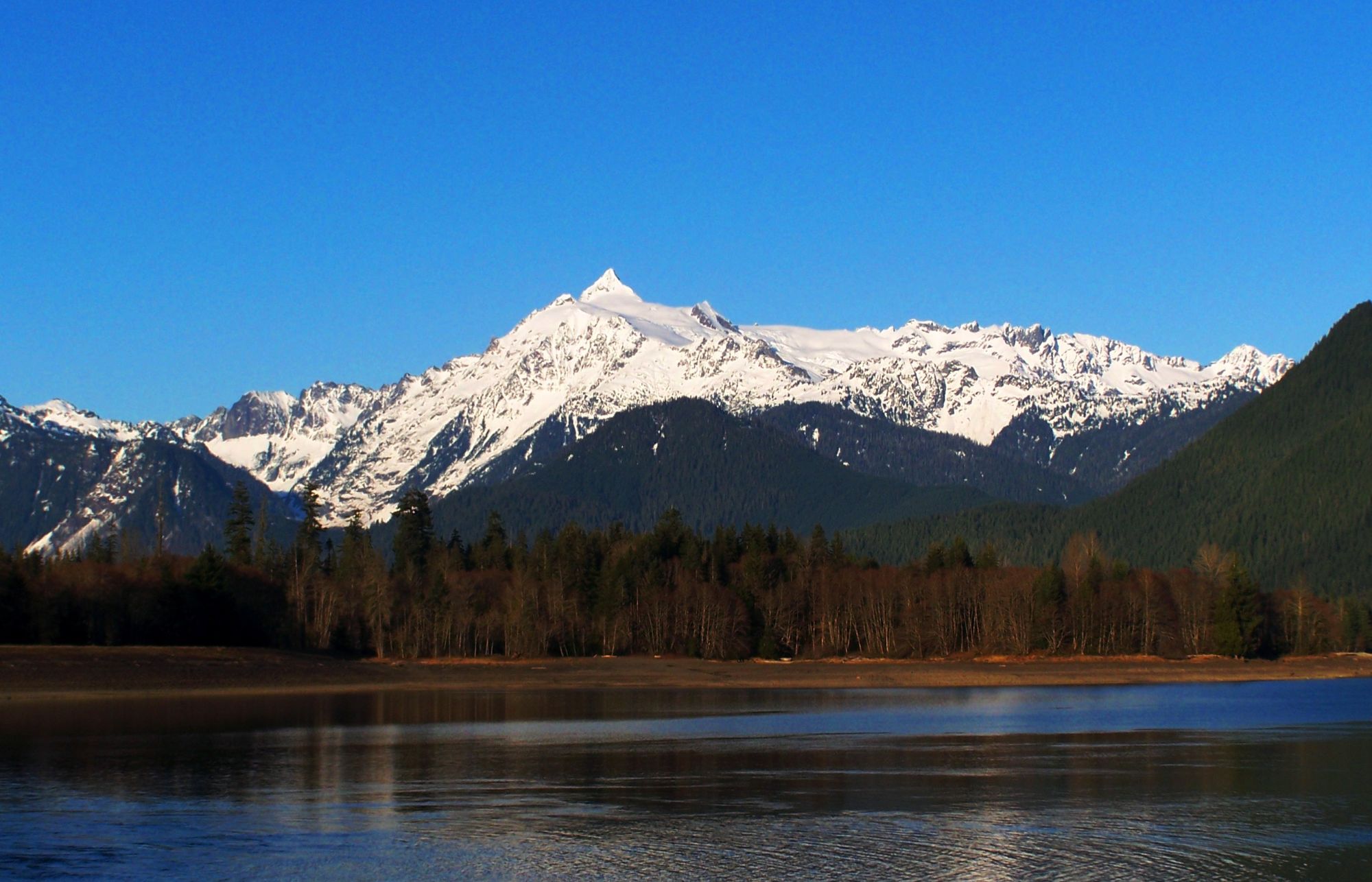
Photo: Mount Shuksan as seen from Baker Lake - CC BY-SA 3.0
Quick answer
Baker Lake is best for camping, boating, fishing, swimming, low-elevation hiking, and Concrete-based backup plans. It is not a high-service resort corridor, and it is not the fastest way to see the classic North Cascades Highway highlights. Stock up in Concrete before turning north.
Should you go to Baker Lake?
Baker Lake makes the most sense when the lake itself, the campgrounds, or the lower-elevation forest setting are part of the point. It is a good choice for people who want a slower day near water, a summer camping base, a boating or fishing trip, or a fallback when the high-country trailheads are not cooperating.
Choose Baker Lake if:
- You are staying in or near Concrete and want a practical nearby outdoor zone.
- You want a campground, lake, boat launch, fishing, swimming, or picnic-focused trip.
- You want a lower-elevation hike instead of a snowy or crowded alpine trailhead.
- You are looking for a backup when Rainy Pass, Blue Lake, Maple Pass, Cascade Pass, or other high-demand trailheads are unrealistic.
- You are okay with fewer services after leaving town.
Skip Baker Lake if:
- You only have one day and want the classic Highway 20 highlights.
- Your main targets are Diablo Lake Overlook, Newhalem, Washington Pass, Maple Pass, Blue Lake, or Cascade Pass.
- You need restaurants, gas, groceries, or lodging close to your recreation stop.
- You want alpine views more than a forest, river, or lake outing.
Where Baker Lake fits in a North Cascades trip
Baker Lake sits north of Concrete, reached by turning off Highway 20 onto Baker Lake Road / Forest Service Road 11. That makes it a Concrete-side recreation area, not a direct continuation of the main North Cascades Highway corridor.
This matters because Baker Lake changes the shape of your day. Once you turn north toward the lake, you are committing to a side-road outing. That can be exactly the right choice if your day is about camping, boating, fishing, swimming, or lower-elevation hiking. It is less useful if you are trying to efficiently combine several Highway 20 stops farther east.
For a first-time North Cascades sightseeing day, Baker Lake usually belongs in the “optional side trip or backup” category. For a Concrete-based camping or family trip, it can be the main event.
What the Baker Lake area is actually used for
The Baker Lake area is built around basic outdoor recreation, not town services. The main uses are camping, boating, fishing, lake access, picnicking, swimming, and low-elevation forest hiking.
Camping
Baker Lake has a real cluster of public campgrounds along and near the western side of the lake. This is one of the biggest reasons to come here. The campgrounds vary a lot: some are reservable, some are first-come, first-served, some have potable water, some do not, and some work better for boaters than for casual overflow camping.
Boating and lake access
This is one of the biggest differences between Baker Lake and the core Highway 20 overlook corridor. Baker Lake has public boat-launch infrastructure and a much stronger water-recreation identity. During sockeye season, boat launch pressure can be heavy, and watercraft inspections may apply.
Fishing
Baker Lake is a serious fishing destination, especially because of kokanee and the Baker sockeye fishery. Fishing rules can change by season and emergency regulation, so this guide should not be used as a regulation source. Check WDFW before fishing.
Low-elevation hiking
The main trail anchors are Baker Lake Trail and Baker River Trail. Both are better understood as forest, river, and lakeshore outings than as alpine North Cascades hikes.
Backup planning
Baker Lake is especially useful when the higher country is snowy, crowded, smoky, or closed. It is not always a convenient same-day backup from deep in the Newhalem or Diablo corridor, but it works well when you are still planning from the west side or staying around Concrete.
Campgrounds around Baker Lake
Baker Lake campgrounds should be treated as destination campgrounds, not casual overflow for someone who really wanted to stay near Newhalem, Diablo, or Marblemount. They can be excellent if your trip is truly about Baker Lake, but the side-road distance and limited services matter.
Horseshoe Cove Campground
Horseshoe Cove is one of the strongest family-style Baker Lake options. It has lake access, a swimming beach, a gravel boat launch, potable water, and a forested campground setting. It is a good fit when you want the lake to be part of the trip, not just a place to sleep.
Swift Creek Campground
Swift Creek is one of the best Baker Lake options for mixed camping styles and boating-oriented trips. It has a day-use area, picnic facilities, a paved boat ramp suitable for larger motorboats, and a dock. During sockeye season, expect boat-launch pressure to be much heavier.
Shannon Creek Campground
Shannon Creek is farther up Baker Lake Road and works well for a quieter lake-camping feel with boat access. Its gravel ramp is short and not ideal for larger boats, so it is better for smaller-scale lake use than for people needing the easiest launch setup.
Bayview Campground
Bayview is a smaller reservable option near the Baker Lake Road / Horseshoe Cove Road area. It has vault toilets but no potable water, so it is better for campers who arrive prepared than for people needing a comfort-heavy campground.
Panorama Point Campground
Panorama Point is a smaller, scenic campground on the western shore. It has lake views and a boat-launch parking area nearby, but potable water is not available at the site. During sockeye season, the boat-launch area can become very busy.
Lower Sandy Campground
Lower Sandy is a small first-come, first-served campground on Baker Lake. It can work as a quieter, lower-amenity option if you arrive early and bring what you need, but it is a weak late-Friday backup because there is no reservation certainty.
Park Creek Campground
Park Creek is a smaller forested campground near Swift Creek. Treat it as a niche option and check current status before relying on it, especially if you are building a trip around a specific weekend.
Kulshan Campground
Kulshan Campground is operated by Puget Sound Energy and is first-come, first-served. It adds useful Baker Lake camping inventory, but it should still be treated as a plan-ahead destination rather than a guaranteed last-minute solution.
Planning rule: If the campground is the reason for the trip, Baker Lake makes sense. If you are only looking for a place to sleep after a Highway 20 park day, compare it against Concrete, Rockport, Marblemount, and other campground-backup options before committing.
Hikes and easy outings near Baker Lake
The Baker Lake area has useful lower-elevation hiking, but it should not be sold as an alpine hiking zone. The best-known options are forest, river, lakeshore, and backpacking-oriented routes.
Baker Lake Trail 610
Baker Lake Trail runs along the eastern shoreline of the lake and is the main lakeshore hiking route in the area. It can be a good family hike if you do a short out-and-back, but casual visitors should not assume they need to hike the full route. A partial walk to a viewpoint, creek crossing, or lakeshore camp spur may be the better version.
This is also a backpacking and lakeshore-camping route, with several first-come, first-served trail-accessed camps along the lake. Treat all water before drinking, and check current Forest Service trail notes before relying on bridge, stock, or campground access details.
Baker River Trail 606
Baker River Trail is the other major trail anchor. It starts at the north end of Baker Lake Road and offers a low-elevation rainforest-style hike with old-growth trees, beaver ponds, Baker River access, and a connection toward Baker Lake Trail.
The first section to the Baker River suspension bridge is the easiest and most useful for casual visitors. Continuing farther is a real hike, not just a quick roadside stop. The trail can have wet stream crossings during high runoff, and overnight travel into North Cascades National Park requires the correct backcountry permit.
Short-section strategy
For families, late arrivals, or people using Baker Lake as a backup, the best move is often not to “complete” a trail. Pick a short section of Baker Lake Trail or Baker River Trail, enjoy the forest and water, then save time for a lake stop, picnic, or drive back toward Concrete.
Boating, fishing, and lake access
Baker Lake is much more water-focused than most of the Highway 20 park corridor. Boating, fishing, kayaking, canoeing, swimming, and lake access are major reasons people come here.
If you are boating, check the specific launch you plan to use. Not every ramp is equally suitable for larger boats. Swift Creek is one of the stronger launch areas for larger motorboats, while Shannon Creek’s gravel ramp is shorter and less suitable for larger boats.
If you are fishing, use this guide only for trip-shape planning. Baker Lake regulations, sockeye timing, emergency rule changes, invasive-species inspections, daily limits, and boat-launch closures can change. Check WDFW and the Fish Washington app before fishing.
During sockeye season, expect more pressure at boat ramps, more early arrivals, and less of the quiet lake-camping feel that visitors might expect from looking at a map.
What to handle in Concrete before Baker Lake Road
Concrete is the practical stock-up point for the Baker Lake area. Do not drive up Baker Lake Road expecting a service corridor with restaurants, gas, groceries, gear, and easy problem-solving near every campground.
Handle these before turning north:
- Fuel
- Groceries and camp food
- Ice and firewood, if needed and allowed
- Water, especially if your campground does not have potable water
- Campground reservation details or backup options
- Fishing regulations and license needs
- Offline maps and driving directions
- Smoke, fire, and road-condition checks
If you need comfort, food choices, lodging flexibility, or an easier fallback plan, stay closer to Concrete or compare Baker Lake against other west-side bases before committing.
When Baker Lake works as a backup plan
Baker Lake is one of the better west-side backup areas when the trip is still flexible. It works best before you have committed to driving deep into the Highway 20 corridor.
Good Baker Lake backup situations:
- High-elevation trails are still snow-covered.
- Rainy Pass, Maple Pass, Blue Lake, or Cascade Pass parking is unrealistic.
- The forecast makes alpine views less valuable.
- A family or mixed-ability group needs water, picnic space, and a lower-stress outing.
- You are staying in Concrete and want an outdoor plan without pushing all the way east.
- You need a lower-elevation forest hike in spring or shoulder season.
Weak Baker Lake backup situations:
- You are already near Newhalem or Diablo and want a quick nearby alternative.
- You are trying to salvage a Washington Pass or Rainy Pass day from the east side.
- You need food, gas, lodging, or last-minute campground certainty.
- You only have a few hours and do not want another side-road commitment.
The practical rule is simple: Baker Lake is a strong planned backup from Concrete or the lower west side. It is not an automatic backup for every North Cascades itinerary.
Where to stay for a Baker Lake trip
The best base depends on whether Baker Lake is the main event or only one piece of a broader trip.
Stay or camp at Baker Lake if:
You want the campground, lake, fishing, boating, or slower forest setting to define the trip. This is the best fit for summer camping weekends and lake-focused family trips.
Stay in Concrete if:
You want services, food, fuel, groceries, and easier fallback options while still being close enough to Baker Lake Road. Concrete is the most practical service base for this area.
Stay in Rockport or Marblemount if:
You care more about the main Highway 20 corridor, Newhalem, Diablo Lake, Cascade River Road, or classic North Cascades National Park access than about Baker Lake itself.
Use private cabins or rentals if:
You want Baker Lake access without depending on federal campground availability. This can be especially useful for families, shoulder-season travelers, or people who want showers and a real bed after a lake day.
Best seasons for Baker Lake
Baker Lake’s biggest advantage is that it sits lower than the alpine trailheads farther east. That makes it useful before the highest North Cascades hikes are ready and after the first signs of fall start changing trip conditions.
Spring
Spring can be good for lower-elevation forest hiking, early-season camping research, and checking whether Baker Lake works as a backup while higher trails remain snowy. Expect wet trails, variable weather, and the need to verify campground and road status.
Summer
Summer is the main season for camping, boating, swimming, fishing, and family lake trips. It is also when reservations, boat ramps, and popular campgrounds can become competitive.
Late summer and early fall
This can be a good time for forest hiking and camping if smoke, fire restrictions, weather, and campground schedules cooperate. Do not assume all services or campground operations continue deep into fall.
Winter
Winter is not the normal visitor season for most Baker Lake camping plans. Some road and recreation access may exist, but weather, daylight, closures, and facility availability become more important. Check official sources before using Baker Lake as a winter fallback.
Passes, permits, and rules to check
Baker Lake is mostly a Forest Service recreation area, with some Puget Sound Energy recreation sites and trail connections that can enter North Cascades National Park. That means rules are not one-size-fits-all.
- Day-use passes: Many Forest Service day-use sites and trailheads require a Northwest Forest Pass, Interagency Pass, or day-use fee.
- Campground reservations: Many developed campgrounds use Recreation.gov, while some sites are first-come, first-served.
- Backcountry permits: Overnight travel inside North Cascades National Park requires the correct NPS backcountry permit.
- Fishing licenses: Fishing requires a Washington fishing license and current WDFW regulation check.
- Dogs: Dogs may be allowed in some Forest Service areas but are restricted in North Cascades National Park. Check the exact trail and land manager before bringing a dog.
- Fire rules: Campfires must follow current fire restrictions and campground rules.
Because Baker Lake mixes campgrounds, trails, boat launches, fishing, Forest Service land, PSE sites, and nearby national park boundaries, always verify the specific site you plan to use before leaving.
Official sources to check before you go
Use official sources for current rules, closures, fees, campground availability, and fishing regulations. Conditions around Baker Lake can change with storms, fire restrictions, campground schedules, fishing seasons, and road maintenance.
- U.S. Forest Service - Baker Lake recreation area
- Mt. Baker-Snoqualmie National Forest current conditions
- U.S. Forest Service - Baker Lake Trail 610
- U.S. Forest Service - Baker River Trail 606
- Recreation.gov - campground reservations
- Puget Sound Energy - Baker Lake and Lake Shannon recreation
- WDFW - Baker Lake fishing information
- WDFW - Baker River sockeye season and counts
How to use this page with the rest of your North Cascades planning
If Baker Lake sounds like the right fit, build your day around the lake, campground, trail, or boat launch instead of trying to bolt it onto too many Highway 20 stops.
If Baker Lake sounds useful only because your original plan is falling apart, compare it against other backup areas before committing. Sometimes Baker Lake is the right pivot. Other times, Newhalem short walks, Diablo pullouts, Rockport, or a Concrete service day will be cleaner.