Baker Lake Boat Launches and Day-Use Access
Last updated: June 2026
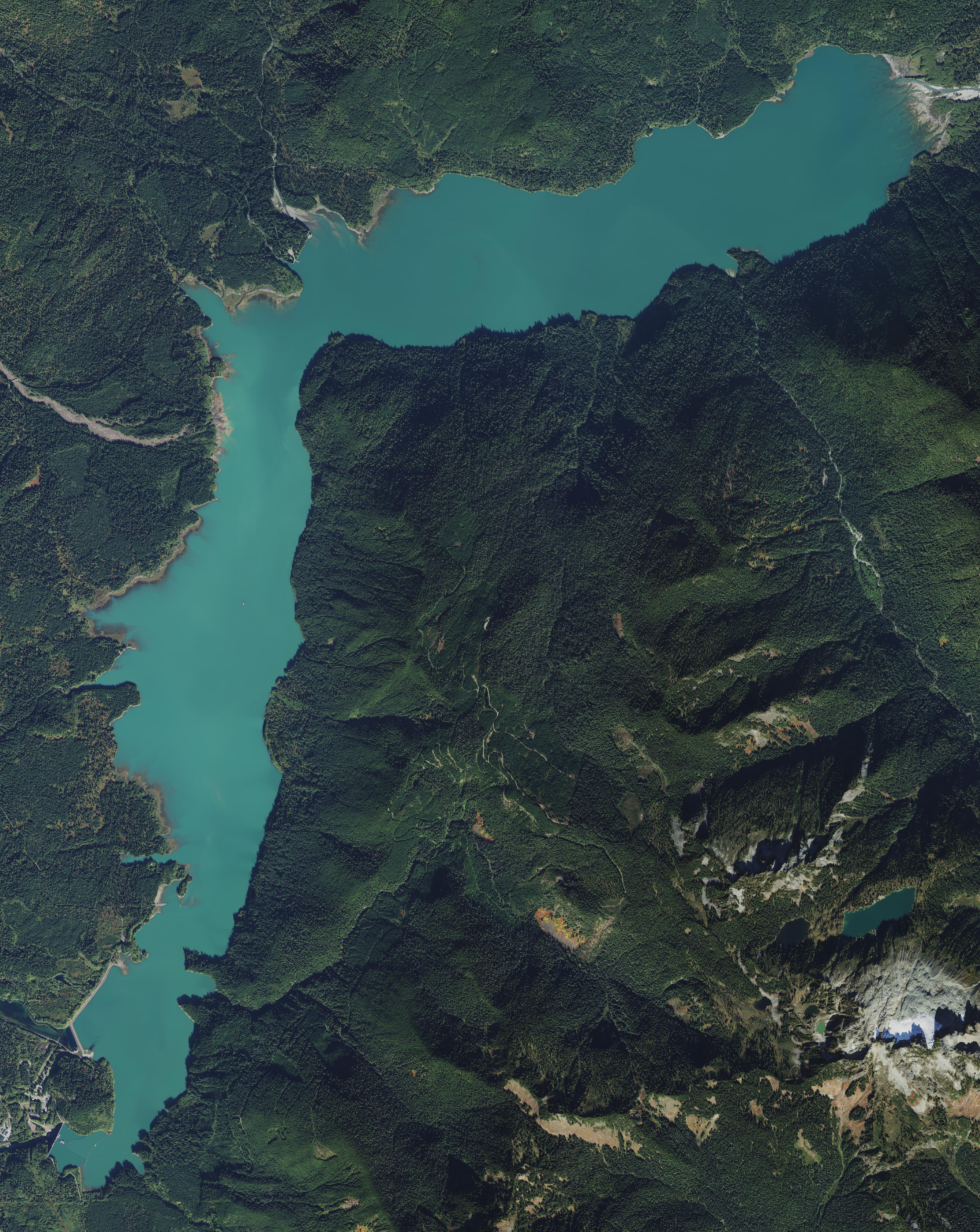
Photo: An aerial view of Baker Lake taken by USDA's NAIP
Baker Lake is best treated as a real lake-day destination, not a quick North Cascades Highway pullout. If you are coming from SR-20 near Concrete, choose your launch or day-use area before you start up Baker Lake Road.
For larger boats, start with Swift Creek. For a family swim and picnic day, start with Horseshoe Cove. For a paved-launch backup, look at Panorama Point. For south-end access, check Kulshan / West Pass Dike.
Want weekly road, weather, access, and trip-planning updates for the North Cascades and Highway 20 corridor? Sign up for the Cascades Field Guide newsletter before your trip.
Quick Decision Guide
- Best for larger trailered boats: Swift Creek. It has the clearest larger-boat setup, with a paved ramp and dock.
- Best family lake day: Horseshoe Cove. It has the strongest mix of swimming beach, picnic use, toilets, water, and launch-area parking.
- Best paved-launch backup: Panorama Point. It works well for launching and picnicking, but parking can tighten during sockeye season.
- Best south-end launch: Kulshan / West Pass Dike. This is the PSE-managed south-end access point and should be checked separately from USFS campground pages.
- Best small-boat or camper-focused option: Shannon Creek. Do not treat it as the default ramp for larger boats.
- Not first-choice day-use answers: Bayview, Lower Sandy, Park Creek, Boulder Creek, Baker Lake Trail, and Baker River Trailhead.
Common mistake: close to Baker Lake does not always mean easy lake access. Some campgrounds are good overnight bases but weak answers for a same-day swim, picnic, or boat launch.
Best Boat Launches for Trailers and Motorboats
Swift Creek: This is the first place I would compare if I were towing a larger boat from Concrete. The day-use area has picnic tables, a shelter, grills, a paved boat ramp suitable for larger boats, and a 20-slip dock.
Swift Creek also works for mixed groups. One person can launch while the rest of the group uses the beach, picnic area, or campground-side lake access. The tradeoff is crowding. During sockeye season, expect the launch area to feel more like a fishing hub than a quiet lake-day stop.
Panorama Point: This is the next serious paved-launch option. It is about 19 miles up Baker Lake Road from SR-20 and has a large paved boat-launch parking area near the campground entrance.
Panorama Point is useful if Swift Creek is too busy or if your group wants both a launch and a picnic stop. The main caution is the same: sockeye season can make the paved launch extremely busy, and parking can become limited.
Kulshan / West Pass Dike: This is the south-end Baker Lake launch managed by Puget Sound Energy. It is the best launch to check if you want the quickest Baker Lake access from the Concrete side, but do not assume the rules, camping, or schedule match the USFS campgrounds farther up the lake.
Shannon Creek: This is a useful lake access point, but it is not the big-boat default. The gravel ramp is short and not suitable for larger boats. During sockeye fishing season, boat-ramp use is limited to Shannon Creek campers only.
What I would do: if the trip depends on launching a real boat, check Swift Creek first, Panorama Point second, and Kulshan / West Pass Dike third. I would only make Shannon Creek the plan if I were camping there, using a smaller craft, or deliberately avoiding the bigger launch areas.
Best Day-Use Spots for Swimming, Picnicking, and Paddling
Horseshoe Cove: This is the best first answer for a low-stress family lake day. Day use includes a swimming beach and a gravel boat-launch area with parking. It also has campground infrastructure nearby, including flush toilets and potable water in season.
Choose Horseshoe Cove if the group includes kids, towels, lunch, paddleboards, or people who mostly want to sit near the water. It is a better casual-lake answer than some places that look more boat-focused on paper.
Swift Creek: Swift Creek is a better fit when the group includes both swimmers and boaters. It has a small beach, picnic tables, a shelter, grills, a paved ramp, a dock, vault toilets, drinking water, and a cold-water outdoor shower near the swimming beach.
The downside is traffic. If the boat ramp is busy, the whole place can feel more hectic. This is especially true when sockeye fishing is active.
Panorama Point: Panorama Point works well for a picnic and launch combination. It has a day-use picnic area, vault toilets, potable water, and a large paved launch-parking area.
I would describe Panorama as a launch-and-picnic stop more than a classic swim-beach stop. If swimming is the main goal, compare Horseshoe Cove first.
Paddling note: Baker Lake is a nine-mile reservoir. Near-shore paddling around a protected access area can be reasonable, but do not treat the whole lake like a small beginner pond. Wind, distance, cold water, and boat traffic can change the feel quickly once you leave the launch area.
Places That Look Useful But Are Not First-Choice Day-Use Stops
Shannon Creek: Good to know, but easy to overrate. It has a small day-use area, grassy space, and a boat launch, but the short gravel ramp is not suited for larger boats. Sockeye-season ramp limits also make it a poor first-time default unless you are camping there.
Bayview: Bayview is a useful campground base, especially if you want to be near the lake basin, but it is not the first place I would send a family looking for a simple swim-and-picnic day. Potable water is not available at the campground, so bring your own.
Lower Sandy: Lower Sandy can work as a simpler first-come campground, but it is not the cleanest answer for someone asking where to launch, swim, picnic, and park. Use it as an overnight backup, not the main day-use plan.
Park Creek: Park Creek is near Swift Creek and Baker Lake, but the Forest Service lists no day use at the campground. Do not drive there expecting it to solve your picnic or launch plan.
Boulder Creek: Boulder Creek is also near the Baker Lake basin, but it is not a day-use site. It can matter for camping or nearby trails, not for a casual lake-day visitor who wants easy shoreline access.
Baker Lake Trail and Baker River Trailhead: These are good for hikers and backpackers. They are weak answers for a group that wants to unload coolers, towels, paddleboards, and kids near the water.
This is where people misjudge the corridor: Baker Lake has many recreation names on the map. Only a smaller set are practical day-use launch, swim, and picnic answers.
Fees, Passes, Rules, and What to Check Before You Drive
Passes and day-use fees: Expect Northwest Forest Pass, Interagency Pass, or day-use fee rules at USFS sites where posted. Do not use a Discover Pass as your default assumption for Baker Lake National Forest sites.
Fishing rules: If fishing is part of the plan, check WDFW before leaving cell service. Baker Lake fishing seasons, sockeye timing, emergency rules, and retention limits can change with in-season abundance.
Watercraft inspections: During the sockeye fishery, WDFW may conduct mandatory aquatic invasive species checks on boats, kayaks, and other watercraft entering Baker Lake. Clean, drain, and dry your craft before arrival.
Launch pressure: Treat sockeye season as a parking and ramp issue, not just a fishing issue. Swift Creek, Panorama Point, and Shannon Creek all become more complicated when fishing pressure is high.
Supplies: Handle fuel, food, ice, and basic supplies before committing to Baker Lake Road. Concrete is the main service base before the lake-road drive. See Concrete Services and Supplies if you need to plan the stop.
Road and site status: Check USFS alerts, Recreation.gov, PSE recreation updates, and WDFW rules before towing a boat or committing a family day to the lake.
Plan A / Plan B
Plan A: Decide your access point before you leave the SR-20 / Baker Lake Road area near Concrete. If you are towing a boat, make Swift Creek or Panorama Point the lead plan. If you are mostly swimming and picnicking, make Horseshoe Cove the lead plan.
Plan B for boaters: If Swift Creek is overloaded, check Panorama Point or Kulshan / West Pass Dike. If you are not camping at Shannon Creek during sockeye season, do not count on that ramp as the backup.
Plan B for families: If the launch areas feel too crowded, switch the goal from “boat day” to “picnic and shoreline day.” Horseshoe Cove, Swift Creek, and Panorama Point are still the best places to compare.
Plan B for late starts: If you are already deep into a North Cascades Highway day near Newhalem or Diablo, Baker Lake is usually too much of a detour for a quick save. It works better when you pivot early and decide the day is now a Baker Lake day.
Time budget: Give yourself enough time for the Baker Lake Road drive, parking, unloading, and a possible second-choice access point. A boat-launch plan with no parking backup is not a good summer-weekend plan.
Related Guides
Sources
- U.S. Forest Service: Baker Lake
- U.S. Forest Service: Swift Creek Campground
- U.S. Forest Service: Horseshoe Cove Campground
- U.S. Forest Service: Panorama Point Campground
- U.S. Forest Service: Shannon Creek Campground
- U.S. Forest Service: Park Creek Campground
- U.S. Forest Service: Boulder Creek Campground
- Puget Sound Energy: Baker Lake and Lake Shannon Recreation
- Washington Department of Fish and Wildlife: Baker Lake
- Washington Department of Fish and Wildlife: Baker River Sockeye Season and Counts
Information can change with road conditions, campground operations, lake levels, fishery rules, and seasonal closures. Check the official USFS, PSE, Recreation.gov, and WDFW sources before towing a boat, planning a family lake day, or driving up Baker Lake Road.