Baker Lake Area Campgrounds: Which One Fits Families, Boats, Trailers, and Short Stays
Baker Lake Campground Choices
Last updated: July 2026
Baker Lake is a real camping destination north of SR-20 near Concrete, before Marblemount and well before Newhalem. It is best for families, boaters, anglers, swimmers, and campers who want the lake itself, not visitors trying to stay closest to Diablo Lake, Cascade River Road, or Washington Pass.
The main tradeoff is simple: Baker Lake gives you more lake-focused camping than the core Highway 20 corridor, but it adds a side-road commitment before your North Cascades drive has really begun.
Get the North Cascades weekend planning email for road, smoke, campground, and trip-planning updates before you drive.
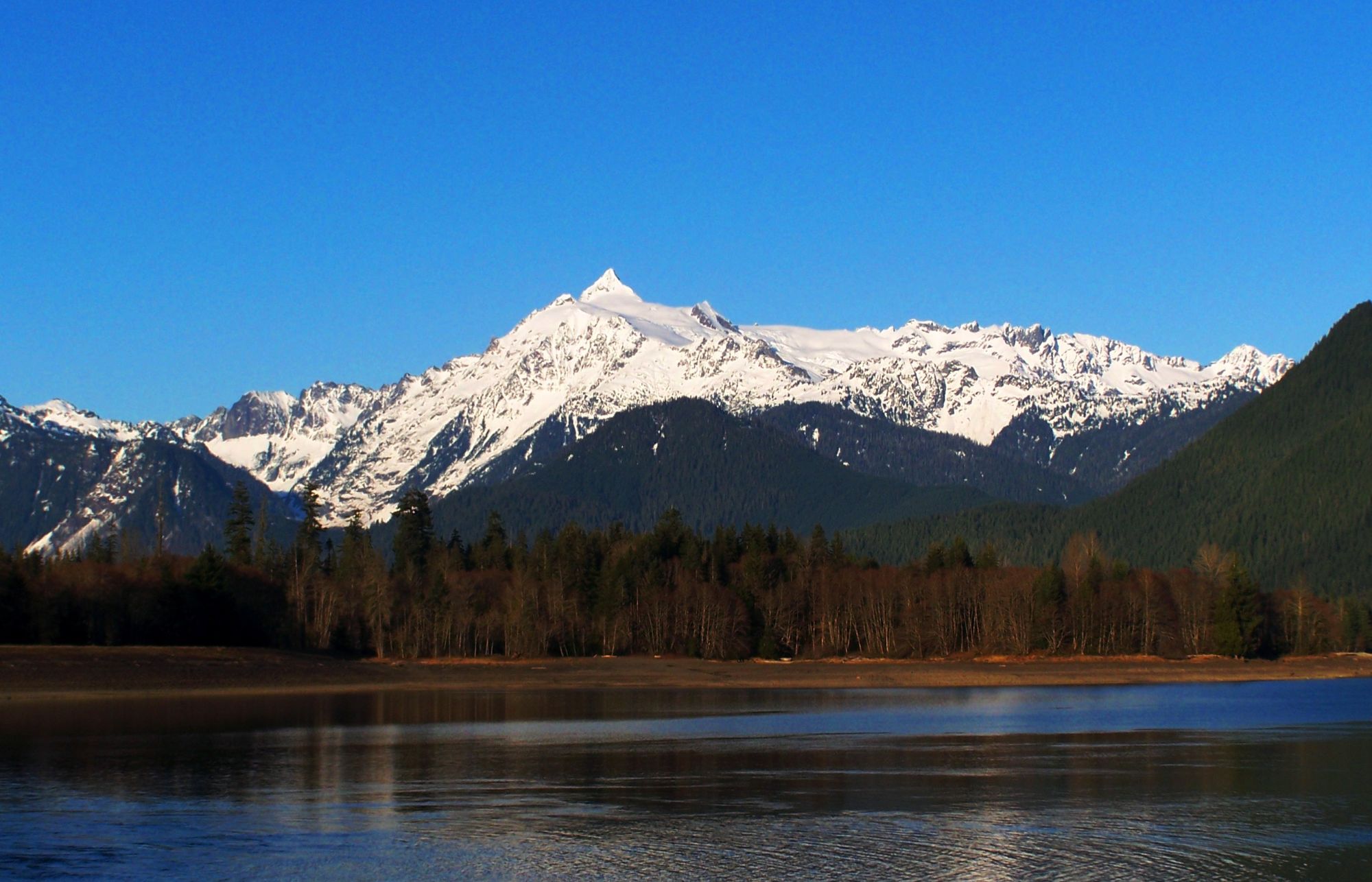
Photo: Mount Shuksan as seen from Baker Lake - CC BY-SA 3.0
Quick Decision Guide
Best first pick for families: Choose Horseshoe Cove if you want a reservable campground with potable water, flush toilets, lake access, a swimming beach, and the simplest kid-friendly setup.
Best for boats: Choose Swift Creek if your trip is built around boating, paddling, swimming, or larger water access. It has a paved boat ramp, dock, day-use area, potable water, and reservable sites.
Best deeper-lake base: Choose Shannon Creek if you want to be farther up Baker Lake Road and already have a reservation. Do not choose it for larger boats, because the gravel ramp is short.
Best small backup: Try Bayview or Panorama Point if the main family and boat campgrounds are booked. Treat both as planned choices, not places to count on after dark.
Best late-arrival fallback: If you do not already have a site, look at Rasar State Park, Howard Miller Steelhead Park, or lodging near Concrete before committing to a long campground hunt up Baker Lake Road.
Where Baker Lake Fits
Baker Lake Road turns north from SR-20 west of Concrete near SR-20 mile marker 82. From there, the campgrounds spread along the west side of the lake, before you ever reach Marblemount, Newhalem, Diablo Lake, or the high pass country.
This is where people misjudge the corridor: Baker Lake looks close to North Cascades on a map, but it is not the same base as Newhalem Creek, Colonial Creek, or Marblemount. It works best when the lake is the point of the trip.
Choose Baker Lake over Newhalem or Colonial Creek when you want swimming, boating, fishing, lakeside camping, or a slower family camp day. Choose Newhalem, Goodell, or Colonial Creek instead when your real goal is the North Cascades Highway core east of Marblemount.
Choose Baker Lake over Cascade River Road camping only if you do not need early access toward Cascade Pass or other Marblemount-side trailheads. Baker Lake is a separate side-road plan, not a shortcut to Cascade River Road.
Choose Baker Lake over Washington Pass only when your trip is staying west of the mountains. If Rainy Pass, Blue Lake, Maple Pass, or Washington Pass are the main goal, Baker Lake puts you on the wrong side of the day.
Plan A: Camp at Baker Lake when your day is built around the lake, a short Baker Lake Trail segment, boat access, fishing, swimming, or a relaxed Concrete-area overnight.
Plan B: If your group mainly wants Diablo Lake, Newhalem, Cascade River Road, or Washington Pass, use a corridor campground, west-side lodging, or a shorter backup near Concrete or Rockport instead.
Campgrounds by Trip Type
Families and swimming: Horseshoe Cove is the cleanest answer. It has a swimming beach, lake access, potable water, flush toilets, and a campground layout that is easier to understand than the smaller sites farther up the lake road.
Boats and lake days: Swift Creek is the strongest choice because it has a paved boat ramp suitable for larger boats, a dock, a day-use area, picnic shelter space, potable water, and tent or RV sites. It beats Horseshoe Cove for boat logistics, but it may feel busier when boat traffic is high.
Small reservable camps: Bayview and Panorama Point work when you want something smaller and already have the booking handled. Bayview has no potable water, while Panorama Point has potable water but is small enough that it should not be treated as overflow certainty.
Deeper-road camping: Shannon Creek sits farthest up the main Baker Lake campground chain. It is useful if you want that part of the lake, but it is a poor choice for casual late arrivals or larger boat launches.
Rustic early-arrival fallback: Lower Sandy is first-come, first-served, small, and has no potable water. It can work if you arrive early and bring water, but it is a bad plan for someone leaving Seattle late on Friday.
Common mistake: Do not assume every Baker Lake campground has water, a good boat ramp, a host, or card payment. The difference between campgrounds matters here.
Campground Notes
Horseshoe Cove Campground: Best for families who want the most straightforward Baker Lake camping choice. It has reservable sites, potable water, flush toilets, lake access, a swimming beach, and a gravel boat launch, so it is the easiest pick when the group wants comfort more than solitude.
Swift Creek Campground: Best for boating and bigger lake-use days. It has reservable tent and RV sites, potable water, vault toilets, a paved boat ramp, a 20-slip dock, a day-use area, and a cold-water outdoor shower near the swimming beach.
Shannon Creek Campground: Best for campers who already know they want to be farther up Baker Lake Road. It has reservable sites, potable water, vault toilets, and a small day-use area, but the gravel ramp is short and not suitable for larger boats.
Bayview Campground: Best as a smaller reservable Baker Lake choice when you do not need hookups or potable water. It has vault toilets and can fit tent and RV campers, but you need to bring water and should not count on it as a high-service family base.
Panorama Point Campground: Best for a small lake campground with potable water and nearby boat-launch parking. It has only a small number of sites, so I would treat it as a reservation-first choice, not a late-day backup.
Park Creek Campground: Best for campers who want a smaller forest campground near Swift Creek, not a day-use stop. There is no day use at Park Creek, so do not drive there expecting a picnic, swim stop, or flexible lake-access area.
Boulder Creek Campground: Best for a smaller forested stay near Baker Lake when you can be self-contained. It has vault toilets but no potable water, so it is not the right choice if you are already short on supplies.
Lower Sandy Campground: Best for early-arriving campers who understand first-come, first-served risk. It is small, has vault toilets, has no potable water, and uses on-site cash payment during the fee season.
Kulshan Campground: Best as a separate first-come, first-served option operated by Puget Sound Energy, not the Forest Service. It adds useful inventory near Baker Lake, but it uses different rules than Recreation.gov campgrounds.
My practical take: If you want the least-stress public campground choice, try to book Horseshoe Cove or Swift Creek first. If those are gone, do not assume the smaller campgrounds solve the same problem.
Booking and Arrival Strategy
Most of the higher-demand Forest Service campgrounds around Baker Lake connect to Recreation.gov. That includes Horseshoe Cove, Swift Creek, Shannon Creek, Bayview, Panorama Point, and Park Creek.
Lower Sandy is different. It is first-come, first-served, and the official page notes on-site cash payment during the fee season, so it is not a good choice if you are arriving late or do not have exact cash.
Kulshan is also different. It is operated by Puget Sound Energy, has first-come, first-served sites, and does not follow the same reservation workflow as the Forest Service campgrounds.
Common mistake: Do not assume all public campgrounds use the same booking system. Forest Service sites, PSE sites, Washington State Parks, and Skagit County parks can all work differently.
If you are driving east on SR-20 from the Seattle side, decide before Concrete whether you are committed to Baker Lake. Once you turn north, you are no longer casually checking campsites along the main North Cascades Highway.
If you arrive without a reservation on a summer Friday or holiday weekend, make your backup decision early. It is better to pivot near Concrete or Rockport than to keep pushing farther from services while tired.
Services Before the Turn
Concrete is the service town that matters for Baker Lake campers. Handle fuel, groceries, ice, firewood, basic food, and restroom stops before you leave SR-20 for Baker Lake Road.
Do not wait until Marblemount for this trip unless you are not actually camping at Baker Lake. Marblemount is farther east on SR-20 and is better for Cascade River Road, Newhalem, and the park corridor.
Do not wait until Newhalem. Newhalem is beyond Marblemount and is not a Baker Lake supply stop.
Local planning note: I would treat Baker Lake like a self-contained camp zone. Bring water if your campground does not list potable water, and do not assume there will be a store or easy food option once you are up the lake road.
If you need the most complete service base, stay closer to Concrete instead of pushing deep up Baker Lake Road. That tradeoff gives you fewer lakefront minutes but much better recovery if weather, supplies, or campsite availability go sideways.
When to Use Plan B
Use Plan B if Baker Lake Road has an alert, campgrounds are full, wildfire smoke is bad, rain makes tent camping a poor fit, or your group needs more services than a national forest campground provides.
What I would do: If the Baker Lake sites are full and it is still early, check public backups near the west-side corridor before driving farther. Rasar State Park and Howard Miller Steelhead Park are more practical than circling small lake campgrounds after dark.
Use Rasar State Park when you want a more developed public campground with state-park amenities and easier access from the west side of SR-20. It is a better comfort fallback than a dry, small national forest campground when your group needs showers, restrooms, or more predictable facilities.
Use Howard Miller Steelhead Park when Rockport or the Skagit River side of the corridor makes more sense than Baker Lake. It is also more useful for RV-style fallback planning than many small Forest Service sites.
Use Concrete lodging if the trip is no longer really a camping trip. This is the cleanest pivot when weather, late arrival, or campground scarcity would make the first night stressful.
Use a core North Cascades campground or west-side lodging instead if your real goal is Newhalem, Diablo Lake, Ross Lake trail access, or Cascade River Road. Baker Lake does not protect those mornings as well.
Worth it if / skip it if: Baker Lake is worth it if you want the lake. Skip it if you are only using it because Newhalem or Colonial Creek was full and your next morning still starts east of Marblemount.
Short Hikes and Lake Access
Baker Lake Trail is the main lakeshore trail option, with access to east-shore camping and lake segments. Use it for a shorter out-and-back if you want a camp-adjacent walk, not because you need to finish the full trail.
Baker River Trail works better as a forest-and-river hike from the north end of the lake road. It is useful when you want a lower-elevation walk, but it is not a substitute for a short scenic pullout on the main North Cascades Highway.
For easy lake access, choose the campground or day-use area that matches your activity. Horseshoe Cove is easier for swim-beach time, Swift Creek is stronger for boating, and Shannon Creek is only a good launch choice if its limitations fit your boat and season.
During sockeye fishing season, boat-launch pressure can change the feel of the lake quickly. Panorama Point can see very heavy boat-launch use, and Shannon Creek limits launching to campers during sockeye season.
Sources and Official Checks
Check these before you drive, especially for openings, closures, fire restrictions, fees, water status, reservations, and boat-launch limits.
Related Guides
Campground status, road access, water, fees, fire rules, boat-launch limits, and fishing rules can change. Check official sources before driving, especially in summer, during wildfire smoke, after heavy rain, and during sockeye season.