Best Time to Visit North Cascades: Month-by-Month for SR-20 Trips
Last updated: June 2026
The best single month to visit North Cascades for most first-time SR-20 visitors is usually early September. It gives you the best mix of open road access, melted-out trails, cooler nights, fewer bugs than midsummer, and slightly less peak-summer pressure after Labor Day.
The broader best window is late July through mid-September, especially if your goal is high-country hiking, Washington Pass, Rainy Pass, Blue Lake, Maple Pass, Diablo Lake, camping, or a full west-to-east North Cascades Highway trip. May and June can still be excellent, but they are not the same kind of trip. October can be memorable, but it is more weather-sensitive. Winter is a completely different product.
Turn the month into a real trip plan
Once you know the best season, use these guides to decide whether the trip works this week, where to stay, and what needs to be booked or checked before you go.
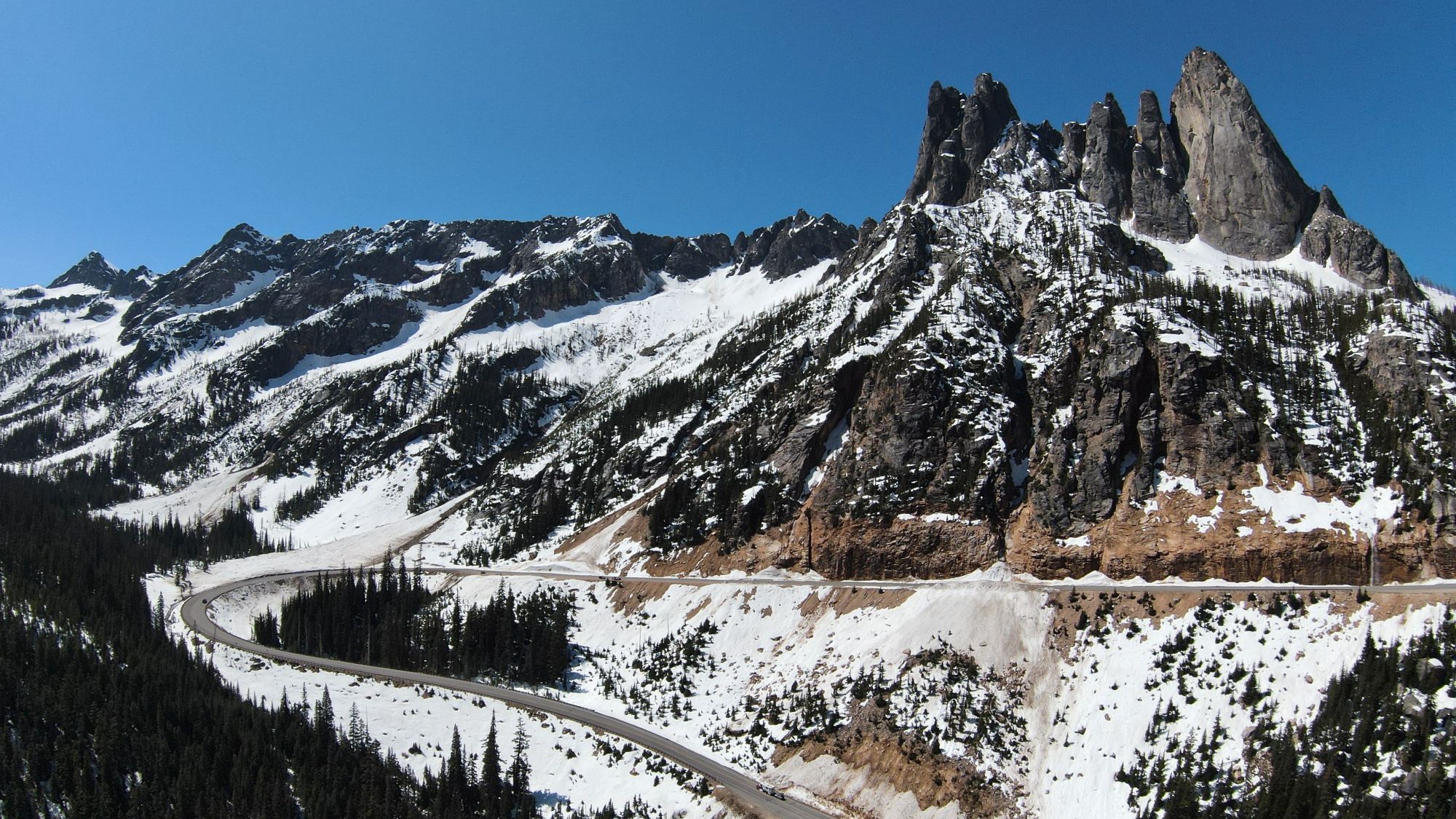
Washington Pass just after opening in the spring season. Photo: © 2026 CascadesFieldGuide.com. All rights reserved.
Quick Answer: Best Time by Trip Goal
Best overall for most first-time visitors: Early September. This is the safest single answer if you want SR-20 access, good trail odds, cooler nights, fewer bugs, and a slightly calmer feel than peak summer.
Best broad high-country window: Late July through mid-September. This is the best planning range for Maple Pass, Blue Lake, Rainy Lake, Washington Pass, longer day hikes, and classic North Cascades Highway trips.
Best for scenic drives and short walks: Late April through June, depending on road status. This is strongest for waterfalls, Newhalem, Gorge Creek Falls, Diablo Lake Overlook, west-side greenery, and lower-elevation stops. Do not treat it as full alpine hiking season.
Best for wildflowers: Summer depends heavily on elevation. Lower and mid-elevation bloom comes earlier, while higher meadows usually come later once snow melts. For a separate bloom-focused plan, use the North Cascades wildflower guide.
Best for larches and fall color: Late September through early October. This is a special-case “best” window, not the best all-around window. Weather changes faster, daylight is shorter, and crowds concentrate hard around Rainy Pass, Washington Pass, Maple Pass, Blue Lake, Cutthroat, and Easy Pass.
Best for Ross Lake and boat-in trips: July through early September. Lake access, docks, Hozomeen usability, and summer operations tend to line up better in the heart of the season, but always verify current lake and boat access conditions before planning around them.
Best for winter wildlife and quiet lowland trips: January and February. This is not a normal through-drive season, but it can be good for Skagit River bald eagle viewing, low-elevation forest scenery, stormy photography, and east-side winter recreation based around Winthrop or Twisp.
Most misunderstood month: June. The road may be open and the trip may be worth doing, but many higher-elevation trails can still hold snow.
Worst fit for a first-time full Highway 20 road trip: November through March. North Cascades National Park Service Complex remains open year-round, but Highway 20 is normally closed across the high mountains because of snow and avalanche hazards. Additionally, most park services and some nearby businesses close for the winter.
If your trip is within the next week or two, use the This Weekend’s Plan and Current Conditions pages before booking or driving.
Before You Pick a Month
Check current conditions first: Seasonal averages are only a starting point. Road closures, wildfire smoke, trail snow, storm damage, lake levels, campground status, and parking restrictions can override the usual month-by-month pattern. Start with current North Cascades conditions before building a final plan.
SR-20 is the deciding factor: Recent North Cascades Highway openings have ranged from late April to mid-May, and recent seasonal closures have ranged from early November to early December. Use WSDOT’s current road status, historic opening and closure dates, and the Seasonal Access Guide before planning a through-drive.
Open road does not mean open alpine season: Highway 20 may reopen before higher trails are ready. Blue Lake, Maple Pass, Cascade Pass, Easy Pass, Cutthroat, and other high-country routes can still be snowy after the road opens.
Open park does not mean full services: North Cascades National Park Service Complex is open year-round, but the peak operating season is generally late May through late September. Outside that window, visitor centers, campgrounds, ranger desks, food options, and seasonal services may be more limited.
Pass rules are confusing: There is no entrance fee for North Cascades National Park Service Complex, and NPS trailheads do not have trailhead parking fees. Many nearby U.S. Forest Service trailheads require a Northwest Forest Pass, Recreation Day Pass, or accepted federal pass. A Washington Discover Pass is not valid on federal lands. Check NPS fees and passes before you leave.
Cell service is weak: Download maps, reservation details, pass information, and backup routes before leaving the last reliable service zone. Cellular data is minimal through much of the park complex and is usually most reliable around Newhalem. An offline audio guide can help if you want more structure without depending on service.
For final planning, check these sources:
- Current Cascades Field Guide conditions for practical trip-planning notes.
- WSDOT for SR-20 status and seasonal history.
- NPS conditions for roads, trails, facilities, and alerts.
- NPS trail conditions before committing to higher-elevation hikes.
- NPS fire closures and smoke resources before summer or fall trips.
- Northwest Avalanche Center if your trip involves snow travel.
West Side vs East Side Reality
The west side is cooler, wetter, greener, and more forested. This side works better for spring greenery, waterfalls, low-elevation hikes, Newhalem, Diablo Lake, Gorge Creek Falls, Rockport, Marblemount, and backup plans when the high country is not ready. It is also the side most visitors reach first when driving east from Seattle, Everett, Mount Vernon, or Bellingham.
The east side is drier, hotter, sunnier, and more exposed. Winthrop and Twisp can be better bases when you want Methow Valley services, Washington Pass access, larches, east-side sunshine, or winter recreation. The tradeoff is summer heat, greater smoke sensitivity, and a much less useful position if SR-20 is closed across the crest.
For a classic first-time SR-20 trip: Most visitors should think west to east. Start with Concrete, Rockport, Marblemount, Newhalem, Diablo Lake, Rainy Pass, Washington Pass, then Winthrop if you are crossing the mountains.
For shoulder season: Do not assume both sides are equally useful. A May west-side trip can be worthwhile even when alpine trails are still snowy. An October east-side larch trip can be excellent even when lower west-side weather is wet. A winter trip based from Winthrop is a completely different trip than a winter trip based near Rockport or Marblemount.
Use the North Cascades map if you need to see how the west side, pass country, and Methow Valley connect.
Where to Stay by Season and Trip Style
Marblemount and Rockport: Best for west-side access, early starts, Newhalem, Diablo Lake, Skagit River winter eagle viewing, and park-first trips. These are the most useful bases when you care more about proximity than deep services. Start with the Marblemount lodging guide or the Rockport lodging guide.
Concrete, Sedro-Woolley, and Burlington: Better when you want more food, fuel, groceries, larger lodging inventory, or easier fallback logistics. Concrete is closer to the corridor than Burlington or Sedro-Woolley, but the farther west you stay, the more daily drive time you add. Start with the Concrete lodging guide if you want a west-side base with more services than Marblemount or Rockport.
Winthrop and Twisp: Best for east-side sunshine, Methow Valley services, Washington Pass approaches, larch season, and winter recreation. They are poor substitutes for west-side park access when SR-20 is closed through the mountains. Start with the Winthrop lodging guide, the Mazama cabins guide, or the Twisp stay guide, then use the Winthrop services guide if your trip depends on east-side food, fuel, lodging, or town services.
Baker Lake and nearby forest alternatives: Useful as a spring, smoke, closure, or snow backup. Baker Lake is not the same experience as Washington Pass or the SR-20 crest, but it can save a trip when higher elevations are not cooperating. Start with the Baker Lake Area Guide, then use the Baker Lake Boat Launches and Day-Use Access guide if your backup plan is built around the lake.
Stehekin: Treat Stehekin as a deliberate boat, ferry, or Lake Chelan trip, not a casual add-on to a normal SR-20 drive. It can be excellent, but it requires different logistics.
For a broader base-town comparison, use Where to Stay Near North Cascades: Best Bases.
North Cascades Month by Month
Jump to a month:
January | February | March | April | May | June | July | August | September | October | November | December
January in North Cascades
January is a winter access month, not a classic North Cascades Highway road-trip month. SR-20 is normally closed across the high mountains, daylight is short, storms are common, and visitor services are limited. Do not plan January around Rainy Pass, Washington Pass, Maple Pass, Blue Lake, or a west-to-east scenic drive.
What January is good for: Low-elevation west-side scenery, Skagit River bald eagle viewing, quiet forest stops, stormy photography, and east-side winter recreation based around Winthrop or Twisp. This is a good month if you actively want winter conditions, not if you are trying to force a summer-style park trip.
Best base areas: Rockport and Marblemount for Skagit River winter wildlife and west-side lowland access; Winthrop and Twisp for Methow Valley winter recreation.
Main mistake: Assuming “North Cascades National Park is open” means the North Cascades Highway is open across the mountains. It usually is not.
Best fit: Flexible locals, winter-aware visitors, photographers, eagle watchers, and travelers who are comfortable building a low-elevation plan.
February in North Cascades
February is still winter in the North Cascades. It has a little more daylight than January, but the high-country travel picture is mostly the same: SR-20 is normally closed across the crest, higher trailheads are not normal day-hike destinations, and winter travel requires more self-sufficiency.
What February is good for: Quiet west-side forest trips, river-valley scenery, bald eagle viewing if timing and river conditions still cooperate, and east-side snow recreation from Winthrop or Twisp. It can also be useful for scouting lodging, base towns, and future spring or summer routes without peak-season crowds.
Best base areas: Rockport, Marblemount, Concrete, Winthrop, or Twisp, depending on whether you want west-side river valleys or east-side winter recreation.
Main mistake: Planning from a map instead of road reality. A route that looks like a through-drive in July is usually not available in February.
Best fit: Winter travelers, quiet-trip visitors, photographers, and people who understand that this is not the season for casual alpine exploration.
March in North Cascades
March can feel like spring in the lowlands while the North Cascades high country is still locked in winter. This is usually too early for a full SR-20 sightseeing route, Washington Pass stops, Rainy Pass hikes, or reliable high-elevation trail access.
What March is good for: Lower-elevation west-side trips, waterfalls, forest walks, storm-window drives, and planning reconnaissance. It can also be a useful month to start watching road-clearing updates, snowpack patterns, campground opening information, and permit timing.
Use caution with: Snow travel, avalanche terrain, creek crossings, and any plan that assumes higher-elevation access. Even if lower valleys feel mild, upper routes can still be serious winter terrain.
Better plan: Stay closer to Concrete, Rockport, Marblemount, Baker Lake Road, Newhalem, and other lower-elevation options unless current conditions clearly support going farther.
Main mistake: Treating March like early hiking season because spring has arrived in Seattle, Mount Vernon, or the lowlands.
April in North Cascades
April is the watch-the-road month. In some years the North Cascades Highway opens in April; in others, it does not open until May. Treat April as a flexible planning window, not a guaranteed full-corridor trip.
What April is good for: Waterfalls, west-side greenery, lower-elevation hikes, quiet forest stops, Newhalem-area visits if access allows, and short-notice scenic drives when the road status lines up. It is one of the better months for visitors who like shoulder season and do not need alpine hiking.
Good stops if access allows: Newhalem, Gorge Creek Falls, Diablo Lake Overlook, Ladder Creek Falls, and lower corridor viewpoints that do not require committing to a snowy high-elevation trail.
Best base areas: Concrete, Rockport, and Marblemount are usually more useful than east-side bases if your plan depends on west-side access before SR-20 fully opens.
Main mistake: Booking a fixed Highway 20 crossing, Winthrop add-on, or east-side itinerary before checking WSDOT road status.
May in North Cascades
May is one of the most underrated North Cascades months for visitors who do not need full alpine access. The highway often reopens by early or mid-May in a typical year, greenery is strong on the west side, waterfalls are active, and the corridor begins to feel more usable.
What May is good for: Driving-focused trips, lower-elevation hikes, west-side waterfalls, Newhalem, Gorge Creek Falls, Diablo Lake views, Thunder Knob if conditions line up, early camping, and visitors who want a quieter trip than peak summer.
What May is not good for: Reliable high-country hiking. Maple Pass, Blue Lake, Cascade Pass, Easy Pass, Cutthroat, and similar higher routes may still hold significant snow or have road/trail access problems.
Camping note: Campgrounds and services begin returning around late May, but the exact operating status varies by campground and season. Check NPS camping information and reservation details before building your trip around a specific campground.
Best base areas: Concrete, Rockport, and Marblemount work well for west-side access. Winthrop can work if SR-20 is open and your plan is more Methow- or east-side-oriented.
Main mistake: Treating May like summer because the highway might be open. Road access and trail readiness are different things.
June in North Cascades
June is the most misunderstood month in the North Cascades. The highway may be open, waterfalls can be excellent, the west side is green, and the corridor can be very worth visiting. But June is still not peak alpine reliability.
What June is good for: Diablo Lake Overlook, Gorge Creek Falls, Newhalem, Thunder Knob if conditions line up, Rainy Lake later in the month if snow allows, family sightseeing, lower- and mid-elevation hiking, and flexible camping trips.
Use caution with: Maple Pass, Blue Lake, Cascade Pass, Cutthroat Pass, Easy Pass, and other higher-elevation hikes. They may not match summer trail photos yet. Snow, mud, lingering cold, creek crossings, and early-season route-finding can all matter.
Bug note: As snow melts and wet ground lingers, bugs can start becoming more noticeable. June can feel lush and beautiful, but it is not always the clean, dry, bug-free version people imagine.
Parking risk: Do not build a June day around Rainy Pass or Blue Lake unless you are deliberately accepting early-season uncertainty and limited parking. Rainy Pass parking is limited, and Blue Lake has a small designated lot.
Better backup: If the weather or snowpack is not cooperating, keep the day west side: Concrete, Rockport, Marblemount, Baker Lake Road, Newhalem, Gorge Creek Falls, and Diablo Lake.
Main mistake: Assuming June is full summer because SR-20 is open.
July in North Cascades
July is when North Cascades planning starts to feel more like the trip most visitors expect. SR-20 is normally open, most popular roadside stops are accessible, and higher trails become more realistic as the month goes on.
What July is good for: First full-corridor drives, family sightseeing days, Diablo Lake, Washington Pass Overlook, Rainy Lake, Thunder Knob, late-month high-country hikes, backpacking, camping, and Ross Lake-oriented plans.
Early July vs late July: Early July can still be uneven at higher elevations after heavy snow years. Late July is usually a safer bet for visitors who want a classic hiking-and-scenic-drive combination.
Ross Lake note: July through September is generally a stronger window for Ross Lake planning than spring. Boat-in trips, dock access, Hozomeen-area logistics, and lake-based plans still require current checks, but the odds usually improve in the heart of summer.
Reservation pressure: July is a peak planning month. Campgrounds, backcountry permits, lodging, popular trailheads, and small parking lots all become more competitive. If your trip depends on a specific campground or trailhead, have a backup.
Main mistake: Overplanning. A full west-to-east drive, multiple overlooks, lunch stops, and one major hike can be too much unless you intentionally cut something else.
August in North Cascades
August is operationally one of the strongest North Cascades months. High-elevation access is usually more reliable, roads and campgrounds are active, days are still long, and classic SR-20 trips work well for first-time visitors.
What August is good for: Maple Pass, Blue Lake, Rainy Lake, Washington Pass, Diablo Lake, Ross Lake, camping trips, backpacking, boating, paddling, and 1-2 day itineraries with a real hiking component.
Tradeoff: August is also peak pressure. Expect more competition for lodging, campground reservations, backcountry permits, trailhead parking, and popular viewpoints. Start early if your day depends on Rainy Pass, Blue Lake, Maple Pass, or another small trailhead lot.
Heat and smoke caveat: The east side can be hot, and wildfire smoke can affect visibility, air quality, and the value of scenic viewpoints. Smoke is not guaranteed, but it is important enough to check before a view-heavy or high-exertion trip.
Bug caveat: Bugs and mosquitoes can still be a real factor in lake, forest, and camp settings, especially where water and wet ground linger. Do not assume late summer automatically means bug-free.
Main mistake: Assuming August is easy because access is good. Access may be good, but parking, smoke, heat, reservations, and crowding can still make the plan fragile.
September in North Cascades
September may be the best single month for many North Cascades visitors. Early September usually keeps the best parts of summer access while reducing some bug pressure and school-vacation crowding. This is why early September is the strongest one-size-fits-most answer for first-time SR-20 trips.
What September is good for: First-time visitors, high-country hiking, couples trips, photography, camping with fewer school-vacation crowds, west-to-east SR-20 drives, Washington Pass, Rainy Pass, Blue Lake, Maple Pass, Diablo Lake, and cooler nights.
After Labor Day: Weekdays after Labor Day often give the best balance of access and crowd reduction. Weekends can still be busy, especially when weather is good.
Smoke caveat: Early September can still be affected by wildfire smoke. Check air quality and fire conditions before committing to a strenuous hike or view-heavy itinerary.
Late September: Larch interest starts building in the Rainy Pass, Washington Pass, Cutthroat, Maple Pass, Blue Lake, and Easy Pass areas. Crowds can concentrate hard around good weather windows.
Main mistake: Assuming September is always quiet. It is often better than August for crowd pressure, but larch season and good-weather weekends can still feel intense.
October in North Cascades
October can be excellent, but it is not beginner-proof. Fall color, larches, crisp air, and shoulder-season scenery can make the corridor memorable. At the same time, services are reduced, days are shorter, rain becomes more common at lower elevations, and snow or ice can return to higher terrain.
What October is good for: Larches, fall color, flexible photography trips, lower-elevation stops, quieter weekdays, crisp scenic drives, and experienced hikers who can change plans quickly.
Larch window: Late September through early October is the practical larch window, with timing varying by elevation, weather, and year. Popular trails near Rainy Pass and Washington Pass can have full lots, roadside congestion, and crowd levels that surprise people expecting a quiet fall trip.
Better low-stress plan: If you want fewer crowds, stay lower and earlier on the west side: Newhalem, Diablo Lake Overlook, Thunder Knob, Rockport-area walks, or Baker Lake Road depending on conditions.
Use caution with: Washington Pass weather, early snow, icy mornings, shorter daylight, and trailheads that become crowded during peak-color weekends.
Main mistake: Assuming October is just “less crowded September.” It can be, but it can also be wet, snowy, smoky, thin on services, or crowded around larch trails.
For more detail, use the North Cascades fall guide.
November in North Cascades
November is a closure-transition month. SR-20 may still be open early in the month in some years, but winter closure can arrive quickly once snow and avalanche risk build. West-side weather turns wetter, east-side nights get cold, and high-country plans become much less dependable.
What November is good for: Flexible lower-elevation trips, storm-window drives, quiet west-side stops, dramatic weather, and visitors who are not depending on a full highway crossing.
What November is not good for: A guaranteed Washington Pass trip, Rainy Pass hiking, Maple Pass, Blue Lake, or a fixed cross-Cascades itinerary.
Best base areas: Concrete, Rockport, and Marblemount for lower-elevation west-side access; Winthrop or Twisp only if your plan is deliberately east-side or Methow-focused.
Main mistake: Planning from July assumptions. A route that worked cleanly in summer may not exist as a practical through-drive in November.
Best fit: Flexible visitors, locals, photographers, and people willing to build around current road conditions instead of a fixed itinerary.
December in North Cascades
December is winter mode. SR-20 is normally closed across the high mountains, park services are limited, and winter visitors need to be self-sufficient. This is not the season for a normal first-time North Cascades Highway drive.
What December is good for: Low-elevation west-side scenery, Skagit River winter wildlife, quiet forest stops, stormy river-valley photography, and east-side snow recreation based from Winthrop or Twisp.
What December is not good for: Casual alpine sightseeing, Washington Pass, Rainy Pass, Maple Pass, Blue Lake, or a simple west-to-east SR-20 road trip.
Best base areas: Rockport and Marblemount for west-side lowland access and eagle-season planning; Winthrop and Twisp for Methow Valley winter recreation.
Main mistake: Trying to force the classic summer version of the North Cascades into a winter month. December can be worthwhile, but only if you want the winter version.
Best Stops by Season
Spring and early summer: Build around Newhalem, Gorge Creek Falls, Diablo Lake Overlook, Thunder Knob if conditions are reasonable, west-side forest walks, and lower-elevation backups. The official North Cascades Highway stop list includes Gorge Creek Falls at mile 123.4 and Diablo Lake Overlook at mile 131.7, both of which work better for uncertain shoulder-season plans than high-country hikes.
Mid-summer: Add Washington Pass Overlook, Rainy Lake, Blue Lake, Maple Pass, Ross Lake, Diablo Lake, and longer hiking days if your group is prepared for parking pressure and a full mountain day.
Late summer and early fall: Early September is often the best balance point. Keep the high-country hiking menu, but watch smoke, weather, and larch-season crowd spikes.
Fall: Use a split plan. If larches are the goal, focus on Rainy Pass, Washington Pass, Maple Pass, Blue Lake, Cutthroat, or Easy Pass. If avoiding crowds is the goal, stay lower and do not chase the same peak-color trailheads as everyone else.
Winter: Keep expectations west side and low elevation, or shift east to a Methow Valley winter recreation trip. This is not the season for casual exploration beyond the open corridor.
Crowds, Cost Pressure, and Reservation Reality
Lowest overall pressure: January through March, November, and December. These months can be cheaper and quieter, but that is because access, daylight, weather, and services are more limited.
Best shoulder-season value: April, May, weekdays in June, and weekdays after Labor Day. These windows can work well if your plan does not depend on fully melted-out alpine trails.
Highest pressure: July and August. This is the strongest summer access window, but it is also the most competitive period for campgrounds, lodging, permits, trailhead parking, and popular viewpoints. If you are planning for this window, use the Best North Cascades Campgrounds, When Campgrounds Are Full, and What to Book Before a North Cascades Trip guides before assuming you can solve lodging or camping later.
Most surprising crowd spike: Late September through early October near Rainy Pass and Washington Pass. Larch season compresses demand into a short window, especially on clear weekends.
Camping and permits: Park campground prices are usually not the main problem. Availability is. Backcountry permits are also more about quotas and timing than raw cost. If your trip depends on a specific campground, boat-in site, or backcountry zone, use the campground guide and booking checklist early, then keep backups.
Trailhead pass costs: NPS areas do not charge an entrance fee, but nearby U.S. Forest Service trailheads may require a Northwest Forest Pass, Recreation Day Pass, or accepted federal pass. Check the exact trailhead before leaving.
When to Book and When to Recheck Conditions
Six to seven months before a peak summer camping trip: Mark campground booking windows and target weekdays where possible. Summer weekend campground demand can move faster than casual planners expect. Use What to Book Before a North Cascades Trip and the Best North Cascades Campgrounds guide before the obvious weekends are gone.
March through April for backpacking: Pay attention to backcountry permit timing if your plan depends on Cascade Pass, Sahale, Copper Ridge, Ross Lake boat-in camps, or other competitive zones.
Two to eight weeks before travel: Choose a base town and at least one backup plan. Start with Where to Stay Near North Cascades if you are not sure which base fits the month. A good North Cascades itinerary should have an east-west pivot, a lower-elevation pivot, or a shorter scenic-drive version.
Seven days before departure: Re-check campground inventory, trail reports, road status, smoke, and weather. Some plans that looked perfect a month out may no longer be the best choice.
Seventy-two to twenty-four hours before departure: Check WSDOT, NPS alerts, trail conditions, smoke, and avalanche resources if snow is involved. This is the highest-value final planning step.
Travel day: Fuel up before the park corridor, download offline maps, save reservation details, and start earlier than feels necessary if your day depends on a small trailhead lot.
Common Month-by-Month Mistakes
- Assuming June is full summer: June can be good, but higher-elevation trails may still be snowy.
- Ignoring the pass closure: SR-20 is seasonal across the high mountains. Check WSDOT before planning a through-drive.
- Confusing park access with trail access: A road can be open while a trail is still snow-covered, muddy, icy, or difficult.
- Forgetting the west-side / east-side difference: Newhalem and Winthrop do not behave like the same climate zone.
- Underestimating May: May can be excellent for waterfalls, west-side scenery, and lower-elevation trips even when alpine hikes are not ready.
- Overrating August: August has strong access, but smoke, heat, bugs, reservations, and parking pressure can all matter.
- Arriving late for larches: Larch weekends concentrate demand into a short window. Popular trailheads can fill very early.
- Depending on services outside peak season: Food, visitor information, campground services, and ranger desks become more limited outside late May through late September.
- Forgetting winter has its own purpose: January and February are poor months for a classic SR-20 crossing, but they can be good for eagles, lowland scenery, and Methow winter trips.
FAQ: Best Time to Visit North Cascades
What is the single best month to visit North Cascades?
Early September is the best single answer for most first-time visitors. It usually has the best balance of open road access, trail readiness, cooler nights, fewer bugs than midsummer, and slightly lower pressure after Labor Day.
What is the best overall season for North Cascades?
Late July through mid-September is the best broad window for classic North Cascades trips. That is when SR-20 access, high-country hiking, camping, and scenic driving are most likely to line up.
Is May a good time to visit North Cascades?
Yes, if you want waterfalls, west-side greenery, lower-elevation hikes, Newhalem, Diablo Lake views, and a flexible scenic-drive trip. May is not a reliable month for high-country hiking.
Is June too early for North Cascades?
June is not too early for lower-elevation stops, Diablo Lake views, waterfalls, and flexible west-side planning. It can be too early for visitors expecting reliable access to Maple Pass, Blue Lake, Cascade Pass, or other high-elevation hikes.
Is August or September better?
August is better for the fullest summer operating feel, warm weather, boating, camping, and long hiking days. September is usually better for cooler nights, fewer bugs, slightly lower pressure after Labor Day, and a better all-around first-time experience. Early September is the stronger default choice for most visitors.
When is the best time for hiking in North Cascades?
Late July through mid-September is usually the best hiking window for visitors targeting popular SR-20 hikes. Earlier summer may still have snow on higher trails, and late September or October can bring faster weather changes.
When do larches peak in North Cascades?
The practical larch window is usually late September through early October, with exact timing changing by elevation, weather, and year. Avoid planning around a single guaranteed weekend.
Is October a good time to visit North Cascades?
October can be excellent if you are flexible. It is good for fall color, larches, and shoulder-season drives, but services are reduced and mountain weather can change quickly.
When is Ross Lake best?
July through early September is usually the strongest planning window for Ross Lake, boat-in camping, and summer lake access. Current lake levels, dock access, fire restrictions, and boat logistics still need to be checked separately.
Where should I stay for the best month?
For west-side access, start with Marblemount, Rockport, or Concrete. For east-side access, larches, Methow Valley services, or winter recreation, use the Winthrop lodging guide, the Mazama cabins guide, or the Twisp stay guide. For a full comparison, use the North Cascades base-town guide.
When does Highway 20 open?
North Cascades Highway usually reopens in April or early May, depending on snow, avalanche hazards, storm damage, and road work. Use the North Cascades Highway opening date guide for the seasonal pattern, then always check current WSDOT status before planning a spring crossing.
When does Highway 20 close?
North Cascades Highway usually closes sometime from November into early December, depending on snow and avalanche risk. Fall trips should be planned from current road conditions, not just the calendar.
Can you visit North Cascades in winter?
Yes, but not as a normal full-corridor road trip. The park complex is open year-round, but services are limited and SR-20 is normally closed across the high mountains in winter.
Do you need a pass or entrance fee?
There is no entrance fee for North Cascades National Park Service Complex. Many nearby U.S. Forest Service trailheads require a Northwest Forest Pass, Recreation Day Pass, or accepted federal pass, and a Washington Discover Pass is not valid on federal lands.
Sources
- NPS seasonal weather guidance
- NPS non-peak season planning
- WSDOT mountain pass opening and closing dates
- NPS current conditions
- NPS trail conditions
- NPS North Cascades Highway stop list
- NPS camping information
- NPS fees and passes
- NPS boating on Ross Lake
- NPS backcountry reservations
- USFS Rainy Pass and Heather-Maple Pass trailhead information
- USFS Blue Lake Trailhead information
- NPS fire closures
- Washington Department of Health wildfire smoke guidance
- Northwest Avalanche Center
Related Guides
This guide is for trip planning, not real-time operations. Verify road status, weather, smoke, trail access, parking rules, lake conditions, campground availability, and seasonal facility status before leaving reliable cell service.